

Online Sex Crimes Defense | Collin County, Texas
Understanding the Online Sex Crime Case Timeline in Collin County
From first contact with police through bond, arraignment and court settings, learn what the process usually involves and how a defense lawyer can help you prepare at each stage.
By Heather Barbieri · Published October 30, 2026
An online sex crime case in Collin County moves in stages, and no single date fits every case. The usual stages run from arrest and bond through arraignment, grand jury review, pretrial work, a plea decision and trial setting. The charge, the evidence and the court’s docket set the pace. This guide walks through each stage so you know what to expect.
What an Arraignment Is in a Texas Criminal Case
An arraignment is the first formal court hearing where the defendant hears the charge and enters a plea. It is a procedural step. It is not a trial, and it does not decide guilt.
Texas treats online contact with a minor as a crime in specific situations. Under Penal Code § 33.021, a person commits an offense if the person knowingly solicits a minor, over the Internet, by electronic mail, text message, or other electronic message service or system, or through a commercial online service, to meet another person for sexual contact, sexual intercourse, or deviate sexual intercourse, with the intent that the minor will engage in that conduct. It is a defense to prosecution that the actor was married to the minor, or was not more than three years older than the minor and the minor consented to the conduct. Depending on the subsection and the minor’s age, the offense is a second-degree or third-degree felony. Texas Penal Code § 33.021 reads: “(f) An offense under Subsection (b) is a felony of the third degree, except that the offense is a felony of the second degree if the minor is younger than 14 years of age or is an individual whom the actor believes to be younger than 14 years of age at the time of the commission of the offense.”
Court paperwork lists the setting date, time and courtroom. Keep every document in one place. Read each date carefully.
For the wider charge picture, read our online sex crimes overview.
If you're waiting on a court date after an online sex crime charge in Collin County, we'd welcome your questions in a free, confidential consultation with no obligation to continue. Talk it through with our team — the first consultation is free, confidential, and carries no obligation.

Where Arraignment Falls After Arrest and Jail Booking in Collin County
Arraignment comes after arrest, booking and the first bond decision. The general Texas process runs in roughly that order, as the Fort Bend County DA case flowchart shows. It moves through magistrate proceedings, bond and release, felony grand jury review, pleas and trials.
Many online cases start with a tip, not a knock on the door. The NCMEC CyberTipline accepts reports of suspected online child exploitation, including online enticement. NCMEC reviews those tips and refers them to law enforcement for possible investigation.
Federal programs also play a role. The OJJDP Internet Crimes Against Children program supports investigations of technology-facilitated child sexual exploitation. A case can start with a national report and still end up in a local Texas court. For local court information, see our Collin County guide.
Bond Conditions and Protecting Yourself Between Arraignment and the Next Court Date
Questions about bond conditions in a specific case should be discussed with a lawyer who can review the paperwork and explain them. Under Penal Code § 25.07, a person commits an offense when, in violation of a condition of bond or an order in a family violence, sexual assault or abuse, indecent assault, stalking, or trafficking case, the person knowingly or intentionally does one of the acts listed in that section, such as communicating a threat to a protected individual, possessing a firearm, or harming or threatening a pet possessed by a protected person. That act must also violate either a bond condition set in one of the case types the section lists and related to the safety of a victim or the community, or one of the court orders it names. Under Penal Code § 25.07, a person commits an offense if, in violation of a condition of bond set in a family violence, sexual assault or abuse, indecent assault, stalking, or trafficking case and related to the safety of a victim or the community, the person knowingly or intentionally engages in one of the acts the statute lists, such as possessing a firearm or communicating with a protected individual in a manner the statute prohibits.
The statute covers specific acts. These include contacting a protected person in a threatening or harassing way, going to or near a residence, workplace or school named in the order, and possessing a firearm. A threat passed through another person also counts.
Travis County guidance explains that a protective order can limit contact in sexual-assault cases. It also explains that these orders are legal rules set by a judge. Treat every term as binding.
Read the bond order line by line. Ask your lawyer what each term means before you act. Do not delete messages, accounts or devices without advice from your lawyer.
Who Is in the Courtroom and How the Docket Moves
Most settings include the judge, a prosecutor from the Collin County District Attorney’s Office, the defense lawyer and the defendant. Each setting is one step in the case. It is not the final decision.
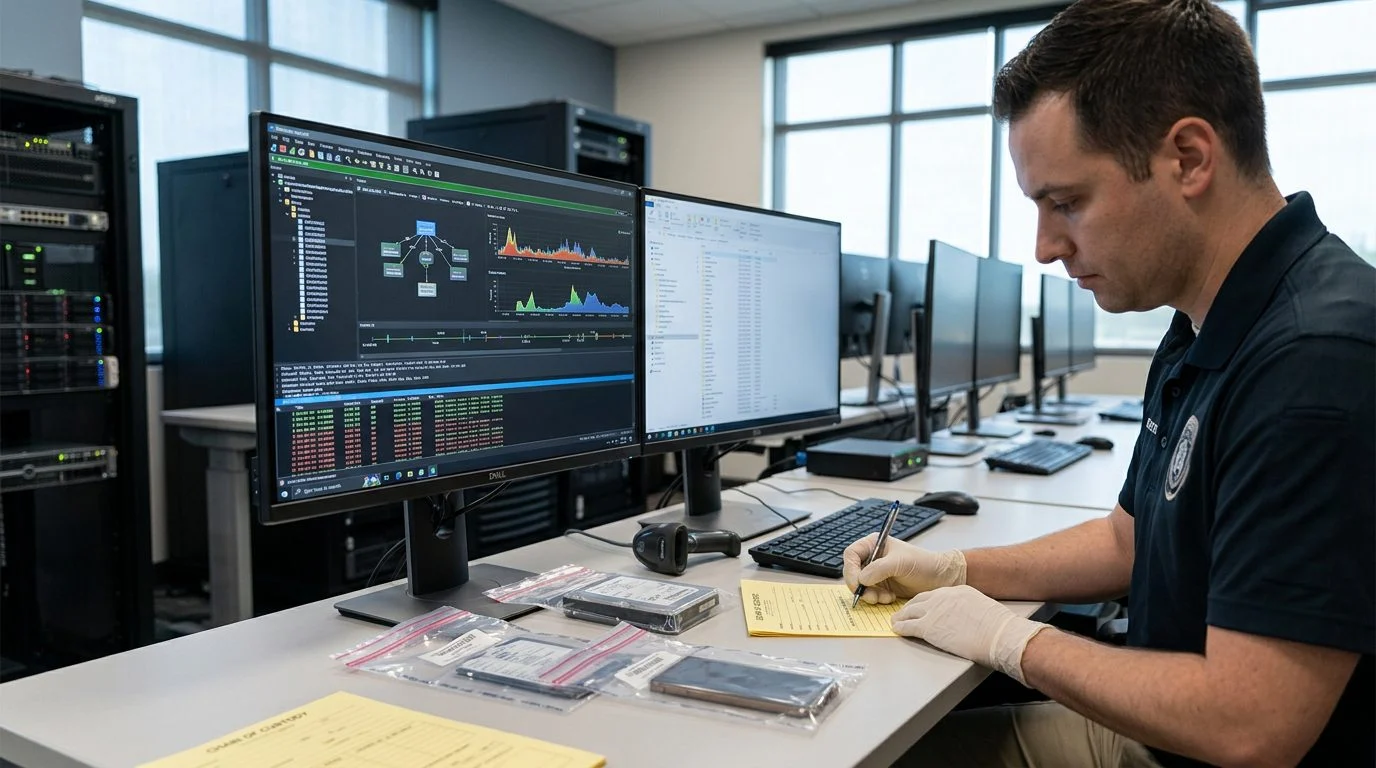
Dates change often enough that you should not plan around the first one. A setting can be reset while both sides exchange discovery. Discovery is the exchange of evidence in a criminal case, and a lawyer can explain what has been shared in a specific case. In online cases, it often includes device examinations and recordings of forensic interviews.
Those reviews take time. The court sets each next date based on where the case stands. The docket, which is the court’s list of matters to hear, decides when a hearing fits. Ask your lawyer to confirm each setting in writing.
Charges, Pretrial Motions and Why the Plea Is Not Decided on the Spot
A plea is usually not decided at the first setting. Felony charges often go to a grand jury first. Under Texas Code of Criminal Procedure art. 12.06, an indictment is “presented” once the grand jury has acted on it and the court has received it. That step can add time.
Pretrial motions can also slow a case. A defense lawyer may challenge a search or a statement. The ruling on that challenge shapes what happens next. The lawyer and client review the evidence first, then weigh the options.
A plea to a judge can lead to deferred adjudication.
Time matters too. Under art. 12.05(b), time during the pendency of an indictment is not counted in the limitation period. That is one reason the calendar depends on the charging history.

Getting a Timeline for Your Own Case
Your timeline depends on the facts, the number of counts, the evidence and the court’s schedule. No single date applies to every case. Start by gathering three things: the charging papers, the bond order and every court setting. Write down when you received each document.
Quick Answers
How long does an online sex crime case take in Collin County?
The length depends on the facts, the charge and the court’s schedule. No fixed number applies.
Can a bond order limit contact?
Yes. Bond terms can limit contact, travel and conduct, and breaking them can lead to a new charge.
Does arraignment decide guilt?
No. It is the first formal hearing where the charge is read and a plea is entered.
If you’re waiting on a court date after an online sex crime charge, call Barbieri Law Firm at (972) 424-1902 or send your case details through our contact page. The initial consultation is free, confidential and carries no obligation to continue.
Attorney responsible for this site: Heather Barbieri, Barbieri Law Firm, Frisco, Texas.
What Shapes the Timeline
The Investigation
Police may collect devices, messages, account records and digital files. How that evidence is gathered and reviewed affects how long the case takes.
Court Settings
Each hearing is set by the court and its docket. Some settings move, and the schedule can change as the case develops.
Bond Conditions
Understanding every condition from the start helps you avoid new problems.
Coordinated Defense
Our lawyers and team track deadlines and settings, review the evidence, and explain each step so you know what comes next.
Be Careful About What You Say and Post
Do not discuss the allegation with police, the other person involved, or anyone online, including in texts, social media or messaging apps. Those statements can be used in your case. Speak with a lawyer before you answer questions or respond to messages.
Stages at a Glance
Investigation and First Contact
Detectives may interview you, request devices or seek a search warrant. Early decisions made at this stage can shape the rest of the case.
Arrest and Bond
After an arrest, the court sets bond conditions.
Arraignment
At arraignment the charge is read and a plea is entered. Arraignment is an early step; it does not decide guilt or innocence.
Pretrial Review and Motions
We review the evidence, including digital forensic reports, and evaluate pretrial motions. This stage often takes the longest because it depends on discovery and the court's docket.
Talk With a Collin County Defense Lawyer About Your Case
Related practice areas
- Online Sex Crimes Defense Lawyer in Prosper
- What Happens at an Online Sex Crime Arraignment in Collin County?
Request a Consultation
Fill out the short form and we will take it from there.