

Sex Crimes Defense | Collin County and Dallas-Fort Worth
Facing an Improper Photography Charge in Texas? Start With the Facts
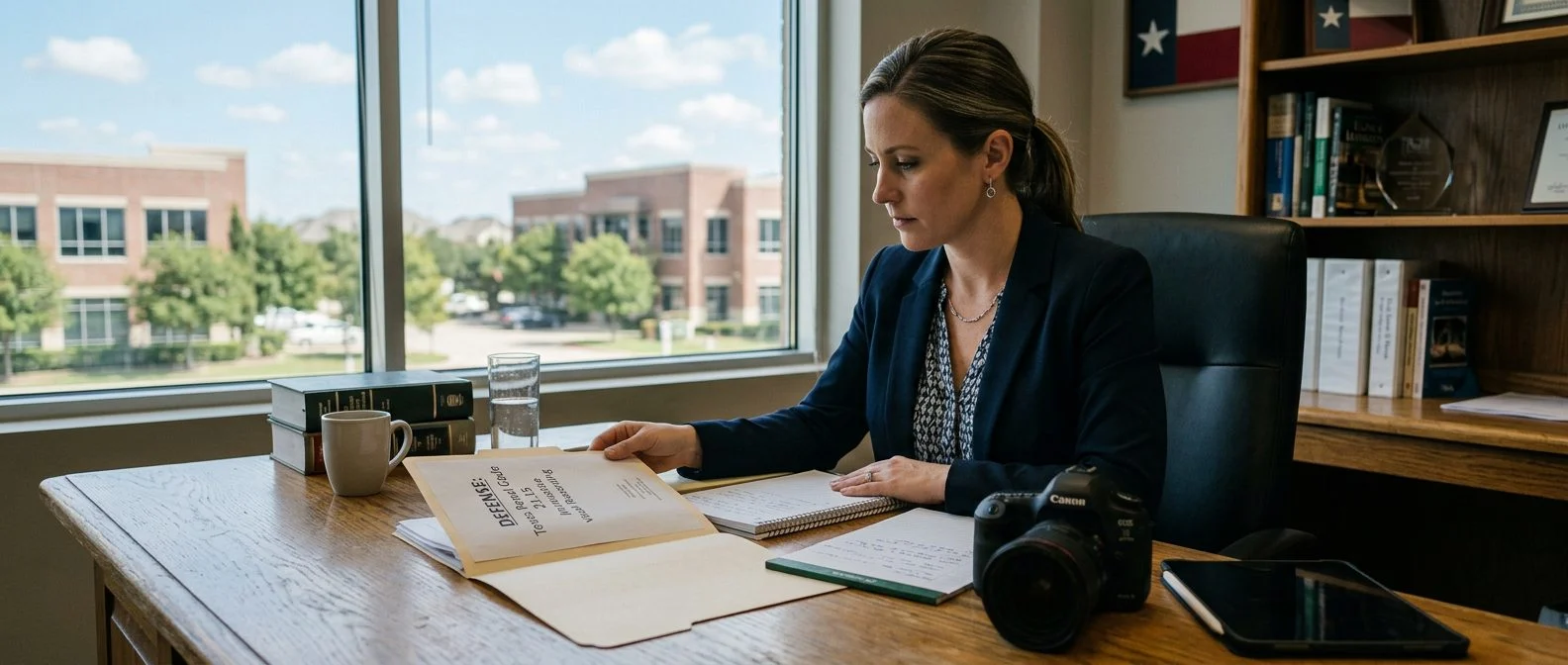
Heather Barbieri and our team examine the images, the device, the setting and the circumstances, then explain the options available to you.
By Heather Barbieri · Published November 12, 2026
If your loved one has been accused of secretly photographing or recording someone, the charge can feel sudden and hard to make sense of. The core question is what Texas law requires the State to prove.
If your loved one has been accused of a photography-related offense in Texas, the charge may be an invasive visual recording charge, which is a state jail felony. Each element the State must prove can be checked against the evidence, and that check is where a defense starts.
What Improper Photography Means Under Texas Law
Improper photography means recording or capturing another person without consent and with intent to invade the other person’s privacy, in a way the statute covers. Texas calls this offense invasive visual recording.
Under Texas Penal Code § 21.15, a person commits an offense if, without the other person’s consent and with intent to invade that person’s privacy, the person photographs, records, broadcasts, or transmits a visual image of an intimate area of another person if that person has a reasonable expectation that the intimate area is not subject to public view, or photographs, records, broadcasts, or transmits a visual image of another person in a place where a person has a reasonable expectation of privacy.
The statute covers phones, video cameras, and other electronic devices. It also reaches a person who, without the other person’s consent and with intent to invade the privacy of the other person, knowing the character and content of the recording, promotes it.
Location matters. The statute defines a changing room to include dressing rooms, locker rooms, and swimwear changing areas. It also names a bathroom, bedroom, and changing room as places where a person can reasonably expect privacy.
This page is written for you, a family member trying to read a police report, an arrest, or a court notice.
Elements the State Must Prove
A missing element is the first thing a defense review checks.
- No consent. Under Texas Penal Code § 1.07, consent means assent in fact, whether express or apparent. Consent is often the central factual question in these cases.
- An intimate area or a private place. For an intimate area, the other person must have a reasonable expectation that it is not subject to public view. The statute’s definition includes clothed genitals, pubic area, anus, buttocks, and female breast, so clothing alone does not settle the question.
- Intent to invade privacy. The State must show the person acted with intent to invade the other person’s privacy.
The State also has to show either that an intimate area was recorded when the other person had a reasonable expectation that it was not subject to public view, or that the image was taken in a place where a person has a reasonable expectation of privacy. A bathroom stall, a changing room, and a bedroom each raise different questions.
A posted sign saying someone is being recorded does not establish consent in a private place.
Are unsolicited pictures illegal in Texas? Not every unwanted picture is a crime under this statute. Whether a charge fits turns on the elements, the place, and the intent.
Penalties, Degrees, and Collateral Consequences
The basic offense is a state jail felony. Under Texas Penal Code § 12.35, that means confinement in a state jail for 180 days to two years, and possibly a fine of up to $10,000.
Some charges carry a higher level. Under the same section, the offense is punished as a third-degree felony if a deadly weapon was used or exhibited during the offense or immediate flight, and the person used or exhibited it or was a party to the offense and knew a deadly weapon would be used or exhibited, or if the person has a qualifying prior final felony conviction. A third-degree felony carries two to ten years in prison and a fine of up to $10,000, under Texas Penal Code § 12.34.
Judges also have discretion. Under Texas Penal Code § 12.44, a court can impose confinement permitted for a Class A misdemeanor if, after considering the gravity and circumstances of the felony and the history, character, and rehabilitative needs of the defendant, it finds that would best serve the ends of justice. At the prosecutor’s request, the court may also authorize the prosecutor to prosecute a state jail felony as a Class A misdemeanor.
Registration is a separate question. Texas defines a reportable conviction or adjudication to include deferred adjudication, and it lists a violation of § 21.15 among those offenses under Texas Code of Criminal Procedure art. 62.001. That makes registration one of the first questions to review.
Beyond the sentence, a charge can affect work, school, and housing. Gather the charging papers, bond conditions, and any protective order so the early review is complete.
Common Situations Behind These Charges
These reports often begin with an observation, a complaint, or a device seized during a different matter. The first account is rarely the full story.
Common settings include a phone held over a bathroom stall, a camera hidden in a changing area, a recording made in a shared home or workplace, and images found on a phone during an unrelated search. Describing a setting does not decide what happened in it.
The questions that usually matter are where the recording happened and whether consent existed. Three early mistakes can hurt a defense:
- Deleting files, resetting a phone, or changing accounts before counsel reviews the device.
- Discussing the allegation with the complainant, coworkers, or on social media.
- Answering investigators’ questions before anyone has reviewed the charge.
If your loved one has a device or papers connected to the case, ask them to keep the device as it is and to bring it and every paper to counsel.
How a Defense Review Works: Steps and Timeline
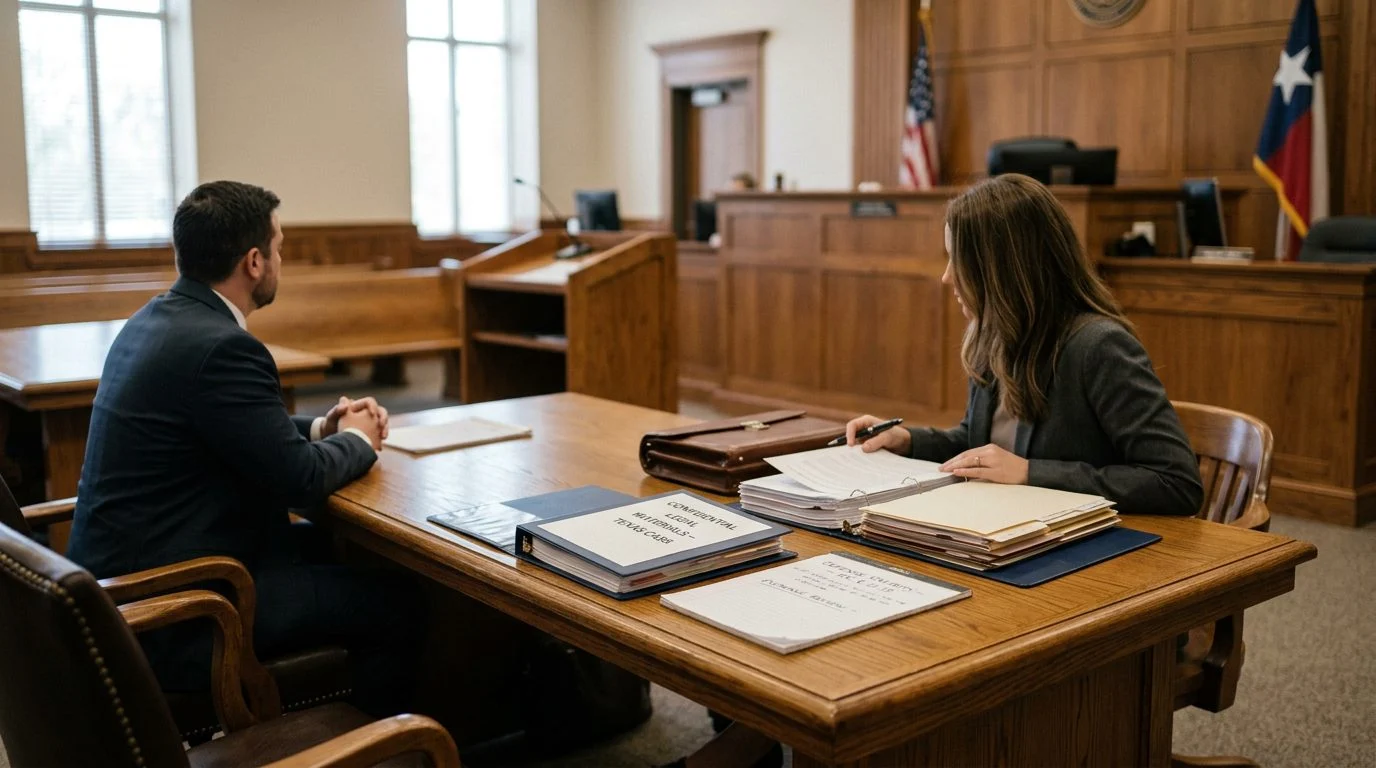
A defense review starts with a consultation and moves through the evidence, bond conditions, the State’s discovery, and your options at each stage.
- Consultation. We review the charge, the arrest or report, and the timeline, and we answer your questions.
- Evidence. We review the device, the image or video files and their dates, the location, witness statements, and any evidence of consent.
- Bond and orders. We review bond conditions and any protective order, and we address the next court date.
- Discovery. Discovery is the evidence the State shares with the defense. We review what the prosecution says it can prove about consent, intent, and location.
- Options. We explain negotiations, pretrial motions, and trial, and how each path works in your case.
Timing varies by county and by case. No lawyer can say how a case will end or how long it will take.
Why Barbieri Law Firm
Barbieri Law Firm is an all-women criminal defense firm based in Frisco, Texas. It defends people accused of sex crimes and assaultive offenses in Collin County, Dallas-Fort Worth, and across Texas.
Heather Barbieri leads the firm as its responsible lawyer. Carrie Thomas is also one of the firm’s lawyers. Our team includes support staff who keep each file organized.
Heather Jean Barbieri, Board Certified, Criminal Law — Texas Board of Legal Specialization.
We check each element, the setting, and the evidence, then explain your options in plain language.
Not sure what your next step is?
Talk it through with our team — the first consultation is free, confidential, and carries no obligation.
Frequently Asked Questions
Is improper photography a felony in Texas?
Yes. The basic offense under § 21.15 is a state jail felony, and some charges are punished as a third-degree felony.
What is effective consent?
Under § 1.07, consent means assent in fact, whether express or apparent. Whether consent existed is often central to the case.
Does deleting the image end the case?
Do not delete anything on your own. Keep the device as it is and let counsel review it first.
Should my loved one talk to police first?
Get advice first. Contact our office before answering investigators’ questions.
Can a family member contact the firm?
Yes. A family member can reach us the same way the accused can.
Talk Through Your Situation With Our Team
If your loved one has just been charged with secretly recording someone, or you have just learned of a camera allegation, the questions it raises can be hard to work through on your own. Our team can review the charge, the evidence, and the next court steps with you. Call (972) 424-1902 or send your case details. Your first consultation is free, confidential, and without obligation to continue.
Attorney responsible for this site: Heather Barbieri, Barbieri Law Firm, Frisco, Texas.
How Our Firm Approaches Your Case
Full Review of the Evidence
We request and review the police report, the images, the device and any forensic data, so every part of the State's case is examined.
Defense Focused on Criminal Law
Our practice is devoted to criminal defense, including sex crimes charges across Texas.
An All-Women Firm
Heather Barbieri leads a firm of women lawyers and staff who take each client's situation seriously and keep you informed at every stage.
Clear Explanations
We explain the charge, the evidence and your options in plain language so you can make informed decisions about your case.
Talk With a Lawyer Before You Discuss the Charge
Statements to investigators, messages to friends or posts online about the case can become evidence. Speak with a criminal defense lawyer before you answer questions or share details about the matter.
What We Look at in an Improper Photography Case
The Images Themselves
We review what was recorded, how it was captured and whether the State can show what it claims the images depict.
Consent and Context
We examine the facts surrounding the image, including what the people involved knew and agreed to at the time.
The Device and Its Data
We look at how the images were stored, transferred or accessed, and whether the digital evidence was collected and handled properly.
Your Options
After reviewing the evidence, we explain the defense strategies available and what each would mean for you, so you can decide how to proceed.
Heather Jean Barbieri, Board Certified, Criminal Law — Texas Board of Legal Specialization. Your first consultation is free, confidential and carries no obligation to continue.
Related practice areas
Request a Consultation
Fill out the short form and we will take it from there.