


Sex Crimes Defense | Frisco, Texas
Arrested at Work? Focus on the Facts That Matter Now
An arrest at your job can happen quickly and feel overwhelming. Here is how to protect your position while you get clear answers.
By Heather Barbieri · Published November 18, 2026
A sex crime accusation can reach you at work. It may come as a detective’s call, a protective order or an arrest warrant. None of these settles your case, but each one can change your next few days. This page explains what they can mean in Texas and what to do before you speak with anyone.
The call you did not expect, and what it may mean
A call from a detective is not the same as an arrest, but it means the accusation is now real. You may be at your desk when the phone rings. Your mind jumps to your license, your team and your family. That reaction is normal.
The next step depends on how the case is being handled. You may not yet know what the accuser has said or what evidence exists. Those unknowns are hard. They are also the reason to slow down.
This page answers one question you may be asking: can police arrest me at my office for a sex crime in Texas? It is general information, not advice about your own case.
A detective's call or a protective order can leave you feeling alone at work, but you don't have to face it alone; our team can talk through your situation in a free, confidential first consultation. Talk it through with our team — the first consultation is free, confidential, and carries no obligation.
How a protective order can reach your workplace
A protective order is one way an accusation can affect where you work. A court may issue a temporary order without a hearing if it finds a clear and present danger of harm to the applicant. The order can issue “without further notice to the alleged offender.”
If you are served with any order, keep the papers and bring them to your lawyer the same day.
What the reader fears most: career, family and reputation
Your fears are not only about a courtroom. They are about your job, your license and the people who depend on you. Those fears are reasonable, and a plan can address them one step at a time.
Colleagues may learn about an arrest from the scene itself, so how you respond matters. Your employer, your licensing board and your family each ask different questions. The answers depend on what each one requires and on how the case develops.
People close to you may hear about this from someone else. You can decide who hears it from you and when. Talk with a lawyer first, so what you share is accurate and does not hurt the case.
The accusation can spread faster than the facts. Keep it off social media and out of work chats. Avoid asking coworkers to speak for you.
What the charges and protective orders can carry in Texas
Sex crime charges in Texas carry long prison ranges. Violating a protective order or a bond condition can bring separate charges.
Aggravated sexual assault is a first-degree felony. Aggravated sexual assault is a first-degree felony, punishable by life or any term of 5 to 99 years, plus a fine of up to $10,000, and the minimum term rises to 25 years if the victim is younger than 10, or younger than 14 and the offense is committed in a manner described by Subsection (a)(2)(A) (Texas Penal Code § 22.021, Texas Penal Code § 12.32).
Under Texas Penal Code § 12.32, a first-degree felony is punishable by imprisonment for life or for any term of not more than 99 years or less than 5 years, and may also include a fine of up to $10,000. Indecent assault is a Class A misdemeanor unless a listed condition applies (Texas Penal Code § 22.012).
A violation of a temporary order can bring a contempt fine of up to $500, jail for up to six months, or both (art. 7B.006). A protective order issued under Article 7B.003 may last for the lives of the offender and victim or for any shorter period stated in the order; if no period is stated, it lasts until the second anniversary of the date it was issued, and the court shall issue a lifetime order if the offender is convicted of or placed on deferred adjudication for a listed offense and must register for life as a sex offender (art. 7B.007).
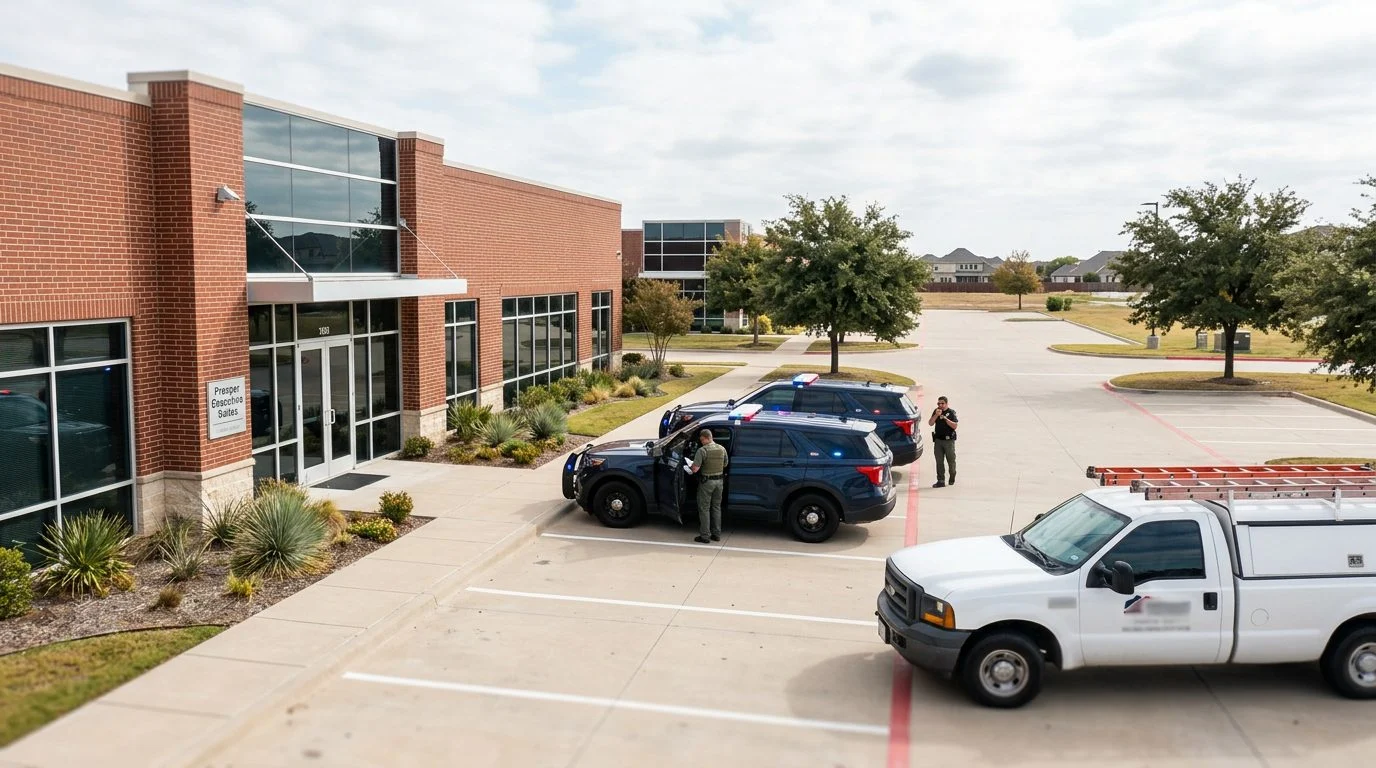
What to say, and not say, if police approach you at work
Do not explain, deny or argue the facts to police, coworkers or the accuser. Tell officers you want to speak with a lawyer first.
A calm, polite request for a lawyer serves you better than an emotional explanation at the scene. Stay composed, and do not argue.
Do not contact the accuser or anyone involved. A protective order can prohibit contact with the applicant or any member of the applicant’s family or household, except through the applicant’s attorney or a person appointed by the court, if the court finds good cause for the prohibition (art. 7B.005). A bond condition can make contact a separate problem (Texas Penal Code § 25.07).
Do not delete texts, emails, call logs or posts. Keep everything as it is, and give it to your lawyer. Do not discuss the accusation with coworkers or clients.
Why an early review by a Texas sex crime defense lawyer matters
An early review lets a criminal defense lawyer look at the paperwork before you make any statement. That review can happen before you decide what to say to anyone.
A lawyer can read the protective order, including each named location and distance. A lawyer can review bond terms and any charging papers, and go through the timeline with you. A lawyer can also handle contact with police, prosecutors and the court, so you do not have to manage those conversations alone.
Barbieri Law Firm, in Frisco, Texas, defends professionals accused of sex crimes and assaultive offenses across Collin County, Dallas-Fort Worth and Texas. Heather Jean Barbieri, Board Certified, Criminal Law — Texas Board of Legal Specialization, leads the firm. Our team supports her work on each case.
No lawyer can predict how any case will end.
Not sure what your next step is?
Talk it through with our team — the first consultation is free, confidential, and carries no obligation.
Next steps if you are reading this after a call, warrant, or protective order
Write down what happened, keep every paper, and speak with a lawyer before you talk with anyone else about the accusation.
- Write down the date, time, names and exact words of each call or visit.
- Keep copies of any order, warrant or paper you were served.
- List anyone who knows about the accusation.
- Tell your lawyer everything, including details that feel unimportant.
- Stay off social media and out of work chats about the matter.
Our online sex crimes defense lawyer page covers those charges in more depth.
A detective’s call or a protective order can leave you feeling alone at work, and you don’t have to face it alone. Barbieri Law Firm offers a free initial consultation that is confidential and carries no obligation to continue. Call (972) 424-1902 or send us your case details.
Frequently asked questions about arrest at work for a sex crime in Texas
Can police arrest me at my office for a sex crime in Texas?
It can happen, and the facts of each case shape how and when. Your lawyer can review what papers exist before you make any statement.
Will my employer be told about the arrest?
That depends on your employer’s policies and on how the case becomes public. No one can predict that answer with certainty.
Should I answer questions if an officer says it is only a conversation?
No. Tell the officer you want to speak with a lawyer before you answer any questions.
Do I need a lawyer if I have not been charged yet?
An early review can help you understand your options before any statement or charge. Waiting can leave you making decisions without the facts.
Attorney responsible for this site: Heather Barbieri, Barbieri Law Firm, Frisco, Texas.
How Barbieri Law Firm Approaches a Workplace Arrest
Review the Paperwork
We will review any warrant, charging document, report or other papers that exist and explain what they mean for your next steps.
Protect Your Rights in Every Conversation
We will advise you on what to say, what to avoid and when to stop talking to police, coworkers or anyone else about the case.
An All-Women Criminal Defense Team
Our team focuses on defending professionals accused of sex crimes and assaultive offenses across Collin County, Dallas-Fort Worth and Texas.
Options Explained Plainly
We will walk you through the evidence and your options so you can make informed decisions.
Before You Speak, Pause
Be careful about what you say to police, supervisors, coworkers or on social media about the arrest. Speak with a lawyer before answering questions about the case, and do not delete messages or post about the matter.
Facts to Gather for Your First Call
Write Down the Timeline
Note when and where the contact happened, who was present and what was said, while the details are still fresh.
Keep Your Messages
Save texts, emails and other communications related to the matter. Do not delete anything.
Note Any Papers You Received
Bring any notices, forms, subpoenas or paperwork from the police, your employer or the court so we can review them together.
Know Your Workplace Obligations
Identify any HR policies or reporting requirements you have been given, and bring copies to your consultation.
Get Clear Answers About Your Arrest. Your First Consultation Is Free.
Related practice areas
- Sex Crimes Defense Lawyer in Prosper
- Sex Crimes Defense Lawyer in Celina
- Sex Crimes Defense Lawyer in Southlake
Request a Consultation
Fill out the short form and we will take it from there.