

Child Sex Crimes Defense | Collin County and Dallas-Fort Worth
When a Child's Account Is Central to the Case, Every Detail Matters
Learn how outcry witnesses, forensic interviews and other testimony evidence fit into a Texas child sex offense case, and how our team reviews them.
By Heather Barbieri · Published November 3, 2026
Many families ask whether a case can rest on a child’s word alone. This guide explains how child sex offenses and child testimony evidence fit together in Texas, offense by offense, so you can see what each charge usually involves.
Which Texas child sex offenses can be proven primarily by the child’s testimony, and which typically require physical or forensic evidence?
Several Texas child sex offenses are built mainly on the child’s account. Others more often involve medical, digital, or other forensic proof.
Indecency with a child is the offense most often built on the child’s account. Contact of this kind can leave no physical mark. Sexual contact is a second-degree felony, and exposure is a third-degree felony.
Sexual assault and aggravated sexual assault work differently. § 22.011 and § 22.021 cover penetration and other contact involving a child. Whether medical, DNA, or injury evidence exists varies with the facts of each case. Under Texas Penal Code § 22.021, aggravated sexual assault is a first-degree felony, and the statute raises the minimum prison term to 25 years when the victim was younger than 10 at the time the offense was committed, or when the victim was younger than 14 at that time and the offense was committed in a manner described by Subsection (a)(2)(A).
Digital offenses form a third group. Sexual performance by a child, possession or promotion of child pornography, and online solicitation of a minor are offenses that can involve devices, files, messages, and account records. Under § 43.25(g), when it becomes necessary to determine whether a child who participated in sexual conduct was younger than 18 years of age, the court or jury may make this determination by any of the following methods, among them: personal inspection of the child; inspection of the photograph or motion picture that shows the child engaging in the sexual performance; oral testimony by a witness to the sexual performance as to the age of the child based on the child’s appearance at the time; or any other method authorized by law or by the rules of evidence at common law. Under the current text of § 43.26(f), amended in 2025, in a prosecution under Subsection (a-1) or (e), the state is not required to prove the identity of the child in the depiction, and there is a rebuttable presumption that the depiction is of an actual child rather than a computer-generated child.
If a child's account sits at the center of your loved one's case, you don't have to sort through it alone, and we're here to talk it through with you. Talk it through with our team — the first consultation is free, confidential, and carries no obligation.

How does a child’s account first enter a Texas child sex crime case?
A child’s account usually enters a case through a first disclosure, often called an outcry. The child usually makes that disclosure to a parent, relative, teacher, or another adult the child trusts.
The adult who hears it is often called the outcry witness. That adult’s account of what the child said is a point the lawyer examines closely. When the disclosure happened, the words the child used, and who heard them first are often reviewed. Those details show how the matter came to light and how it moved from one adult to the next.
Family members may also hear the first version of events secondhand. That account goes into the case file like every other statement.
What is a forensic interview, and how is it used in a child sex crime investigation?
A forensic interview is a structured conversation with a child. It is usually recorded and usually conducted by trained interviewers. Its purpose is to learn what the child says happened, in the child’s own words.
These interviews often take place at a child advocacy center, a child-focused setting where investigators and other professionals may work together. The recording, the interviewer’s notes, and any follow-up questions can become part of the evidence in the case.
The defense reviews how each question was asked, in what order, and how the child answered. Questions that name the act, repeat a suggestion, or follow many earlier sessions are examined closely. A forensic interview is one piece of the record, not the whole case. Other statements, records, and items sit beside it in the file.
How are children’s memories and suggestive questioning weighed in these cases?
A child’s memory can be shaped by repeated questioning, by the wording of questions, and by the time that passes before a disclosure. Courts and lawyers look at how the child was questioned because that review tests the account. Suggestive questioning means questions that lead a child toward an answer, often by naming a detail the child has not yet said.
Cross examination of a child witness is handled with care. The lawyer asks questions in plain words and compares what the child said across different times and different adults. Where accounts differ, the lawyer looks at why, and at what questions came before each answer.
A jury weighs a child’s testimony along with everything else in the record. The way the child was questioned is part of that record.
Why does the other evidence matter when a child’s account is central?
When a child’s account is central, other evidence is usually reviewed beside it. That can include medical records, forensic exam results, phone and account records, school or family records, and witness statements. Whether physical or medical evidence exists in a given case depends on the facts.
Online cases can involve investigators from a federal program. The Office of Juvenile Justice and Delinquency Prevention describes the Internet Crimes Against Children Task Force Program’s role in investigating technology-facilitated child sexual exploitation. The National Center for Missing & Exploited Children explains what counts as child sexual abuse material, which helps explain why device and file records matter.
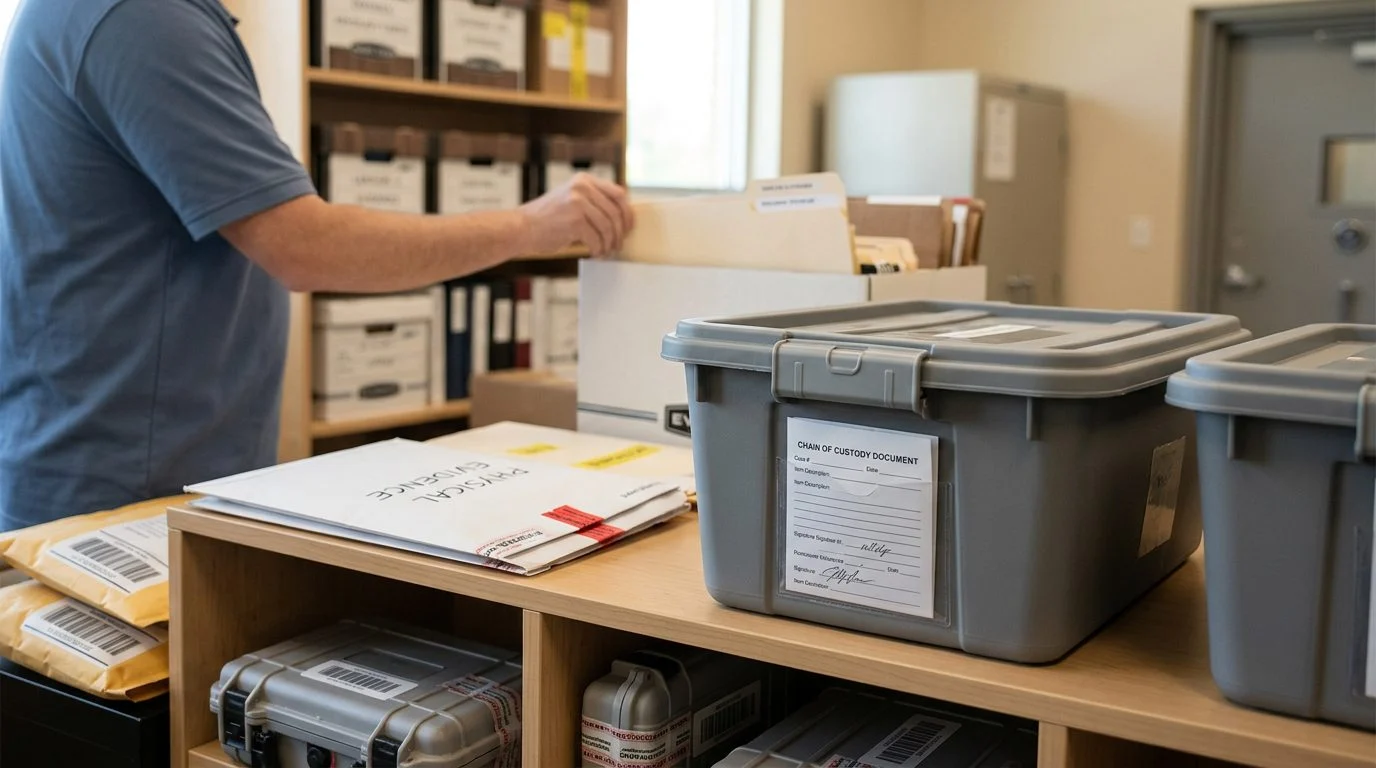
The defense reviews each item of evidence. Chain of custody, the written record of who handled an item and when, matters for physical items and digital files alike.
What should your loved one’s family understand while the case is still being investigated?
If someone you love has been accused, the case may turn on a child’s account. That can leave you unsure what comes next.
Charges, evidence, and procedures are set out in the case file. A criminal defense lawyer reviews that file with the client and explains the options. It helps to keep notes on dates, names, and what each person said, so you can share them clearly with the lawyer.
Quick answers
Evidence of the child’s age
What is an outcry witness?
It is usually the first adult a child tells about the alleged conduct.
Is online solicitation of a minor a felony in Texas?
Yes.
Not sure what your next step is?
Talk it through with our team — the first consultation is free, confidential, and carries no obligation.

Talk with Barbieri Law Firm about your loved one’s case
Barbieri Law Firm is an all-women criminal defense firm in Frisco, Texas. It defends people accused of child sex offenses across Collin County, Dallas-Fort Worth, and Texas.
If your loved one’s case rests on a child’s account, you likely have questions about the evidence and what comes next. Heather Jean Barbieri, Board Certified, Criminal Law — Texas Board of Legal Specialization, leads the firm’s criminal defense work.
Call (972) 424-1902 or send your case details through our contact form. The first consultation is free, confidential, and carries no obligation to continue.
Attorney responsible for this site: Heather Barbieri, Barbieri Law Firm, Frisco, Texas.
How our team approaches child testimony cases
Reviewing the full record
We review recordings, interview notes, reports and medical records to see what was said, when, and by whom.
Examining how the account arose
We look at how the disclosure began, who heard it first, and whether questions or repeated retellings shaped the account.
Protecting your rights at every stage
From the first police contact to trial preparation, we work to keep the process fair and to protect your position.
Clear explanations
We explain the evidence, the charges and your options in plain language so you can make informed decisions.
An allegation is not a conviction
Being accused of a child sex offense is serious, but an accusation alone does not decide a case. Speak with us early so the evidence can be reviewed while it is still fresh.
Types of testimony evidence we examine
Outcry witness testimony
Often the first adult a child tells about the alleged conduct. We examine what the child said, the words used, and the circumstances of the conversation.
Forensic interview recordings
Recorded interviews show how questions were asked and how the child answered. We review the recording in full, including the questioning technique and any gaps.
Corroborating evidence
Texts, messages, school or medical records, and witness statements can support or contradict the account. We identify what exists and what is missing.
Credibility and consistency
We compare statements across time and settings to identify inconsistencies, changes in detail, and influences that may have affected the account.
Talk with Barbieri Law Firm about your case. Your first consultation is free, confidential and carries no obligation to continue.
Request a Consultation
Fill out the short form and we will take it from there.