


Child Abuse Allegations | Collin County, Texas
Accused of Child Abuse in the Middle of a Divorce? Get a Criminal Defense Lawyer in Your Corner Early
A custody fight can bring criminal allegations to light quickly, often before you have had time to respond. Barbieri Law Firm, based in Frisco, defends the criminal side of these cases.
By Heather Barbieri · Published November 19, 2026
Being accused of harming a child during a divorce or custody fight is frightening. A criminal case, a CPS investigation and a family court case can all start at once.
The short answer: call a criminal defense lawyer early, before you give any statement or sign any safety plan. What you say in one case can matter in the others.
What Happens When an Accusation Comes Up During a Divorce?
An accusation like this usually opens several tracks at once, and each track has its own rules.
- The criminal track. Police may investigate, and the case may lead to an arrest, charges and bond conditions.
- The CPS track. Child welfare investigators make an ongoing child-safety assessment, as the CPS investigation handbook describes.
- The family court track. Custody, possession and parenting-time orders may be filed or changed while the criminal case is open.
The accusation is serious. It is also an allegation that must be tested with evidence, and that testing starts with the records you can gather now.
You do not have to sort out every question alone before you call. A lawyer can review what has been filed, check each track against the others and explain your options. Start a written list of dates, messages and filings. Bring it to your first meeting.
If you were accused during a divorce or custody fight, the next choices about statements, bond and your children are close, and you do not have to face them alone. Talk it through with our team — the first consultation is free, confidential, and carries no obligation.
How Serious Is a Child Sex Charge Under Texas Law?
The charge level and punishment range depend on the statute, the child’s age and the conduct alleged.
- Indecency with a child. This applies to a child younger than 17. Sexual contact is a second-degree felony, and certain exposure conduct is a third-degree felony under Penal Code § 21.11.
- Aggravated sexual assault. This is a first-degree felony. The minimum term rises to 25 years if the child is younger than 10, or younger than 14 in certain circumstances, under Penal Code § 22.021.
- It is a first-degree felony, under Penal Code § 21.02.
Under Penal Code § 12.32, a first-degree felony is punishable by life, or by any term of not less than 5 nor more than 99 years, and a fine of up to $10,000 may be added. Some first-degree felonies carry a higher minimum term under other Penal Code sections, so the offense charged determines the exposure.
Registration is a separate question. A reportable conviction includes deferred adjudication, even while an appeal is pending, under Code of Criminal Procedure art. 62.001. Whether registration applies depends on the offense and the outcome, so raise it early.
How Is an Accusation Made in a Divorce Tested?
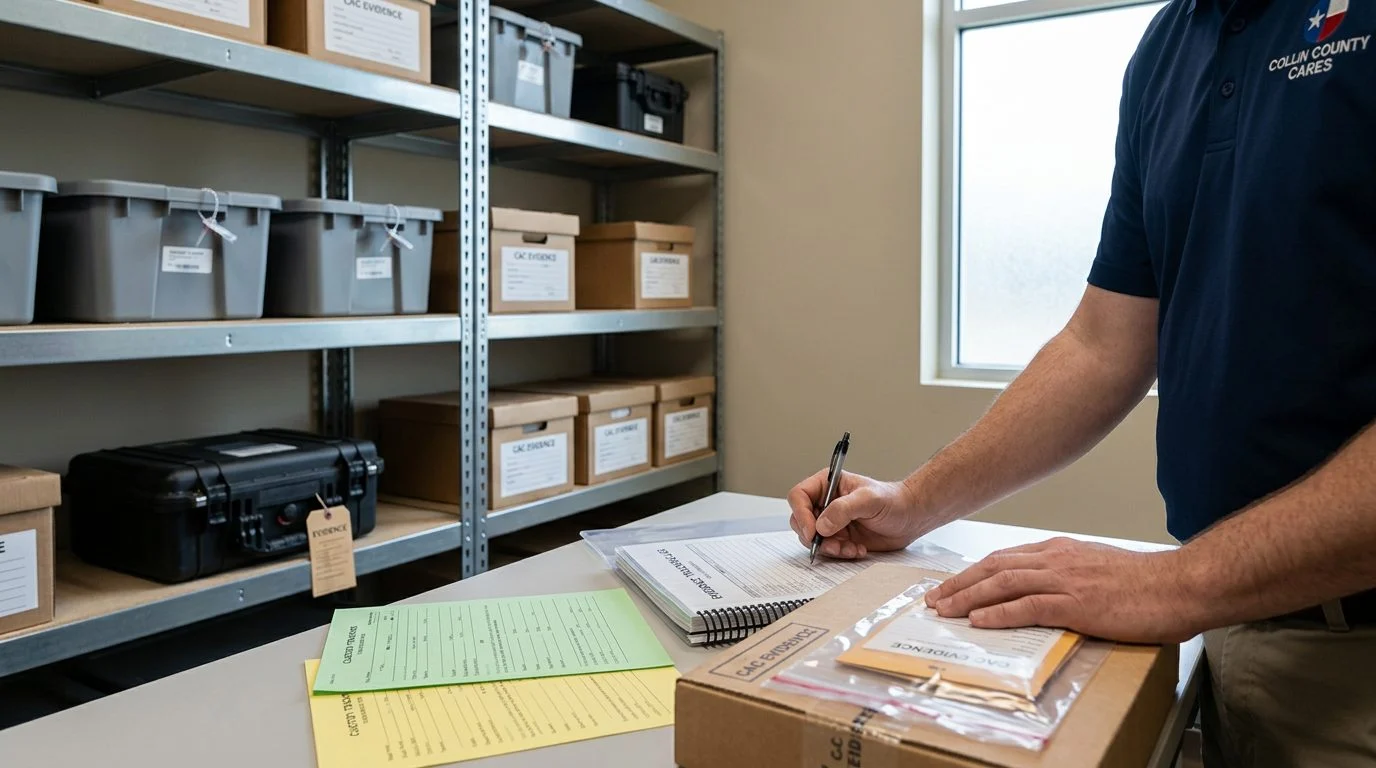
A careful defense tests the timeline, the exact words of each statement and the evidence that exists.
- Timing. Who first heard the accusation, when they heard it, and what was happening in the divorce or custody case at that time.
- Changes. Whether the account changed over time, and how each version was first recorded.
- Child statements to adults. Under Code of Criminal Procedure art. 38.072, a child’s statement about certain listed offenses is not excluded by the hearsay rule if it was made to the first person, 18 years of age or older, other than the defendant, to whom the child told about the offense; the party offering it gives the adverse party the witness’s name and a written summary at least 14 days before the proceeding begins; the court finds in a hearing outside the jury’s presence that the statement is reliable; and the child testifies or is available to testify. Notice is due on or before the 14th day before the proceeding.
- Recorded interviews. Under art. 38.071, a recording of a child’s oral statement made before an indictment is returned or a complaint is filed is admissible if the court determines that the factual issues of identity or actual occurrence were fully and fairly inquired into in a detached manner by a neutral individual experienced in child abuse cases who sought to find the truth.
- Interview quality. Professional standards for child forensic interviews include avoiding repeated questioning and using open-ended questions, according to OJJDP’s child forensic interview publication.
- Child sexual conduct material. Under art. 39.15, a court must deny a defense request for copies if the state, at a facility under its control, provides ample opportunity to inspect, view, and examine the material. Review may happen at a state facility.
- Police questions. Whether a statement given during custodial questioning can be used turns on whether police first gave Miranda warnings, under Dickerson v. United States.
Collect school, daycare and medical records, plus texts, emails, custody filings and calendars, before you meet with your lawyer.
What Are the Steps in a Texas Child Sex Offense Case?
A case usually moves from intake to bond and protective-order work, then evidence review, pretrial work and trial or resolution.
- Intake. We review the arrest report, charging papers, bond conditions and any protective order.
- Early protection. We check contact limits with your children and any CPS or family court deadlines.
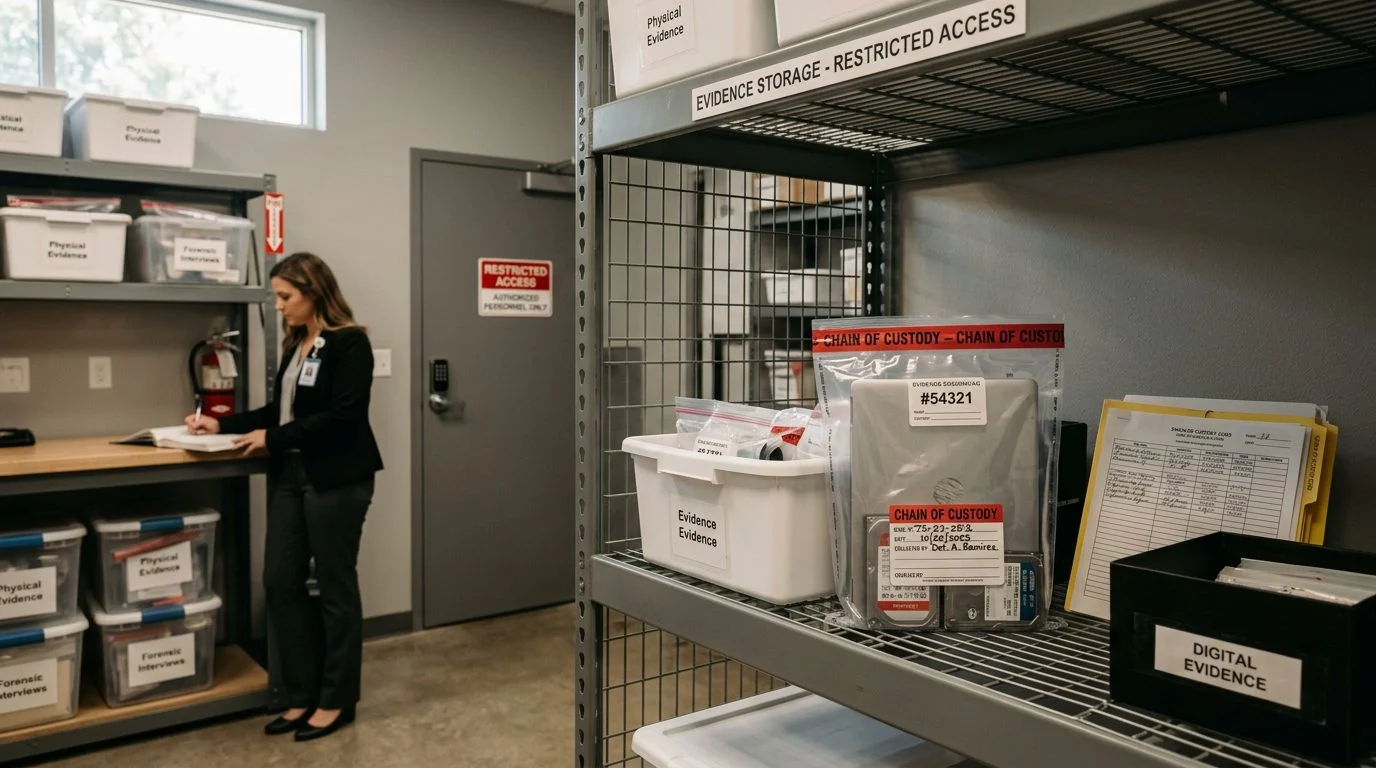
- Evidence review. We obtain the prosecution’s discovery, including recordings and reports, and review every item.
- Pretrial work. We look at motions about statements and evidence. We discuss any offer with you before anything is agreed.
- Trial or resolution. The court’s schedule sets the pace. You decide how to proceed after you have our advice.
Each step is reviewed against the divorce and CPS tracks, so no decision in one track is made without the others in view.
How Do Bond Conditions and CPS Contact Affect Your Children?
Bond conditions and protective orders can limit your contact with your children while the case is open. Breaking one can be its own crime.
Under Penal Code § 25.07, a person commits an offense if, in violation of a bond condition set in a family violence, sexual assault or abuse case that relates to the safety of a victim or the community, the person knowingly or intentionally does a listed act, such as communicating a threat, going to or near a specified place, or possessing a firearm. That includes going to or near, as specifically described in the order or condition of bond, a child care facility, residence or school where a protected child normally lives or attends. The base offense is a Class A misdemeanor. It becomes a third-degree felony when the violation includes committing an assault or stalking.
Under Family Code § 261.3027, the department must tell you orally and in writing that you may make an audio or video recording of the interview but may not record it in any other manner, that any recording may be subject to subpoena under a court order, and that you may request and receive a copy of its current recording policy.
Every filing and statement in the divorce, custody or CPS track should be reviewed against the criminal case first. No lawyer can promise how a court will rule on custody or parenting time.
Why Choose Barbieri Law Firm as Your Collin County Child Sex Crimes Defense Lawyer?
Barbieri Law Firm is an all-women criminal defense firm based in Frisco, Texas. It defends professionals accused of sex crimes and assaultive offenses across Collin County, Dallas-Fort Worth and Texas.
- Credential. Heather Jean Barbieri, Board Certified, Criminal Law — Texas Board of Legal Specialization.
- Lawyers. The firm’s lawyers are Heather Barbieri and Carrie Thomas.
- Review. We review every part of the accusation and the evidence, including the timeline and each statement.
- Explanation. We explain your options in plain language and tell you what each choice may mean.
- Support. Our team handles scheduling, records requests and follow-up, so you always know how to reach us.
- Consultation. The initial consultation is free, confidential and without obligation to continue.
Not sure what your next step is?
Talk it through with our team — the first consultation is free, confidential, and carries no obligation.
Questions You May Be Asking Right Now
Most people in this spot ask about prison time, publicity and talking to investigators. Short answers follow.
Will I go to prison?
No lawyer can promise how a case will end. The exact charge, the child’s age and the conduct alleged set the sentencing range, so the consultation starts with the charge.
Will my name and mugshot be in the news?
Court records can be public. We will talk through publicity risks with you before you say anything publicly.
Should I talk to CPS or police first?
Talk to a lawyer before you give a statement or sign a safety plan. As a defendant in a criminal matter, you have the right to consult in private with counsel sufficiently in advance of a proceeding to allow adequate preparation for the proceeding, under Code of Criminal Procedure art. 1.051.
Can my divorce lawyer handle the criminal case?
A child sex charge is a separate criminal case. Your family lawyer and criminal defense lawyer should coordinate, so no filing or statement in one case hurts the other.
Do you handle a Collin County child abuse case?
Yes. Barbieri Law Firm defends people accused of child sex crimes in Collin County.
Talk to Barbieri Law Firm About Your Case
If you were accused during a divorce or custody fight, the next choices about statements, bond and time with your children are close. Call (972) 424-1902 to set up your consultation, or send your case details through the contact form.
Attorney responsible for this site: Heather Barbieri, Barbieri Law Firm, Frisco, Texas.
How our team approaches these cases
A close look at the allegation
We review the accusation, the reports and the timeline, then explain the charge and your options in plain language.
Coordinated with your family case
We help you think through how the criminal case may affect your divorce, custody and visitation issues.
Careful communication
What you say to investigators, family members and others can shape the case. We talk through those risks before you say anything.
Discretion for your family
Allegations involving children are painful. We treat you and your family with respect and discretion.
Before you discuss the allegation
Talk with a criminal defense lawyer before you give a statement or post about the allegation.
What to bring to your consultation
The exact charge
The specific statute, the conduct alleged and the child's age all shape what the State must prove and the possible penalties.
Records and messages
Texts, emails, school or medical records and any recordings can matter. Bring what you already have.
Orders and court papers
Bring any protective orders, bond conditions and hearing notices so we can review what applies to you now.
Your divorce or custody case
Share your temporary orders and hearing dates so we can discuss how the criminal case may intersect with your family case.
The initial consultation is free, confidential and carries no obligation to continue.
Related practice areas
Request a Consultation
Fill out the short form and we will take it from there.