

Child Sex Crimes Defense | Frisco, Texas
A CAC Interview Is Recorded. Your Defense Starts With Reviewing It.
Barbieri Law Firm reviews the Children's Advocacy Center interview, the recording, and the case file to explain the options for people accused of child sex crimes in Collin County, Dallas-Fort Worth and across Texas.
By Heather Barbieri · Published October 22, 2026
Why the Child Advocacy Center Interview Often Sits at the Center of a Texas Case
In many Texas child sex crime cases, the central evidence is a recorded forensic interview of the child, usually done at a child advocacy center (CAC). That interview often shapes the rest of the case, so it deserves close review from the start.
A CAC is a child-focused facility. Children’s Advocacy Centers of Texas says Texas CACs conduct and coordinate forensic interviews as part of a team response to child abuse investigations. The interview takes place in a setting designed to help children share their accounts.
Investigators, prosecutors and child protective workers can all rely on that recording. It can guide decisions about whether to file charges and how the state describes what happened. That is why defense counsel studies it closely.
The stakes are high. Indecency with a child by sexual contact is a second-degree felony under Texas Penal Code § 21.11. Under Texas law, aggravated sexual assault is a felony of the first degree. For the wider Texas framework, see our child sex crimes defense guide.
If a recorded child advocacy center interview is now part of a case against you or someone you love, we can review that recording with you in a free, confidential initial consultation with no obligation to continue. Talk it through with our team — the first consultation is free, confidential, and carries no obligation.

What Is Typically Recorded in a CAC Forensic Interview
Often, a CAC interview is recorded on video and audio, and the recording becomes part of the case file. It captures the child’s words, tone, pauses and body language. It also captures the interviewer’s questions, which matter as much as the answers.
Interviews usually follow a structure. The interviewer builds rapport first, then introduces the topic before any talk of the alleged conduct. Open-ended prompts, which let the child explain in their own words, are the recognized approach. The OJJDP child abuse investigations guide describes professional standards that include avoiding repeated questioning and using open-ended questions.
In some settings, investigators watch from another room. Their notes and comments may also appear in the file.
A recording captures one session. It doesn’t show what the child heard before the interview, who the child spoke with at home, or what happened afterward. So defense counsel reviews the whole interview, not a short clip.
Your Right to Review the Recording Through Discovery
Defense counsel generally gets access to the recording and the state’s investigative file through discovery. Discovery is the process where the prosecution shares the evidence it holds.
This matters because a summary isn’t the recording. A police report or prosecutor’s summary may describe what the child said in a few lines. The recording shows the full exchange, and counsel compares the two.
Don’t assume the state has shared everything. Counsel tracks what has been produced, what has been requested and what is still missing. Early case information often first comes up at the magistrate stage of an arrest, so it helps to know what was said at that point.
How Defense Counsel Examines the Interviewer’s Technique
Defense counsel examines how the interviewer asked questions, not only what the child said. The wording of a question can change how an answer should be read. Open questions let the child speak freely. Questions that suggest an answer can steer a child toward a particular account.
Next is protocol. Counsel asks whether the interviewer followed the center’s recognized structure and training. Any departures from that structure often show up on the recording itself.
Pressure and repetition matter too. Counsel checks whether questions were repeated, whether the child was told what others had said, and how the interviewer reacted to hesitation or a denial. A child who says “I don’t know” and then hears the same question again may answer differently. Counsel looks for these moments.
Timing and the Sequence of the Child’s Statements
Defense counsel builds a timeline. It starts with when the alleged events supposedly happened. Then it adds when the child first disclosed anything and when the forensic interview took place.
Prior statements matter. A child may have told a parent, relative, teacher, school counselor or medical provider something before the interview. Counsel compares those earlier accounts with the recording to see where they match and where they differ.
Details can also shift between the first disclosure, the interview and later meetings. Counsel looks at who recorded each version and how each one was documented.
Texas law sets its own rules for when a child’s statement about abuse can be repeated in court, and those rules differ by setting. Timing also matters to the charge itself. Under Texas Penal Code § 21.02, jurors need not agree on which specific acts happened or their exact dates. They must agree that two or more acts occurred during a period of 30 or more days.
Documentation: Notes, Chain of Custody, and What the File Should Contain
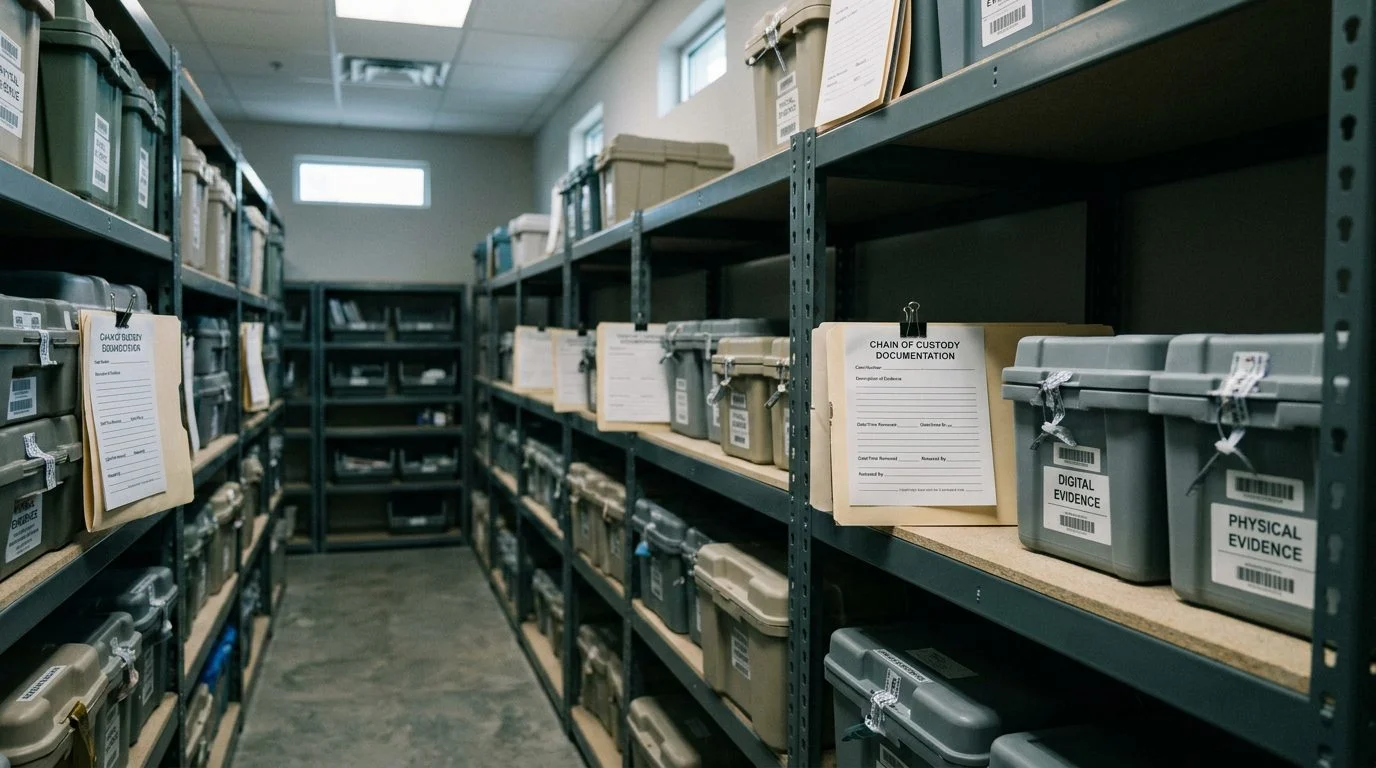
Chain of custody shows who had the file and when. Counsel asks for the original recording, any copies, and how the file was stored and accessed.
The file should also include intake and referral paperwork. These show how the case reached the center and what the interviewer knew before the interview began. If the interviewer had the allegations in advance, that is a question for counsel.
Other agencies create records too. The Texas DFPS CPS handbook describes how CPS investigations proceed, so CPS records are part of the picture. Police reports may describe a child’s statements differently than the recording does.
Watch for gaps. Missing recordings, unexplained pauses and references to material that was never produced are all questions to raise with the prosecutor.
Not sure what your next step is?
Talk it through with our team — the first consultation is free, confidential, and carries no obligation.
How the Interview Fits the State’s Overall Case
The interview is one piece of the state’s case. Prosecutors may pair it with medical findings, witness accounts, digital evidence or other records. Defense counsel tests each piece alone and then all of them together.
Other alleged conduct raises separate questions about what evidence may be offered at trial. Counsel also asks whether a particular statement or recording may be used, and on what legal basis.
Some Texas defenses turn on the facts. Texas Penal Code § 21.11 includes an affirmative defense for an actor who was not more than three years older than the victim and of the opposite sex, did not use duress, force, or a threat, and at the time of the offense either was not required to register for life as a sex offender or had no reportable conviction or adjudication under Chapter 62 for an offense under § 21.11. Whether the interview helps or hurts depends on the facts of each case.
Preparing for the Review of Your Own Case
Before a consultation, write down the dates of any disclosure. List the people the child spoke with. Keep every notice or paper from police, CPS or the prosecutor’s office.
Bring those documents with you. Avoid creating new written messages about the child’s statements, such as texts or social media posts, because those could be used later.
What should I bring to a consultation about a CAC interview?
Bring the dates of any disclosure, the names of people the child spoke with, and every notice from police, CPS or the prosecutor.
Can the defense see the recording?
Defense counsel generally gets access through discovery. Counsel then checks whether the file is complete.
Is a forensic interview the same as police questioning?
Usually not. A trained forensic interviewer typically leads the interview, not a police officer.
Does a CAC interview mean charges will follow?
A CAC interview is one piece of an investigation. Charging decisions depend on the whole investigation.

Talk With Barbieri Law Firm About a CAC Interview in Your Case
If a recorded child advocacy center interview is now part of an investigation or charge you’re facing, Barbieri Law Firm can review that recording with you. The firm defends clients across Collin County, Dallas-Fort Worth and Texas. Call (972) 424-1902 or send your case details through our contact page to schedule a free, confidential initial consultation with no obligation to continue.
Every case turns on its own facts, and no lawyer can say in advance how one will end.
Attorney responsible for this site: Heather Barbieri, Barbieri Law Firm, Frisco, Texas.
What we look at after a CAC interview
The full recording
We review the video or audio of the forensic interview from start to finish, including questions asked, how they were phrased, and how long the interview ran.
The interview protocol
We compare how the interview was conducted with the accepted protocol and identify any steps that were skipped or handled differently.
Prior statements and timing
We trace when each disclosure was first made, to whom, and how the account changed over time.
Every notice and report
We gather the police, CPS and prosecutor documents so the file is complete before we discuss options with you.
Before you speak with anyone
Do not discuss the interview, the allegation or the people involved with the child, family members, school staff or others. Save any notices you received and write down what you remember while it is fresh. Bring these to your first meeting with our team.
How we approach your case
Confidential first step
Your initial consultation is free, confidential and comes with no obligation to continue. We listen first and explain what we need to review.
Case-by-case review
Every CAC interview differs. We look at the recording, the records and the timeline before recommending a path forward.
Clear explanations
We explain what the evidence shows, what it does not show, and the choices available to you at each stage of the case.
Attorneys who focus on criminal defense
Our attorneys focus on defending professionals and families accused of sex crimes and assaultive offenses.
Talk with Barbieri Law Firm about your CAC interview
Related practice areas
Request a Consultation
Fill out the short form and we will take it from there.