

Sex Crimes Defense | Frisco, Texas
Public Indecency Charges in Texas: Lewdness vs. Exposure
Public lewdness and indecent exposure are separate charges with different elements, and the difference can shape your defense. Barbieri Law Firm reviews the facts of your case and explains your options.
By Heather Barbieri · Published October 23, 2026
What is the charge for public indecency in Texas? Everyday language about public sexual conduct can be imprecise, so the exact name of the charge matters. Both are sexual offenses in the Texas Penal Code. This guide explains each one in plain terms, along with the penalties and the next steps.
Short answer: what “public indecency” means in Texas
Public indecency is a general phrase, not the name of an offense. Public lewdness and indecent exposure are separate offenses under the Texas Penal Code, each defined in its own section. Both sit in Chapter 21 of the Penal Code, which covers sexual offenses.
The everyday label does not decide the case. The exact statute named on the citation, complaint, or charging papers matters most. Read that line first. It tells you which elements the state must prove.
If the paperwork names a different statute, the analysis changes. A charge involving a child falls under another section entirely. That difference is covered below.
If a public indecency charge has landed on you or someone you love, you don't have to sort out the terms alone. Our team can talk it through with you. Talk it through with our team — the first consultation is free, confidential, and carries no obligation.
Public lewdness under Penal Code 21.07
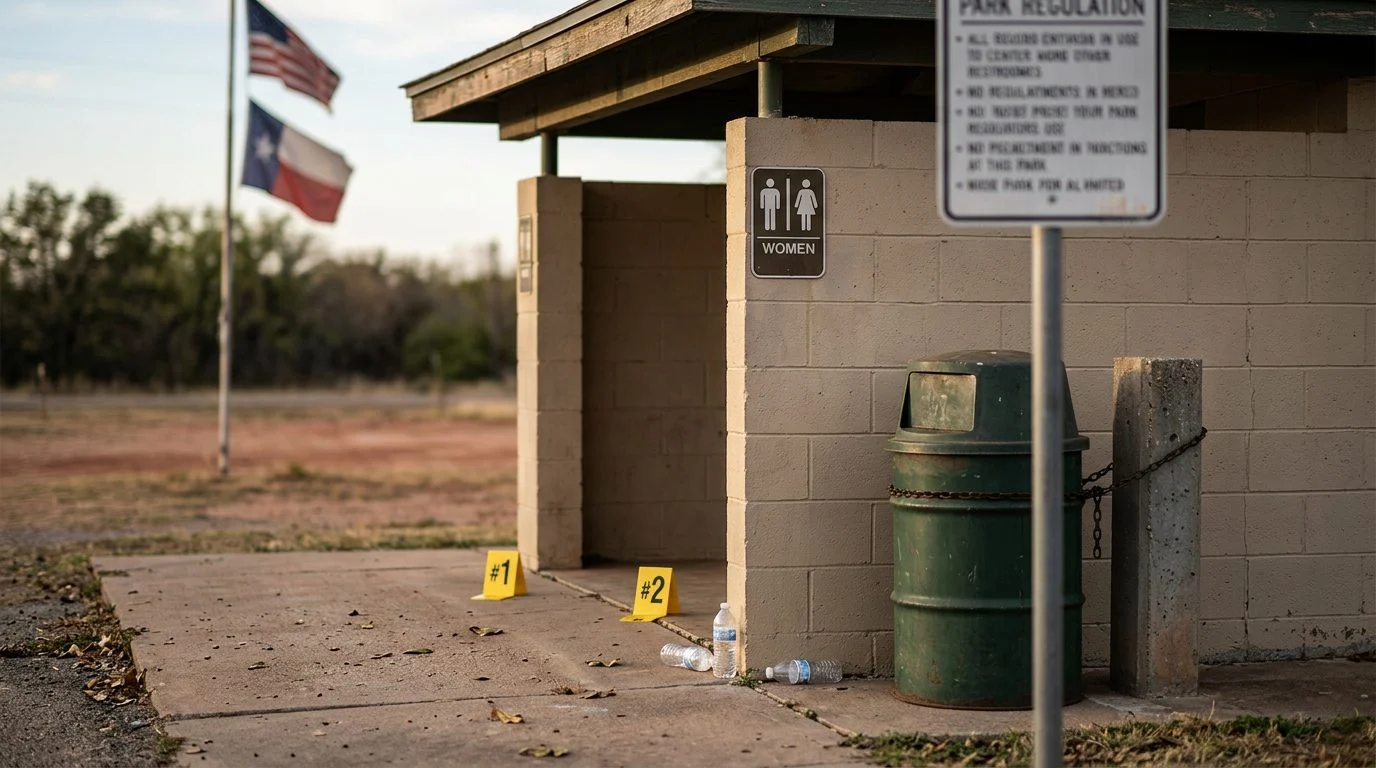
Public lewdness covers certain sexual acts in a public place. Under § 21.07, a person commits the offense if they knowingly engage in sexual intercourse, deviate sexual intercourse, or sexual contact in a public place. If the act happens somewhere other than a public place, the person must be reckless about whether another person is present who will be offended or alarmed.
“Sexual contact” has a specific meaning. The definitions in § 21.01 describe it as touching the anus, breast, or genitals of another person, with intent to arouse or gratify sexual desire.
Two questions drive these cases. Where did the act happen? Did the person know others could see it? The mental state matters. Knowing conduct and reckless conduct are different elements, and each one needs its own review.
Public lewdness is a Class A misdemeanor under § 21.07(b). The statute makes it a third-degree felony only if the actor is civilly committed as a sexually violent predator under Chapter 841 of the Health and Safety Code.
Indecent exposure under Penal Code 21.08
Indecent exposure means exposing the anus or genitals with a specific purpose. Under Texas Penal Code section 21.08, a person commits an offense if he exposes his anus or any part of his genitals with intent to arouse or gratify the sexual desire of any person, and he is reckless about whether another is present who will be offended or alarmed by his act. The person must also be reckless about whether another person is present who will be offended or alarmed.
Intent is a key element. The defense reviews what the report says about it, and what the report leaves out.
Unlike public lewdness, this statute does not turn on a public place. It turns on the exposure, the intent, and awareness that someone might see. A review usually asks what the report says was actually seen, who saw it, and how the observation was described.
Penalties: first offense and repeat offense
A first indecent exposure conviction is a Class B misdemeanor. Under § 12.22, a Class B misdemeanor carries a fine of up to $2,000, jail time of up to 180 days, or both.
The offense goes up after prior convictions. Under § 21.08(b), it is a Class A misdemeanor if the defendant was previously convicted one time under that section. It is a state jail felony if the defendant was previously convicted two or more times. It is a third-degree felony if the actor is civilly committed as a sexually violent predator.
Public lewdness is a Class A misdemeanor under § 21.07(b), as noted above. These are the usual penalty ranges: the offense is a Class A misdemeanor, except that it is a felony of the third degree if the actor is civilly committed as a sexually violent predator under Chapter 841, Health and Safety Code. The actual sentence depends on the facts and on the court.
How public indecency differs from indecency with a child
Indecency with a child is a separate offense under § 21.11. It applies when the other person is a child younger than 17. The penalties are far heavier than for public lewdness or indecent exposure.
Under Texas Penal Code § 21.11, an offense under Subsection (a)(1), which covers engaging in sexual contact with a child younger than 17 or causing the child to engage in sexual contact, is a felony of the second degree. With intent to arouse or gratify sexual desire, exposing one’s own anus or genitals while knowing a child is present, or causing a child to expose the child’s anus or genitals, is a felony of the third degree.
The statute also lists affirmative defenses. Those conditions are fact-specific, so they need a close review.
Under Texas Penal Code § 21.11, an offense under Subsection (a)(1) is a felony of the second degree and an offense under Subsection (a)(2) is a felony of the third degree. The paperwork decides which section applies, so read it closely.
What follows after a public indecency charge
The early steps usually include an arrest or citation, a bond decision, and the prosecutor’s review of the case. Timing varies from case to case.
A defense review usually looks at the location, who observed the conduct, what they actually saw, the mental state the statute requires, and how the report was written.
Registration questions come up often. Whether registration applies depends on the offense and history. Under the Code of Criminal Procedure art. 62.001 definitions, a second violation of § 21.08 is listed unless it results in deferred adjudication. The Texas DPS registration program covers registration and public access to registry information.
Records can follow you beyond the case. For details on how Texas criminal history records are handled, see the DPS criminal history FAQ. Those records can affect criminal-history checks for employment or professional licensing.
Not sure what your next step is?
Talk it through with our team — the first consultation is free, confidential, and carries no obligation.
Talking with a Texas criminal defense lawyer about your situation
A public indecency charge is hard to read alone. You may be reading this for yourself. You may be reading it for a spouse, a child, or a friend. Either way, you’re facing unfamiliar terms and a process that moves quickly.
Is public indecency a crime in Texas?
Public indecency is not one named offense. Public lewdness and indecent exposure are both crimes under the Penal Code.
Is indecent exposure a felony in Texas?
A first conviction is a Class B misdemeanor. It is a Class A misdemeanor if the defendant has been previously convicted one time of this offense, a state jail felony if previously convicted two or more times, and a third-degree felony if the actor is civilly committed as a sexually violent predator under Chapter 841, Health and Safety Code.
Does a public lewdness charge mean sex offender registration?
Registration depends on the offense and the person’s history. Read the exact statute and the paperwork before drawing conclusions.
Barbieri Law Firm offers a free initial consultation. It is confidential and carries no obligation to continue. You can contact our office here or call (972) 424-1902.
Attorney responsible for this site: Heather Barbieri, Barbieri Law Firm, Frisco, Texas.
How We Approach a Public Indecency Charge
Review the charging language
We compare the specific statute cited in your charge with the facts alleged, because lewdness and exposure require different proof.
Examine the location and the evidence
We look at where the alleged conduct occurred, who observed it, what was seen or recorded, and how reliable that evidence is.
Account for your record
We review any prior history, since prior convictions can change how a charge is classified and what penalties may apply.
Explain your options clearly
We walk you through the possible paths forward in plain language so you can make informed decisions about your case.
Important: A Charge Is Not a Conviction
Public lewdness and indecent exposure are often charged after a brief encounter or a complaint from a bystander. Statements made to police, online messages and phone records can all become evidence. Talk with a lawyer before you answer questions or sign anything.
Questions That Shape the Defense
What did the State have to prove?
Lewdness and exposure involve different intent requirements and conduct, so the charging language is a starting point for the review.
Where did it happen?
Whether the conduct occurred in a public place, a semi-private setting or a private residence can affect the analysis.
Who saw it, and how?
Witness accounts, surveillance video and phone records are examined for accuracy, visibility and consistency.
What is your history?
Prior convictions can raise the classification of a charge, and collateral consequences can extend beyond the case itself.
Talk With Barbieri Law Firm About Your Charge
Related practice areas
- What Happens After a Child Sex Crime Charge in Texas: Arrest, Bond, Indictment and Trial, Explained
- Can minors be charged with indecent exposure?
- Can a Defense Attorney Contact a Victim in Texas?
Request a Consultation
Fill out the short form and we will take it from there.