

Collin County Criminal Defense | Frisco, Texas
Understanding the Timeline of a Child Sexual Abuse Case in Collin County
A plain-language guide to the stages a case may move through, the court dates you may face, and the questions that shape how long each step takes.
By Heather Barbieri · Published November 11, 2026
If someone you love has been charged with a child sexual abuse offense in Collin County, you probably want to know how long this will take. The short answer is that no single number fits every case. The length turns on the facts, the specific charge, and how each stage of the court process moves.
This page walks through the stages a Texas criminal case usually moves through, what sets the pace, and which dates are worth writing down early.
How long does a child sexual abuse case take in Collin County?
No single answer fits every case. The length turns on the facts, the charge, and how each stage moves. A timeline is not a promise, and no lawyer can predict how long a particular case will run. Think of the stages below as a map of the road, not a fixed schedule.
Two tracks can run at the same time. The criminal case moves through police, prosecutors, and the courts. If a child-welfare investigation is also open, the Texas Department of Family and Protective Services runs it separately.
Knowing the stages helps you ask better questions. The first stage is the investigation, which the next section covers.
If someone you love is facing a child sexual abuse charge in Collin County, you don't have to face the waiting and the questions alone, so reach out for a free, confidential initial consultation with no obligation. Talk it through with our team — the first consultation is free, confidential, and carries no obligation.

What happens first: the investigation and first contact?
A case usually begins with a report, an investigation, and interviews. That work can start well before anyone files a charge.
Families often learn about it in pieces. You may hear of police contact, a notice to appear, or a warrant. The gap between a report and a charge can be long, and it is often hidden from the family.
Outcomes also vary. Travis County’s monthly sexual assault report lists cases as accepted, declined, referred, or still under investigation. That shows the range of paths a report can take, though those Travis County figures are not about Collin County cases.
A risky habit is sharing case details with friends, coworkers, or on social media. Anything said outside a lawyer’s office can be repeated later. Keep the details close, and talk them through with counsel.
Arrest, magistration, and bond: the first court step
After an arrest, the accused usually appears before a magistrate.
Bond conditions shape daily life. They can limit contact with children, affect where your loved one may live, and set rules about who the accused may talk to about the case. After an arrest for certain offenses, including sexual assault and family violence, a magistrate may issue an order for emergency protection. The magistrate may include a condition in the order for emergency protection that, if the magistrate finds good cause, prohibits communicating with a person protected under the order in any manner except through the party’s attorney or a person appointed by the court.
Breaking a bond term is its own problem.
Write down the court, the cause number, every bond term, and each date given by the court or jail. Keep them in one folder. A missed check-in or a message to a protected person can create a new problem.
Grand jury, indictment, and arraignment: when the case formally starts in court
In many felony cases, a grand jury decides whether to return an indictment. Once that happens, the case is formally in court.
Texas law says an indictment is presented when a grand jury has acted on it and the court has received it. That date matters, because the limitation rules below depend on when a charge is filed.
The charge also shapes the case. Penalties differ by offense. Continuous sexual abuse of a young child is a first-degree felony, punishable by life or by 25 to 99 years (Penal Code § 21.02).
Discovery, pretrial motions, and forensic evidence: where the time often goes
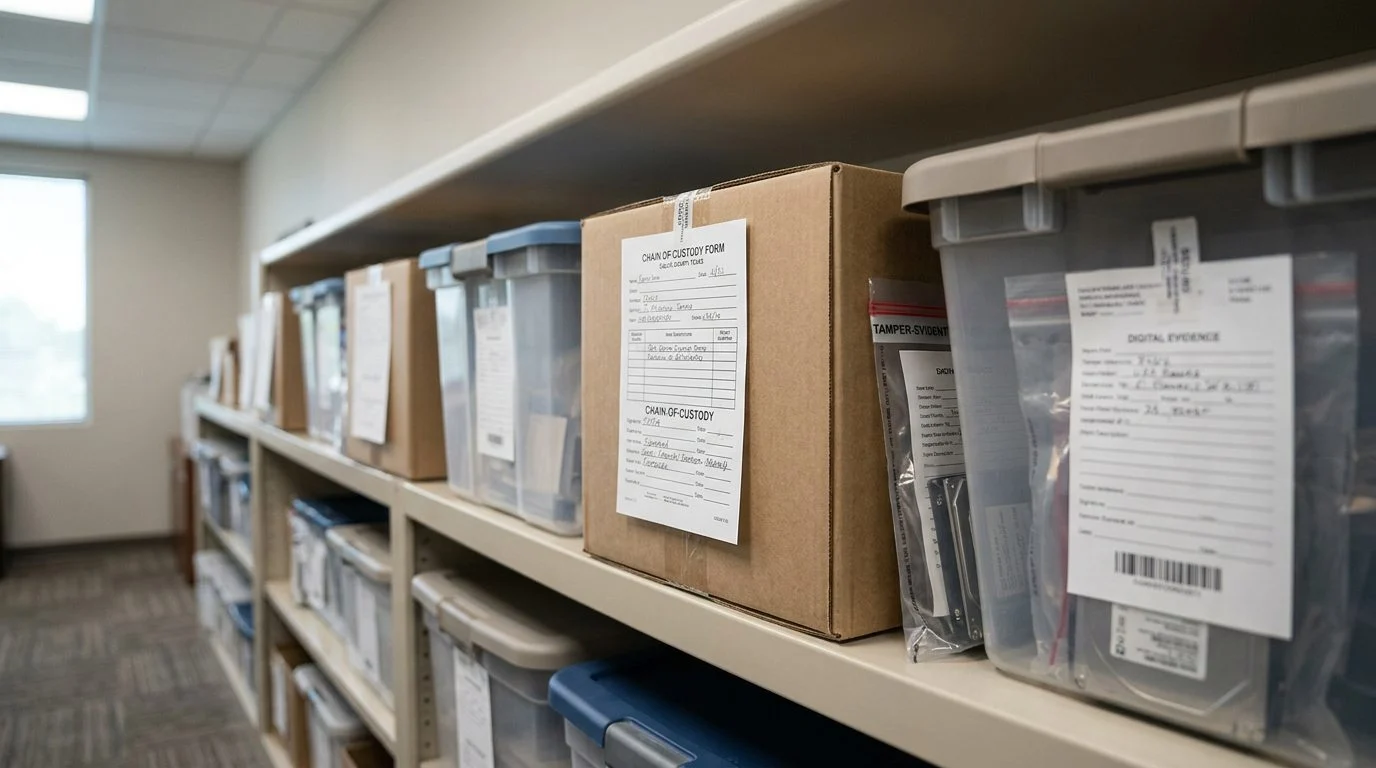
Much of the time in a pending case goes to evidence. Discovery is the exchange of police reports, recordings, interview records, and other evidence between the prosecution and the defense. Each side reviews what it receives, and that review takes time.
Pretrial motions ask the judge to rule on issues before trial, such as what evidence can be used. Hearings on those motions often add steps before a trial date is set.
Forensic interviews, medical examinations, and digital evidence such as phones and computers each need careful review. Lab work and records requests add time too.
Continuous sexual abuse adds a special layer. If a jury decides the case, its members must agree unanimously that the defendant, during a period of 30 or more days, committed two or more acts of sexual abuse. They need not agree on each act or its exact date (Penal Code § 21.02). The Texas District and County Attorneys Association’s article on Jessica’s Law explains the offense’s elements and covered acts.
What can make a Collin County case move faster or slower
The number of counts, the amount of evidence, the number of witnesses, and court calendars drive the pace. A case with many counts or many witnesses usually needs more preparation time than a narrow one. If the matter involves more than one agency or county, coordination can add time.
Plea talks or a dismissal can shorten a case or lengthen it.
Each step waits on the one before it, so one delay can ripple forward. Court calendars are set by the court, not by the family. A family can ask what comes next, but a date can move. Your loved one’s lawyer tracks each date and each delay, and that tracking helps keep the case organized.
Not sure what your next step is?
Talk it through with our team — the first consultation is free, confidential, and carries no obligation.
Time limits: how long Texas can wait to file charges
Texas sets time limits for filing charges.
Penal Code § 21.02 requires that, at the time of each act of sexual abuse, the actor is 17 years of age or older and the victim is a child younger than 14 years of age or a disabled individual, and that two or more acts of sexual abuse occur during a period that is 30 or more days in duration.
Some time does not count. Time the accused spends outside Texas is not counted, and neither is time while an indictment is pending (Code of Criminal Procedure art. 12.05). Which rule fits turns on the specific offense, so bring the charge and key dates to your consultation.

What to do while the case is pending, and how to reach Barbieri Law Firm
Keep court papers in one place, follow bond terms exactly, and talk about the case only with counsel. Keep a simple log of each hearing date and who attended. Avoid posting about the case online.
Barbieri Law Firm is an all-women criminal defense firm in Frisco, Texas. It defends people accused of sex crimes and related offenses across Collin County, Dallas-Fort Worth and Texas. Its free initial consultation is confidential and carries no obligation to continue. Call (972) 424-1902 or send case details through the contact page.
How long does a child sexual abuse case take in Texas?
No single length fits every case. The pace turns on the charge, the evidence, and the court calendar.
Is there a time limit for child sexual abuse charges in Texas?
The right period turns on the specific offense.
What is a magistration hearing?
It is the first court appearance after an arrest, where a magistrate tells the accused the charge and addresses bond.
Attorney responsible for this site: Heather Barbieri, Barbieri Law Firm, Frisco, Texas.
How we approach every timeline
Early review of the evidence
We review the reports, records and statements in your case so you understand what has been gathered and what is still open.
Attention to every court date
We track each setting, filing and deadline in the case so nothing is missed and you know what comes next.
Clear explanations at each stage
We explain what each step means for you in plain language, including what is known and what is not yet known.
Advocacy from the first contact
Our team works to protect your position from the start, whether the case is at the investigation stage or already in court.
Before you speak with investigators
Statements to police, family members, school officials or on social media can become part of the case record. Speak with a criminal defense lawyer before answering questions about the allegation.
Stages a case may pass through
Investigation
Police and, in some cases, child protective investigators gather statements, interviews and records. This stage can run for an extended period before any charge is filed.
Initial court appearance
Our team prepares you for what to expect at this hearing.
Charging and grand jury
The prosecutor may present the matter to a grand jury, and the timing of that step varies widely from case to case.
Pretrial and discovery
Both sides exchange evidence, file motions and prepare for trial or resolution. This is often the longest stage of a case.
Call (972) 424-1902 for a free, confidential consultation with no obligation to continue.
Related practice areas
Request a Consultation
Fill out the short form and we will take it from there.