

Child Sex Crime Case Process Texas: Report to Verdict
By Heather Barbieri · Published October 23, 2026
Short answer: how a Texas child sex crime case typically moves
The child sex crime case process Texas uses usually moves in stages: a report and investigation, a possible arrest, a bond hearing, grand jury review, arraignment, pretrial motions, and then either a plea or a trial. Not every matter reaches every stage. Timing changes by county and by the facts of each file. This page maps those stages so you can find the one you’re facing. It is general information, not advice about your own case, and no lawyer can promise a particular result.

Which child sex offenses are charged in Texas
Texas charges child sex offenses under several Penal Code sections, and the charge sets the punishment range. Indecency with a child covers conduct with a child younger than 17. Under Texas Penal Code § 21.11, sexual contact with a child, committed with intent to arouse, is a second-degree felony. Exposing one’s anus or genitals to a child, knowing the child is present, or causing the child to expose, with intent to arouse or gratify the sexual desire of any person, is a third-degree felony.
Sexual assault also defines a child as younger than 17, under Texas Penal Code § 22.011. Aggravated sexual assault is a first-degree felony under Texas Penal Code § 22.021. A first-degree felony is punishable by life or any term of 5 to 99 years in the Texas Department of Criminal Justice, and a fine of up to $10,000 may be added. The minimum term rises to 25 years if the victim of the offense is younger than 10 years of age at the time the offense is committed, or if the victim is younger than 14 years of age at the time the offense is committed and the actor commits the offense in a manner described by Subsection (a)(2)(A).
Online offenses are a separate family. Texas law on online solicitation of a minor covers some sexually explicit communication with a minor and soliciting a minor to meet for sexual contact. Section 21.11 also has an affirmative defense for an accused who was not more than three years older than the child, was of the opposite sex, and met other listed conditions. The charge in an early report isn’t always the charge that gets filed. Prosecutors can add, drop, or change counts as the evidence develops.
Stage one: the report and the investigation
A case usually begins with a report to police or Child Protective Services (CPS). A CPS investigation can run alongside the criminal one. Knowing the child sex crime case process Texas uses helps you see who does what. CPS looks at child safety and family matters. Police look at whether a crime happened. The two agencies can share information, so something said to one may reach the other.
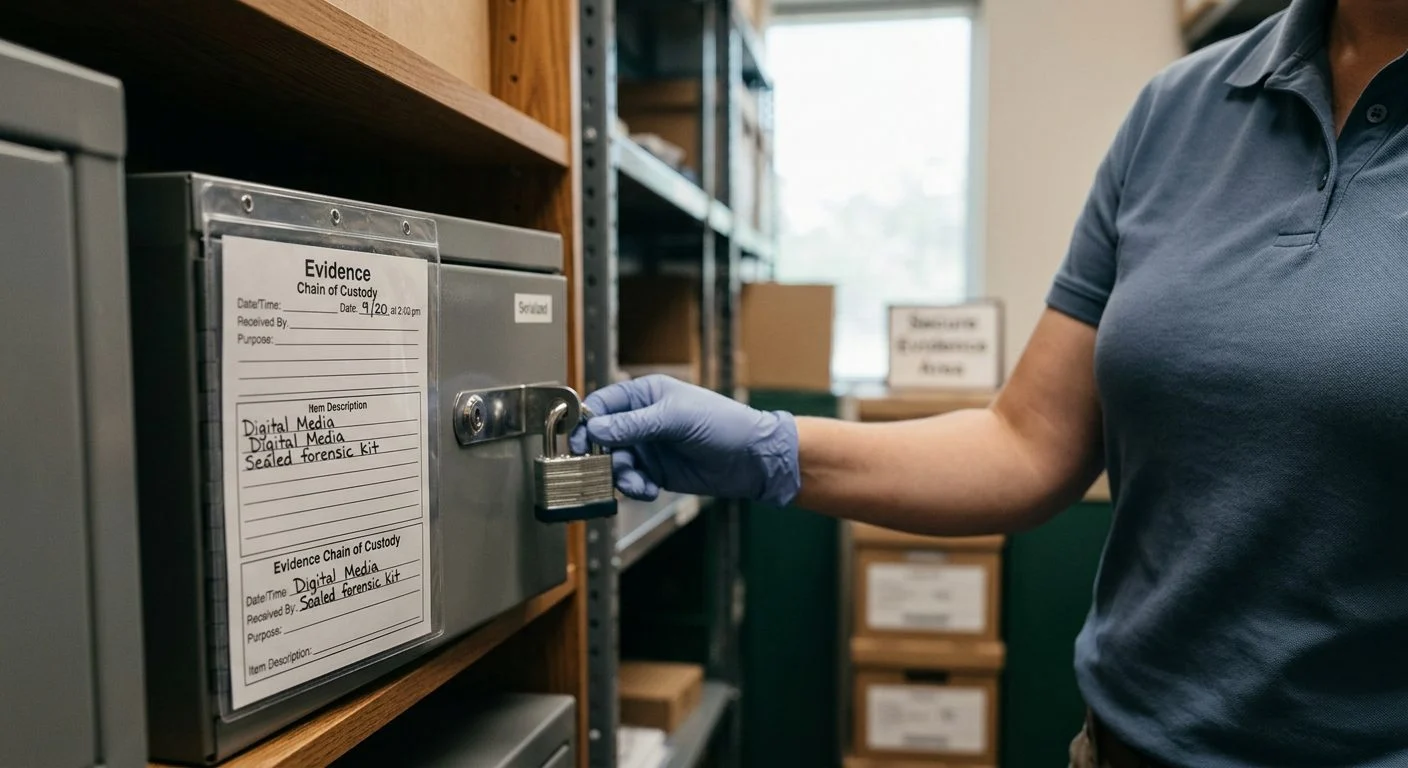
Child interviews are usually conducted by trained forensic interviewers. Investigators may also collect digital evidence, especially in online cases. Federal programs can support these probes. The ICAC Task Force Program works on technology-facilitated child sexual exploitation alongside Texas law.
If you are the accused, do not contact the child or the accuser about the allegation. Do not post about it online or try to reach the family. Statements to investigators can be used in the case. Speak with a lawyer before you answer their questions.
What a parent or other adult should do when a child discloses abuse
A calm, steady response helps most. Your job is to listen, not to investigate. Stay calm, thank the child for telling you, and say you will help. Don’t press for details, repeat questions, or suggest answers. Suggestive or repeated questions can make a child’s account harder to evaluate later. Let trained forensic interviewers gather the full account.
Write down what was said, when it was said, and who was present. Do this as soon as you can. Use the child’s own words where you remember them. Keep the note private. Do not confront the accused, because that can complicate the investigation and put the child under more pressure.
Report the disclosure to police or CPS. Those reports start the process described in this guide. Keep your focus on the child’s safety and comfort, and let the agencies do their work.
Stage two: arrest and the magistrate’s bond hearing
After an arrest, the accused is booked and brought before a magistrate. Bond conditions are set early, so early consultation matters. In child-related cases, conditions can include no-contact orders, limits on contact with minors, and limits on where a person may go. These conditions can change work, housing, and parenting time.
Bond conditions carry legal weight. Texas makes it an offense to communicate with a protected person in violation of a bond condition in a sexual assault or abuse case. This applies when the order prohibits communication. The exception is communication through the person’s attorney or a court-appointed person. The offense of violating certain court orders or bond conditions in family violence, sexual assault, and related cases is defined in Texas Penal Code § 25.07. Follow every bond term exactly. Raise questions with your lawyer before you act on them.
Stage three: grand jury review and indictment
The grand jury decides whether to return an indictment. The grand jury hears the prosecutor’s presentation. The defense usually does not present its own case at this stage. An arrest is not an indictment. An arrest is a police action.
Under Texas law, an indictment is considered “presented” once the grand jury has acted on it and the court has received it, as Texas Code of Criminal Procedure art. 12.06 states. The wording in an early document may not be the final charge. Keep copies of every charging document you receive.
Stage four: arraignment and pretrial motions
At arraignment, the court reads the charges. The accused enters a plea of guilty or not guilty. Then discovery begins.
Pretrial motions ask the court to rule on what evidence can be used and how. In sex crime cases, motions often address statements, forensic interviews, and digital evidence. When physical evidence is limited, the rest of the proof becomes a central question. The timing of each motion matters.
If the accused accepts a plea
Many criminal cases end through negotiation. A plea carries real consequences, including the punishment range for the offense.
Texas also defines some of these offenses as “sexually violent offenses” when an adult commits them. Whether a plea is available or wise depends on the facts. The decision belongs to the accused, after the lawyer explains the options.
If the accused goes to trial
At trial, the jury is chosen. The defense can cross-examine the State’s witnesses, challenge the evidence, and question how a forensic interview was conducted. Medical or other professional testimony offered by the State can be tested in the same way.
If the jury returns a guilty verdict, the case moves to punishment. The charged offense sets the range. For a first-degree felony, the range is life or 5 to 99 years under Texas Penal Code § 12.32. A not-guilty verdict ends that charge. That choice is made with counsel, after weighing the evidence and the risks.
Parallel issues: civil claims, custody, time limits, and federal charges
Several parallel tracks can run alongside the criminal case. A civil lawsuit can be filed separately. Civil cases use a different standard of proof, so an outcome in one does not decide the other. Custody and visitation matters run on their own schedule. Bond conditions and criminal findings can affect them. Keep a written list of every deadline, hearing date, and court order.
Time limits for filing charges vary by offense, so the timeline for any one matter has to be checked against the specific charge. Federal and Texas charges are separate matters that can proceed independently. This page covers the Texas state process only.

Who leads the defense at Barbieri Law Firm, and the next step
Barbieri Law Firm is an all-women criminal defense firm based in Frisco, Texas. Heather Barbieri leads the firm, and Carrie Thomas is also one of our lawyers. Our team defends professionals accused of sex crimes and assaultive offenses across Collin County, Dallas-Fort Worth, and Texas.
Heather Jean Barbieri, Board Certified, Criminal Law — Texas Board of Legal Specialization
Our team reviews the charge, the timeline, the bond conditions, and the investigation status. Then we explain the options. No lawyer can promise a particular result, and we explain every option with that in mind.
What is the child sex crime case process Texas?
It usually runs from report and investigation through bond, grand jury review, arraignment, and pretrial motions. It ends in a plea or a trial.
Does a CPS investigation affect a criminal case?
The two can run at the same time. The agencies may share information.
Should I talk to police before I speak with a lawyer?
Statements made to investigators can be used in the case. Talking with a lawyer first gives you time to understand your options.
If you have just learned of a report, an investigator’s call, or a bond condition, you don’t have to sort out the next steps alone. Contact our team or call (972) 424-1902 for a free initial consultation, confidential and without obligation.
Attorney responsible for this site: Heather Barbieri, Barbieri Law Firm, Frisco, Texas.
Ready to take the next step?
Request a Consultation
Fill out the short form and we will take it from there.