

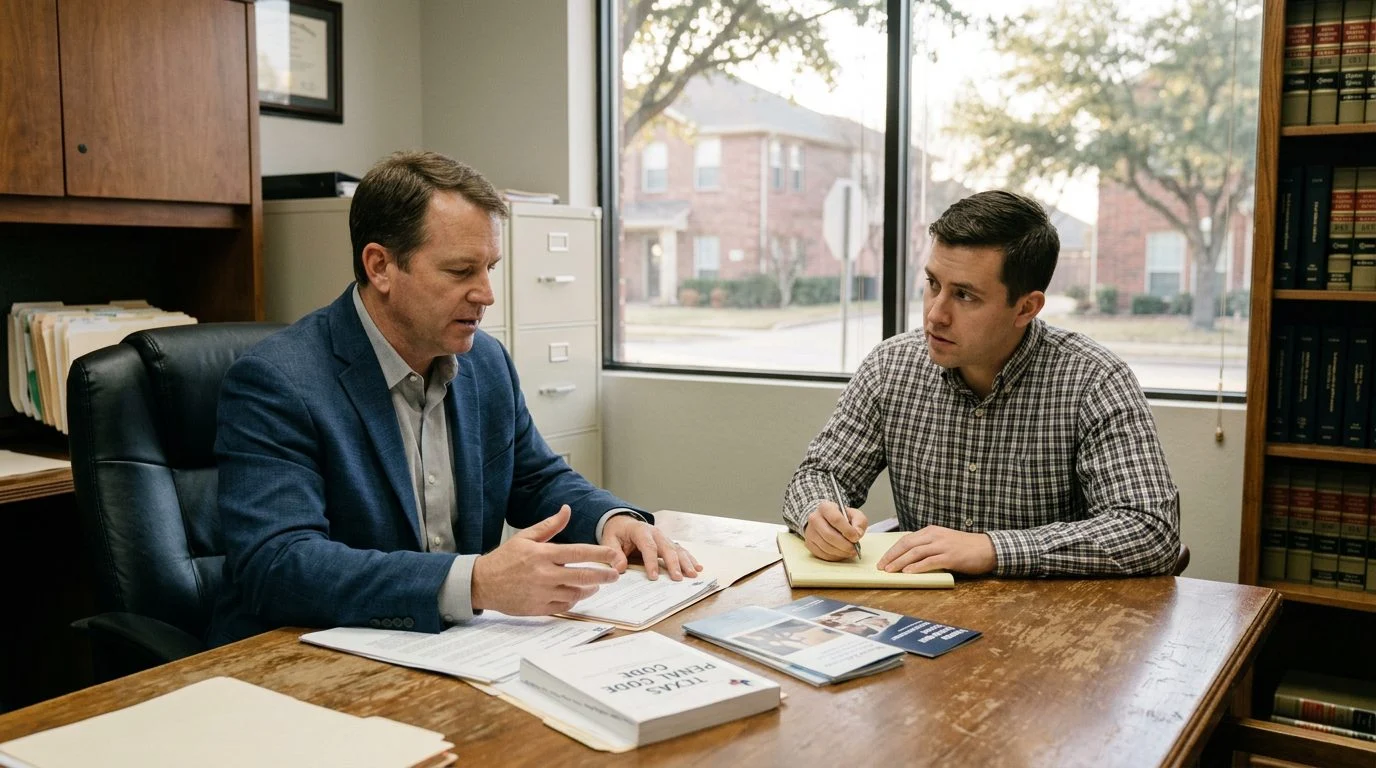
Understanding Your Options If You Face a Felony Charge in Texas
By Heather Barbieri · Published November 10, 2026
Understanding Your Options Facing a Felony Charge in Texas
Your loved one has been charged with a felony, and you want to know whether that charge can be beaten. In Texas, a felony case can end without a conviction. That can happen through dismissal, a grand jury’s decision not to indict, a reduction to a lower offense, an acquittal, or a negotiated resolution. Which path is possible depends on the facts.
This page walks through those endings and the steps that often matter most early on. It is general information about Texas law. No lawyer can say in advance how a case will end, and a defense lawyer’s job is to review the evidence and explain the options clearly.
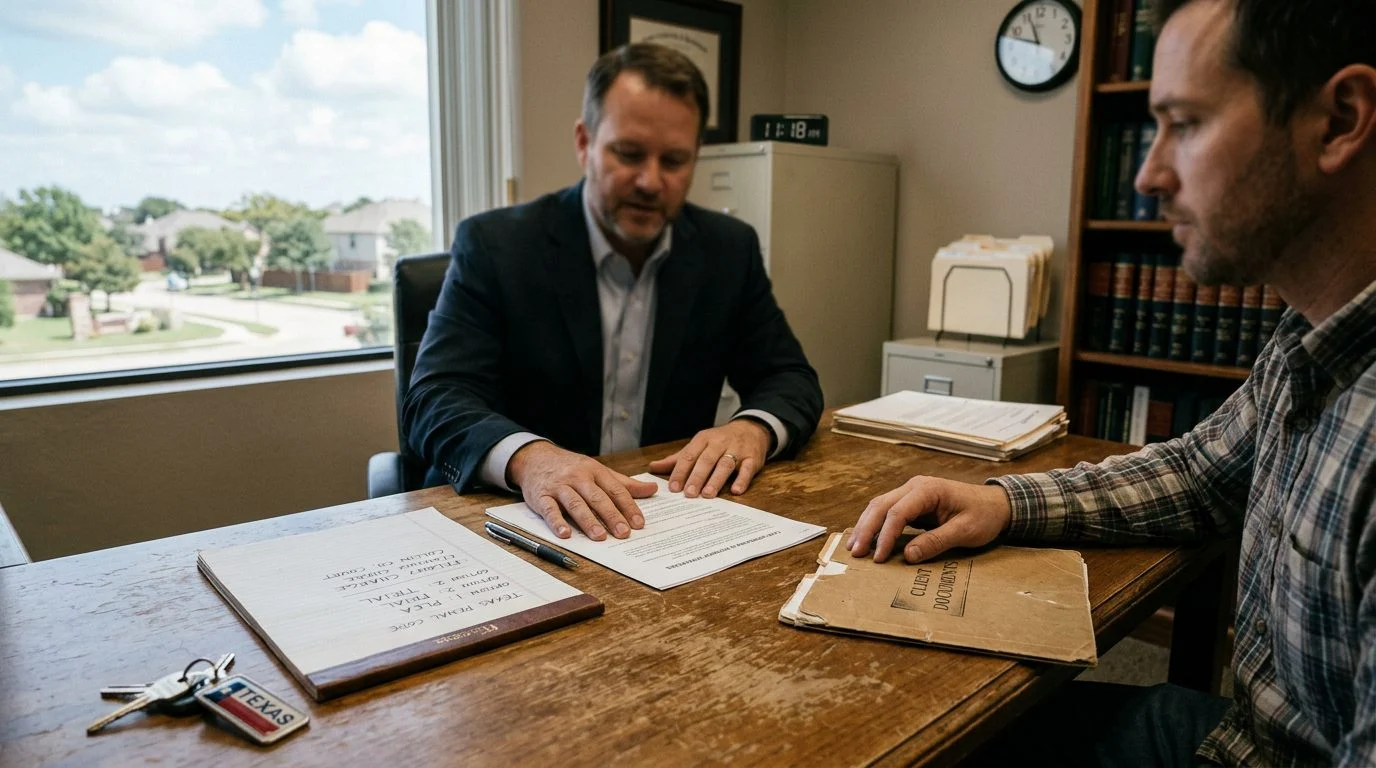
What “Beating” a Felony Charge Can Mean in Texas
Beating a felony charge can mean several different endings. Each one leaves a different record, so it helps to know which one is in play.
- Dismissal: The case ends without a trial verdict.
- No-bill: A grand jury decides not to indict.
- Reduction: The charge is lowered to a less serious offense.
- Acquittal: A judge or jury finds your loved one not guilty at trial.
- Negotiated resolution: The defense and prosecution agree on a plea or other terms.
The charge itself shapes what is possible. Texas sets punishment ranges for each offense. Under Texas Penal Code § 22.02, aggravated assault is a felony of the second degree, except that the section makes it a felony of the first degree in listed circumstances, such as when the actor commits the assault as part of a mass shooting. About Texas Felonies Keep any paperwork that lists the charge so you can ask a lawyer about it.
Can a Felony Charge Be Beaten? What Depends on the Facts
Some felony cases end with no conviction. Whether that happens turns on the facts of each case, not on a formula.
A defense lawyer usually looks at several factors:
- The reported facts, and whether they match the charging papers.
- The witnesses, what each one said, and when they said it.
- Physical and digital evidence, and how it was gathered.
- The procedural history, including prior hearings and bond terms.
- The court and county where the case is pending.
No lawyer can say in advance how a case will end. What a defense lawyer can do is review the evidence, including reports and any recordings, and explain each option and its risks. Timing matters too. A felony case moves through several stages, and each stage can open or close certain options. Your part is to share every fact you know, even the ones that seem small.
First Steps After a Felony Arrest or Indictment
The first steps are to protect your loved one’s rights and to bring in a lawyer early. Quick, calm steps in the first week can matter.
Your loved one should not answer police questions or sign statements without a lawyer present.
Bond terms often limit contact with a complainant, family members, or certain places. Breaking those terms can create new problems. In a family violence case, violating a protective order or bond condition can bring additional criminal charges, and how that conduct is graded depends on the facts and the statutes that apply. Penal Code § 25.07
Gather the paperwork. Note the court, the cause number, and the next court date. Then write a timeline of the arrest, the questioning, and who was present. Share it with the defense lawyer.
Challenging the Stop, Arrest, and Search
A defense lawyer can ask whether police had a legal basis for the stop, the arrest, and any search. That question is often where a case is tested.
One tool is a motion to suppress evidence. If the court grants it, the prosecution may lose evidence it planned to use.
These challenges depend on specific facts. Lawyers compare what officers wrote in their reports with what was said at the scene. They also check whether body camera video, dash camera video, or other recordings exist. If your loved one was stopped without a clear reason, that is the first thing a lawyer will examine. Stops can happen for many reasons, and the paperwork tells only part of the story.
A judge decides the motion after hearing the evidence. No one can predict the ruling. The motion is a legal tool, not a shortcut, and its value depends on what the records show.
Challenging the Evidence: Forensic Tests, Digital Records, and Witness Accounts
Defense work often includes checking how evidence was collected, tested, and recorded.
Lab reports, DNA results, and toxicology results can be reviewed for accuracy. A lawyer may also examine chain of custody, the written record of who handled evidence and when. Gaps in that record can raise questions.
In online sex crime and family violence cases, digital evidence is often central. That can include phone extractions, messages, and metadata, which is data about when and how a file was made or sent. A lawyer will want to know how that material was collected and by whom.
Witness statements matter too. A defense lawyer compares them for inconsistencies, timing problems, and changes over time.
Aggravated assault cases raise their own questions. The Houston Police family violence guide explains that aggravated assault requires an assault plus serious bodily injury or the use or exhibition of a deadly weapon. For how these questions arise after a home dispute, read aggravated assault after a home fight.
Pretrial Motions, Dismissal, and Reducing a Felony to a Misdemeanor
A felony can sometimes be reduced to a misdemeanor, but only when the law and the facts support it.
For state jail felonies, Texas law lets a court impose the confinement allowed for a Class A misdemeanor. The court must find, after considering the offense and the defendant’s history, character, and rehabilitative needs, that this would serve the ends of justice. Penal Code § 12.44 At the prosecutor’s request, the court may also allow the case to proceed as a Class A misdemeanor.
Context matters. A state jail felony carries a state jail term of 180 days to two years and a fine of up to $10,000. It becomes a third-degree felony if a deadly weapon was used or exhibited during the offense or immediate flight, and the person used or exhibited it or was a party to the offense who knew a deadly weapon would be used or exhibited, or if the person has previously been finally convicted of certain felonies, such as those under Penal Code Section 21.02 or 21.03 or listed in Article 42A.054(a) of the Code of Criminal Procedure. Penal Code § 12.35 Penal Code § 12.35
Other pretrial motions can ask a court to dismiss a charge or limit evidence. Each request depends on the record in that case. Each case has its own record, and a lawyer reviews it before suggesting a path. A lawyer can present your loved one’s position, but the prosecutor’s willingness to reduce or dismiss depends on the evidence.
If an indictment was dismissed because of a mistake or a lack of probable cause, your loved one may be entitled to expunction of arrest records. Code of Criminal Procedure art. 55A.053
Plea Bargaining and Other Negotiated Resolutions
A plea bargain is one way a felony case can end, and it can carry lasting effects.
It is an agreement between the defense and the prosecution. It may involve a reduced charge or agreed sentencing terms. The family can ask questions before any decision is made.
One form is deferred adjudication. After a guilty or no contest plea and a finding that the evidence supports guilt, a judge may defer further proceedings without entering an adjudication of guilt. Texas Code of Criminal Procedure Art. 42A.111 On expiration of a period of deferred adjudication community supervision imposed under this subchapter, if the judge has not proceeded to an adjudication of guilt, the judge shall dismiss the proceedings against the defendant and discharge the defendant. Code of Criminal Procedure art. 42A.111
The lasting parts are the records and registration duties. For an offense that requires sex offender registration under Chapter 62, the judge may not dismiss the case and discharge your loved one before the deferred adjudication period ends. Code of Criminal Procedure art. 42A.111
Ask for a full explanation of every term before anyone decides whether to accept an offer.
Mistakes That Can Hurt a Felony Defense
Most damaging mistakes happen early, often when families are trying to help.
- Talking about the case with police, the complainant, or witnesses. Anything said can end up in the file.
- Posting online about the charge, the accusation, or court dates. Posts and messages can be used as evidence.
- Deleting messages or changing records. This can create new legal exposure, so talk with a lawyer first.
- Doing so knowingly or intentionally can be a crime. This can create new problems.
- Discussing strategy with people who could later be witnesses.
A simple habit helps. Keep a folder with the paperwork, the timeline, and a short list of questions. Bring it to every call with the lawyer. Stay calm and factual when you discuss the case with anyone outside the lawyer’s office.

Talking Through Your Loved One’s Felony Case
Many questions about a felony case have no quick answers. That’s hard when someone you love is facing a serious charge.
If the charge involves a sex offense, the consequences can reach beyond the courtroom. Firearm limits can also apply.
Can I beat a felony charge?
Some felony cases end without a conviction, through dismissal, reduction, or acquittal. Whether that’s possible turns on the facts of each case.
What is deferred adjudication?
It is a court placement where the judge defers further proceedings without entering an adjudication of guilt. If the supervision period ends without an adjudication, the judge must dismiss the case.
Does a felony charge affect gun rights?
It can.
If your loved one is facing a felony charge, you don’t have to sort out the options alone. Barbieri Law Firm is an all-women criminal defense firm in Frisco, Texas, serving Collin County and the Dallas-Fort Worth area. It offers a free, confidential initial consultation with no obligation to continue. Reach out through the contact page or call (972) 424-1902.
Attorney responsible for this site: Heather Barbieri, Barbieri Law Firm, Frisco, Texas.
Ready to take the next step?
Related practice areas
Request a Consultation
Fill out the short form and we will take it from there.