

Collin County Criminal Defense
Charged With Indecency With a Child? Start With a Careful Defense.
Barbieri Law Firm defends professionals accused of child sex offenses in Frisco, Plano, McKinney and across Collin County. Your first consultation is free, confidential and carries no obligation.
Why Clients Contact Us
Free
Initial consultation, confidential, no obligation
Collin County
Frisco-based defense across the county
All-Women
Criminal defense firm led by Heather Barbieri
By Heather Barbieri · Published October 31, 2026
If you need an indecency with a child defense lawyer in Collin County, the charge turns on two things: the conduct alleged and the intent behind it. Texas law separates contact from exposure, and each carries its own felony grade. This page explains what the State must prove, what a defense reviews, and how to reach our firm.
What Indecency With a Child Means Under Texas Law
Indecency with a child is a felony in Texas with two main forms: contact and exposure. One form of indecency with a child under Texas law occurs when a person, with a child younger than 17 years of age, engages in sexual contact with the child or causes the child to engage in sexual contact, regardless of whether the person knows the child’s age; the statute defines “sexual contact” as specified touching committed with the intent to arouse or gratify the sexual desire of any person (Texas Penal Code § 21.11). It also covers exposure, where a person, with intent to arouse or gratify the sexual desire of any person, shows his anus or genitals while knowing a child is present.
Intent is central. Touching counts as sexual contact only when it is done to arouse or gratify sexual desire, so the State must prove that intent.
The grade depends on the form. Contact under subsection (a)(1) is a second-degree felony. Exposure under subsection (a)(2) is a third-degree felony. A second-degree felony is punishable by imprisonment in the Texas Department of Criminal Justice for any term of not more than 20 years or less than 2 years. In addition to imprisonment, a fine not to exceed $10,000 may be imposed (Texas Penal Code § 12.33).
Registration is also at stake.
If you've been charged with indecency with a child or contacted in an online sex crime investigation, call (972) 424-1902 or send your case details today, and we'll review the charge with you. Talk it through with our team — the first consultation is free, confidential, and carries no obligation.

What the Defense Reviews in a Collin County Case
The defense starts with the charging papers, then reviews every record the State plans to use. Each item is checked against the others for gaps and contradictions.
- Charging papers. The indictment or complaint shows the subsection charged, the dates alleged and the time frame.
- Police reports. Offense reports and supplemental narratives are compared line by line.
- Forensic interview. A Children’s Advocacy Center interview is reviewed for how it was conducted, what questions were asked and who else spoke with the child.
- Medical and SANE records. Where they exist, these are checked for whether they support or contradict the allegation.
- Digital records. Phone, computer and social media data are reviewed, along with the search warrant, its affidavit and the scope of any extraction.
- Access records. School, daycare, family and witness records show who had access to the child and when.
- Timeline. Each alleged event is placed against the client’s documented schedule, location and messages.
The file is checked for what was recorded and how it was handled.
Testing Intent, Identity and the Accuracy of the Accusation
Every element gets tested, and intent comes first. The defense does not accept the State’s version of events without checking it.
- Intent. The review asks whether the conduct, as described, shows intent to arouse or gratify sexual desire. Caregiving, medical or hygiene situations and ordinary family contact are examined in context.
- Affirmative defense. Under Penal Code § 21.11(b), it is an affirmative defense to prosecution under this section that the actor was not more than three years older than the victim and of the opposite sex, did not use duress, force, or a threat against the victim at the time of the offense, and, at the time of the offense, was not required under Chapter 62, Code of Criminal Procedure, to register for life as a sex offender, or was not a person who under Chapter 62 had a reportable conviction or adjudication for an offense under this section. A separate affirmative defense applies if the accused was the spouse of the child at the time of the offense (Penal Code § 21.11(b-1)). The accused also must not have used duress, force or a threat, and must not have been required to register for life under Chapter 62 at the time. A separate defense applies if the accused was the child’s spouse at the time.
- Identity. Location data, alibi records, witness accounts and any identification procedure are tested.
- Consistency. Statements across interviews, texts and reports are compared to see whether the account changed after the first disclosure.
- Timing and source. When an accusation surfaces during a divorce, custody case or CPS investigation, the timing and source of the report are part of the review.
Online Solicitation Stings and Digital Evidence
An online sting case turns on what was written, who wrote it and what the State can prove about the account and device.
- Who counts as a minor. Under Penal Code § 33.021, a minor includes a person the accused believes is younger than 17. An undercover officer’s stated age therefore matters.
- No meeting required. It is not a defense that the meeting did not occur. Soliciting a minor to meet for sexual contact is a second-degree felony under subsection (c).
- Entrapment. Under Penal Code § 8.06, entrapment requires inducement by a law enforcement agent using persuasion or other means likely to cause the offense. Giving someone an opportunity to offend is not entrapment.
- Operation records. The review covers who posed as a minor, how the account was presented, who sent the first message and whether the operation followed its own protocols.
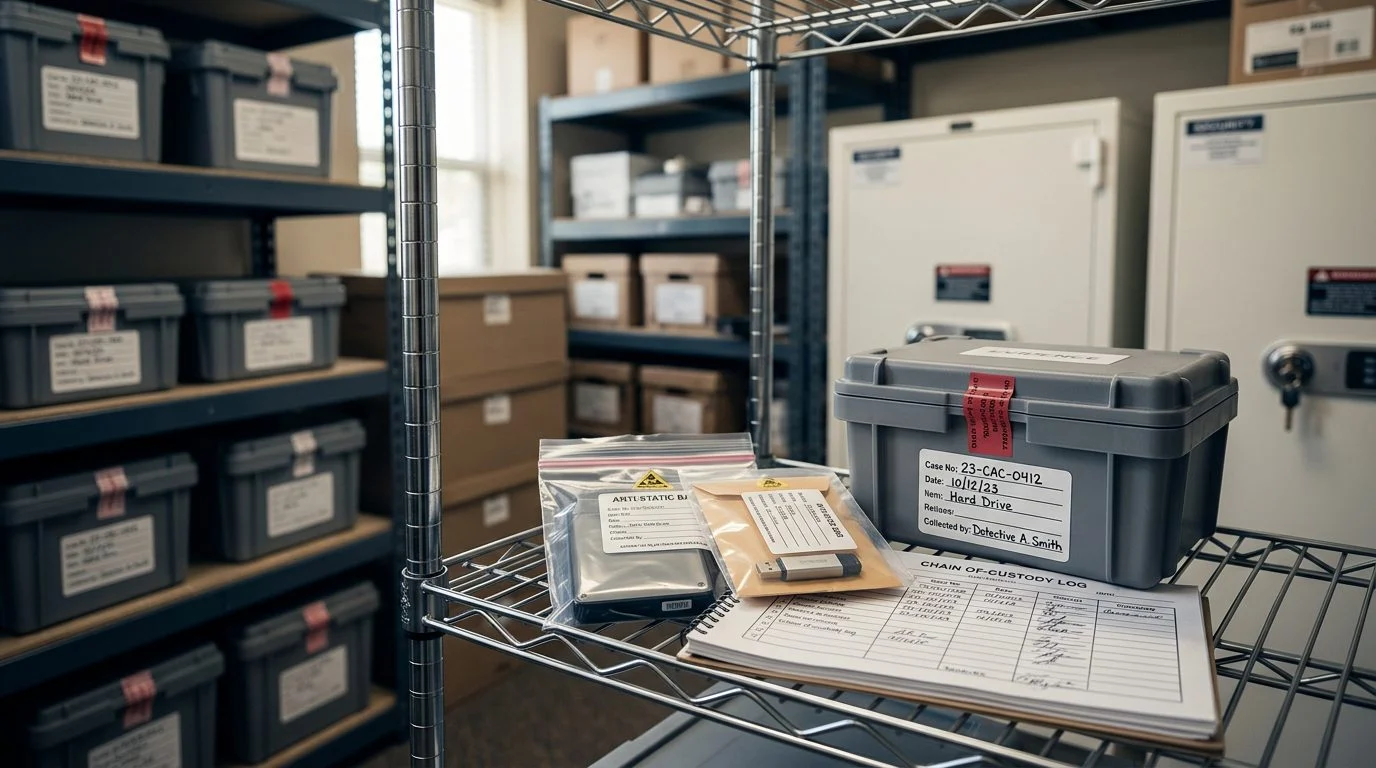
- Digital files. Chat logs, screenshots and phone extractions are checked for authenticity, completeness and chain of custody.
- Access. The analysis asks who had access to the device or account when the messages were sent.
The National Center for Missing & Exploited Children describes what online enticement involves (online enticement).
How the Process Works, Step by Step
The process starts with a first consultation. It then moves through bond protection, evidence review, investigation and a decision on how to resolve the case.
- Consultation. We review the charge, bond conditions and any deadlines you face.
- Bond and contact protection. Bond conditions and court orders control contact with children and the complainant. Knowingly or intentionally violating a bond condition in a sexual abuse case, where the condition is related to the safety of a victim or the safety of the community, can be a separate offense under Penal Code § 25.07. That statute defines sexual abuse to include acts described in § 21.11. Speak with a lawyer before answering questions about the allegation.
- Discovery review. We examine the materials listed above before advising on next steps.
- Investigation. We locate witnesses, preserve records and consult professionals where the forensic interview or digital evidence requires it.
- Motions and talks. Pretrial motions challenge the evidence. Any talk with the prosecution rests on the reviewed evidence.
- Trial or resolution. If the case goes to trial, every element is prepared.
Timing depends on the court’s calendar and how much evidence the State produces.
Why Barbieri Law Firm
Barbieri Law Firm is an all-women criminal defense firm in Frisco, Texas. It defends people accused of sex crimes and assaultive offenses across Collin County, Dallas-Fort Worth and Texas.
Heather Jean Barbieri, Board Certified, Criminal Law — Texas Board of Legal Specialization. Our firm’s lawyers include Heather Barbieri and Carrie Thomas.
- Practice areas. Sex crimes, child sex crimes, online sex crimes, aggravated sexual assault, aggravated assault and family violence.
- Charge-first review. Our team reviews each charge from the charging papers forward, so you know what the State must prove before choosing a next step.
- Confidentiality. Client matters stay confidential. Case details are shared publicly only with the client’s informed consent.
For more on child cases, see our child sex crimes defense guide.
Not sure what your next step is?
Talk it through with our team — the first consultation is free, confidential, and carries no obligation.

Questions Men Ask Before Calling a Defense Lawyer
Short answers to the questions men ask at the start of these cases.
Is indecency with a child a felony in Texas?
Yes. Contact is a second-degree felony, and exposure is a third-degree felony.
Do I have to register as a sex offender?
Registration turns on the offense of conviction.
Can I see my children while the case is pending?
In family violence, sexual assault or abuse, indecent assault, stalking, or trafficking cases, bond conditions and certain court orders related to safety control contact. Violating them can be a separate offense.
Should I talk to police or investigators?
Speak with a lawyer before you answer questions about the allegation.
Can an undercover officer count as a minor?
Yes, under Penal Code § 33.021, a minor includes a person the accused believes is younger than 17.
Is opportunity enough for entrapment?
No. Under Penal Code § 8.06, conduct that only gives a person an opportunity to offend is not entrapment.
Is the consultation free?
Yes. The first consultation is free, confidential and carries no obligation to continue.
Can a lawyer promise a result?
No lawyer can promise a particular result. We explain your options once the evidence is reviewed.
If you’ve been charged with indecency with a child or contacted in an online sex crime investigation in Collin County, call (972) 424-1902 or send your case details today. We’ll review the charge with you.
Attorney responsible for this site: Heather Jean Barbieri, Barbieri Law Firm, Frisco, Texas.
How We Approach an Indecency With a Child Case
Review the evidence
We review the police report, witness statements, interview recordings and any records in your case, then explain what they mean for you.
Get involved early
The sooner we are involved, the sooner we can address statements, contact with others and the steps to take next.
Plain-language communication
We keep you informed at each stage and answer your questions clearly, so you understand your options before you decide.
Discretion for professionals
We understand what is at stake for your career, family and reputation, and we handle your case with confidentiality.
Speak With a Lawyer Before You Speak With Investigators
If police, investigators or anyone involved in the accusation contact you, talk with a lawyer first. We can explain your options and help you decide how to respond.
How Our Team Can Help
Case Review
A confidential review of the accusation, the evidence and the timeline, followed by a clear explanation of your options.
Investigation and Evidence
We examine how the evidence was gathered and identify the records, witnesses and details that matter most to your defense.
Court Representation
Our team represents you in Collin County courts, from the first setting through negotiations or trial, keeping you informed at every step.
Our Lead Attorney
Heather Jean Barbieri, Board Certified, Criminal Law — Texas Board of Legal Specialization. She leads the firm's defense of sex crime and assault cases in Collin County, Dallas-Fort Worth and across Texas.
Talk With Our Team About Your Case. Your First Consultation Is Free and Confidential.
Related practice areas
- Aggravated Sexual Assault Charges in Texas: What an Accused Professional Should Know Now
- Aggravated Sexual Assault Bond Hearing Lawyer, Collin County
Request a Consultation
Fill out the short form and we will take it from there.