

Aggravated Sexual Assault Defense | Frisco, Texas
Careful Review of DNA Evidence in Your Aggravated Sexual Assault Case
Barbieri Law Firm, an all-women criminal defense firm in Frisco, examines how DNA was collected, tested and interpreted, and explains your options across Collin County, Dallas-Fort Worth and Texas. Your first consultation is free, confidential and comes with no obligation to continue.
By Heather Barbieri · Published November 2, 2026
If you have just learned you are accused of aggravated sexual assault in Texas, DNA evidence is often where the case starts. A DNA match shows that a profile is present in a sample. It does not, by itself, show when that profile got there, how it got there, or whether contact was consensual. This guide explains how an aggravated sexual assault DNA evidence defense lawyer in Texas reviews that evidence, and what you should do before you speak to anyone.
What DNA Evidence Means When You Are Charged With Aggravated Sexual Assault in Texas
Aggravated sexual assault is a first-degree felony, and DNA often becomes the center of the investigation. Under Texas Penal Code § 22.021, the offense is a first-degree felony, and the minimum prison term rises to 25 years if the alleged victim was younger than 10, or younger than 14 when the offense is committed in a manner described by Subsection (a)(2)(A).
Those penalties explain why the charge feels so heavy. A DNA result is one piece of the investigation. It is not a verdict.
Your situation may have started with a detective’s call, a protective order or a warrant. Each one can reach your job, your license and your home before a single court date. Licensing and employment questions are separate from the criminal case. Raise them with your lawyer early.
If a detective's call or a warrant has you worried about your job and your family, you don't have to face the next step alone. Talk with us first. Talk it through with our team — the first consultation is free, confidential, and carries no obligation.

How DNA Ends Up in a Texas Sex Crime Investigation
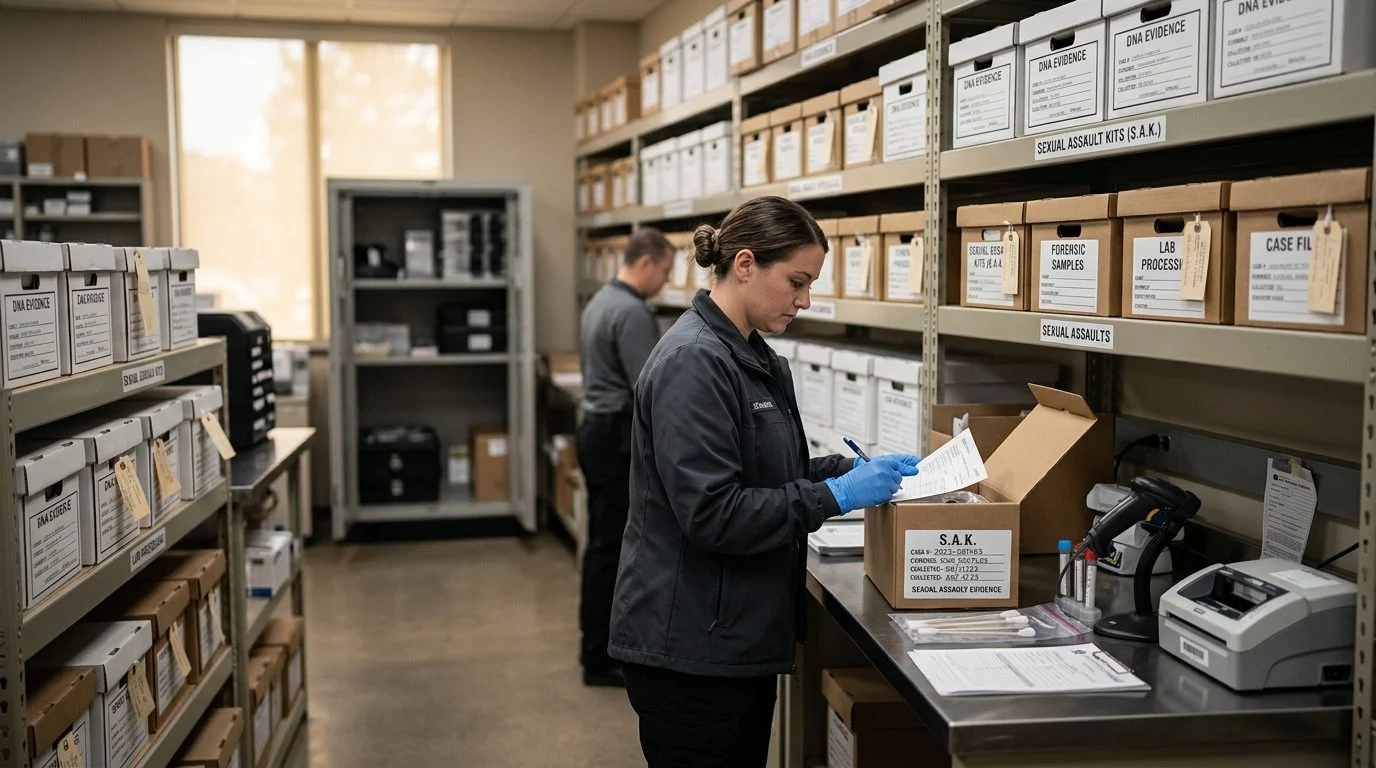
DNA usually enters a case in one of three ways: a forensic exam, items seized from a location, or a sample requested from you. The Texas Attorney General guidance describes how sexual assault exams and evidence collection work.
- Forensic exam. A sexual assault exam collects physical evidence for analysis. The results depend on the exam and the facts of the case.
- A sample from you. Police can ask for a DNA sample. Before you agree to give a statement or answer questions, contact Barbieri Law Firm.
- Lab analysis. Analysts extract DNA, build a profile and compare it to a known sample. For certain purposes, Texas law says records relating to an arrest include the DNA record, the record of how the sample was collected, and the record of its transfer to the Department of Public Safety (art. 55A.131).
Ask for the complete lab file, not a summary. Texas Courts’ 2019 meeting minutes document handling and testing errors involving sexual-assault-kit evidence. The underlying records matter.
What a DNA Match Proves and What It Does Not
A DNA match shows that a profile is present on a sample. It does not show when, how or why the profile got there.
- Presence is not contact. A profile on an item does not show when it was deposited or what happened.
- Mixtures and partial profiles. A sample can contain DNA from more than one person. A partial or very small sample can be harder to read. The statistical language in a report needs careful review.
- Transfer. DNA can move through shared clothing, bedding, household items or everyday contact. These are questions the defense examines, not facts to accept.
- Chain of custody and protocol. Who handled the sample, when, and how it was stored and tested all matter. A defense lawyer checks each step against the lab’s records.
Consent, Timing and the Questions a Lab Report Leaves Open
A lab report usually does not answer whether contact was consensual. In many sexual assault cases, consent is the central issue. Under Texas Penal Code § 22.06, the victim’s effective consent, or the actor’s reasonable belief that the victim consented, is a defense to prosecution for assault (§ 22.01), aggravated assault (§ 22.02) or deadly conduct (§ 22.05) if the conduct did not threaten or inflict serious bodily injury, or the victim knew the conduct was a risk of his occupation, recognized medical treatment, or a scientific experiment conducted by recognized methods; the defense is not available for conduct done as a condition of criminal street gang membership. Section 22.06 does not cover sexual assault offenses under §§ 22.011 or 22.021. Consent in a sexual assault case is analyzed under the statutes that apply to your charge, so your lawyer reviews it on its own terms.
Timing matters too. Consent questions often come down to what each person said, what messages exist, and what happened afterward. Build a timeline of what each person reported and when. Phone records, messages and calendars may bear on that timeline. Medical and forensic findings do not always establish that an assault occurred, so they are reviewed alongside everything else.
Depending on the facts, independent testing and a review of the lab’s raw data and bench notes may be an option. A lawyer can explain whether it fits your case.
Before You Speak to Police: Phones, Warrants and Protective Orders
Before you speak to police, call Barbieri Law Firm about what they want and what you say.
- Know the rules, but don’t rely on them alone. Speak with Barbieri Law Firm before any interview.
- Do not delete, edit or move anything.
- Contact. Do not contact the accuser or witnesses about the case. Texas Penal Code § 25.07 makes it an offense for a person, in violation of certain listed protective orders or of a condition of bond set in a family violence, sexual assault or abuse, indecent assault, stalking, or trafficking case and related to the safety of a victim or the safety of the community, to knowingly or intentionally do any of several things. These include communicating directly with a protected individual or a member of the family or household in a threatening or harassing manner. They also include communicating in any manner with that individual or family or household member except through the person’s attorney or a person appointed by the court, if the violation is of an order described in that subsection and the order prohibits any communication. The same offense covers violations of bond conditions in sexual assault cases.
- Protective orders. A protective order must carry a written warning. For orders other than a temporary ex parte order, a violation may bring a fine of as much as $4,000, jail for as long as one year, or both (art. 7B.006). Unless the order states a period, it lasts until its second anniversary; the order may instead run for the duration of the lives of the offender and victim or for any shorter period it states, and the court must issue a lifetime order if the offender was convicted of or placed on deferred adjudication for a listed offense and must register for life as a sex offender (art. 7B.007).
- Work and family. Keep messages about the case short. Route questions from colleagues, employers and family to your lawyer.
How the Defense Is Built, Step by Step, and What to Expect
A Texas aggravated sexual assault DNA evidence defense lawyer usually starts with your charging papers, warrant and bond terms. Then the work moves to the full evidence file.
- Confidential intake. You share the charging papers, any warrant, your bond conditions and any protective order.
- Full evidence review. Your lawyer reviews the complete lab file, police reports and digital evidence.
- Testing questions. Where the facts support it, your lawyer evaluates independent testing and the lab’s records.
- Options in writing. Your lawyer explains your options, including the timing of any negotiations and how the case may move through the court where it is pending.
Timelines vary with the facts. You should receive your options in writing. No lawyer can predict or assure how a case will end.
Not sure what your next step is?
Talk it through with our team — the first consultation is free, confidential, and carries no obligation.
Frequently Asked Questions About DNA Evidence in Aggravated Sexual Assault Cases
A DNA match is evidence to test, not a verdict. Here are short answers to common questions.
Does a DNA match mean I will be convicted?
No. A match is evidence the defense reviews. No lawyer can predict how a case will end.
Will this affect my license or job?
Licensing and job questions are separate from the criminal case. Raise them with your lawyer early.
What if police ask for a DNA sample?
Talk with a lawyer before you agree. Any warrant presented to you can be reviewed with your lawyer.
What about my family during the case?
A protective order or bond conditions may limit contact. Follow those terms exactly, and ask your lawyer what they cover.

Talk With Barbieri Law Firm Before You Say Anything More
Barbieri Law Firm is an all-women criminal defense firm in Frisco, Texas. It defends professionals accused of sex crimes and assaultive offenses across Collin County, Dallas-Fort Worth and Texas.
Heather Jean Barbieri, Board Certified, Criminal Law — Texas Board of Legal Specialization.
You may be reading this after a detective’s call, a protective order or a warrant has put your career and family at risk. Our team can review your DNA evidence, your bond terms and your options with you. Call (972) 424-1902 or send us your case details for a free first consultation — confidential, with no obligation to continue.
No lawyer can predict or assure how your case will end. This page is general information, not legal advice for your situation.
Attorney responsible for this site: Heather Barbieri, Barbieri Law Firm, Frisco, Texas.
How our team approaches DNA evidence
Lab records and reports
We review the testing laboratory's reports, methods, and notes to understand what was tested and what the results actually show.
Collection and chain of custody
We look at how the sample was collected, labeled, stored and transferred, and whether each step is documented.
Explaining what the evidence means
We explain in plain language what a DNA result can and cannot establish, and what questions remain open in your case.
Direct access to your defense team
Heather Barbieri leads our defense team, and our team keeps you informed at each stage of the case.
Be careful before you speak or give a sample
Statements you make and samples you provide can become evidence in your case.
What we review in a DNA-based case
The accusation and the timeline
We build a clear timeline of the events, the police investigation and every point where DNA was collected or tested.
Testing methods and limits
We examine the testing methods, the statistical reports and whether results were interpreted within the limits the laboratory stated.
Other evidence in the file
We review witness accounts, records and any other evidence that fits with, or conflicts with, the DNA results.
Your options and next steps
After reviewing the evidence, we explain the options available to you and what each one would involve.
Talk with Barbieri Law Firm about your case. Your first consultation is free and confidential.
Related practice areas
- Aggravated Sexual Assault Charges in Texas: What an Accused Professional Should Know Now
- Consent Defense to Aggravated Sexual Assault in Texas | Barbieri Law Firm
Request a Consultation
Fill out the short form and we will take it from there.