

Sex Crimes Defense | Frisco, Texas
Accused as a Professional Athlete? Start With a Clear Defense Plan.
Barbieri Law Firm defends professional athletes accused of sexual assault and related offenses across Collin County, Dallas-Fort Worth and Texas. Your first consultation is free, confidential and comes with no obligation to continue.
By Heather Barbieri · Published October 31, 2026
Professional Athlete Accused of Sexual Assault in Texas: What Happens Next
Your name is online, and your phone won’t stop buzzing. A professional athlete accused of sexual assault in Texas faces three fights at once: a criminal case, a league or team process, and a public story. An accusation is not a conviction. But a Texas sex crime charge can carry felony penalties and sex offender registration, and it can strain your career, so the first steps matter.
Your name may already be in the news, and you don't have to sort out the charge, the league and your contract alone. Our team is ready to talk through your facts. Talk it through with our team — the first consultation is free, confidential, and carries no obligation.

What a Texas Sexual Assault or Aggravated Assault Charge Means for an Athlete
Sexual assault and aggravated sexual assault are different charges with very different penalties. Sexual assault is a second-degree felony. Aggravated sexual assault is a first-degree felony, the more serious charge.
- Sexual assault. The offense covers sexual penetration or contact without consent. Penal Code § 22.011 lists cases where consent is missing, including when the actor knows the other person is too intoxicated to consent. That detail matters after a night out. A second-degree felony carries 2 to 20 years under Penal Code § 12.33.
- Aggravated sexual assault. Under Penal Code § 22.021, this is a first-degree felony. For a first-degree felony under § 22.021, the minimum term of imprisonment is increased to 25 years if the victim is younger than 10 years of age at the time the offense is committed, or the victim is younger than 14 years of age and the actor commits the offense in a manner described by Subsection (a)(2)(A).
- Aggravated assault. Under Penal Code § 22.02, the base offense is a second-degree felony. It applies when the assault causes serious bodily injury or uses or exhibits a deadly weapon. A fight can reach that level, so the facts matter.
- Lower-level assault. If the charge is a Class A misdemeanor, the punishment can include up to one year in jail, a fine up to $4,000, or both.
Registration is a separate risk. Under art. 62.101, the duty to register for that offense generally ends at death, unless Subsection (b) or Subchapter I provides otherwise. A deferred adjudication can also count as a reportable conviction.
An accusation, an arrest, a charge and a conviction are separate stages. A story can break before police file any charge.
The First Days: What to Do and What Not to Do
In the first days, do not answer police questions alone, and do not post about the night.
- Talk to a lawyer before any interview. That includes casual questions that feel harmless.
- Stop posting and texting about the night. Do not delete anything either. Deleted messages can look like hiding evidence, and posts can be used later.
- Keep your notes private. Write what you remember for your lawyer only, and share it with no teammate, friend or reporter.
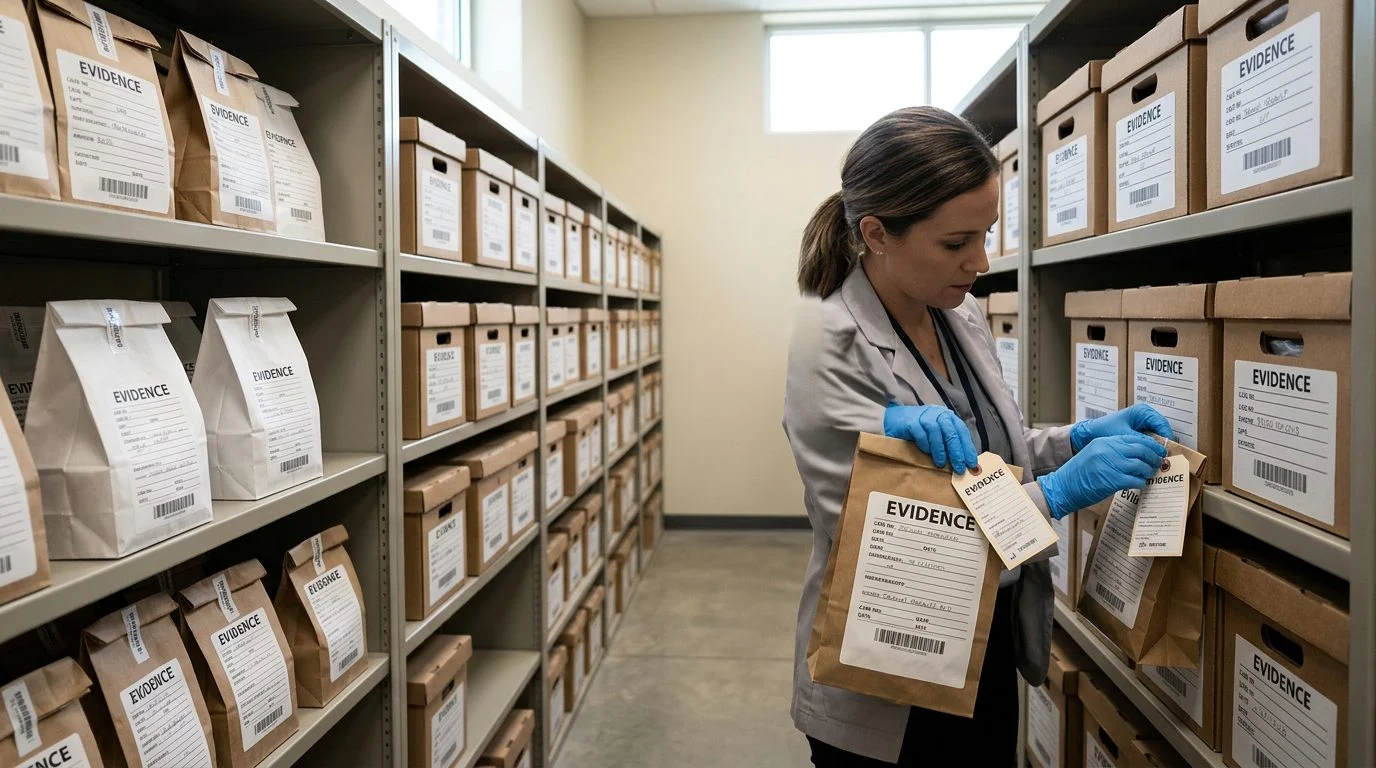
- Preserve what may help. Save video, phone records, ride-share and hotel receipts, and the names of people who were there.
- Know your first court date. Bond conditions can limit travel, practice and game days.
Getting a defense lawyer involved early can shape what happens next.
How a Texas Sexual Assault Case Moves Through Court
A case moves from investigation to a charging decision, court dates, evidence review, and then trial or a resolution.
- Discovery. Your lawyer reviews the police file, forensic and medical reports, digital evidence and witness statements. Sexual assault complainants have rights in Texas cases, which the Texas Attorney General’s Office describes.
- Pretrial motions. These can limit what evidence a jury hears. Your lawyer tests the complaining account against the physical and digital proof.
- Plea offers. Each offer is weighed against trial risk and career consequences. The final decision belongs to you.
- Deferred adjudication. Except as provided by Article 42A.102(b), if in the judge’s opinion the interests of society and the defendant will be served, the judge may, after receiving a guilty or no-contest plea and hearing evidence that substantiates the defendant’s guilt, defer further proceedings without entering an adjudication of guilt and place the defendant on deferred adjudication community supervision. For a charge under Penal Code § 22.011 or § 22.021, Article 42A.102(a) allows deferral only after the judge makes a finding in open court that deferral is in the victim’s best interest.
The length of each stage depends on the facts, the evidence and the court’s calendar. No lawyer can ensure an outcome or a timeline.
Protecting Your Record and Your Future
Your league, team and sponsors can act on their own timelines, apart from the criminal court.
- Gather the paperwork now. Collect your player contract, any conduct or morals clause, endorsement deals, and name, image and likeness (NIL) agreements.
- Check what you must report. Contracts can require notice or cooperation. Your lawyer can read those terms before you respond.
- Hold sponsor and team statements. Do not sign or send one until counsel reviews it.
- Coordinate with your agent and team counsel. With your permission, we can work with them so decisions about the criminal case stay under the defense lawyers’ control.
We can explain how a criminal charge affects these relationships. We cannot control decisions a league, team or sponsor makes.
Public Statements, Media Coverage and Civil Claims
Make no public statement until your lawyer has reviewed it.
- Quotes last. A post, a quick interview or a team statement can be quoted later in court or in a civil case.
- Timing matters. Public statements can be planned with counsel and timed to the case, so they serve your defense.
- Answering questions is a decision. Make that choice with a lawyer, because the two cases can affect each other.
A planned response protects you better than a fast one.
Not sure what your next step is?
Talk it through with our team — the first consultation is free, confidential, and carries no obligation.
Why Barbieri Law Firm for an Athlete’s Case
Barbieri Law Firm is an all-women criminal defense firm based in Frisco, Texas. It defends professionals accused of sex crimes and assaultive offenses across Collin County, Dallas-Fort Worth and Texas.
The firm is led by Heather Jean Barbieri, Board Certified, Criminal Law — Texas Board of Legal Specialization.
Our lawyers, including Heather Barbieri and Carrie Thomas, review the police file, digital records and medical reports. Then they explain your options in plain terms. They also explain how a criminal charge interacts with your career, step by step.
Our focus is your freedom first. We also plan around your privacy and your professional relationships.
No lawyer can ensure an outcome. Call (972) 424-1902 to speak with our team about your situation.
Questions Athletes and Families Ask About These Cases
Most of these questions come down to who decides, and when.
Will I be suspended or cut before any trial?
League and team decisions follow their own rules and timing, separate from the criminal court.
Will my name be public?
Charges and court filings can be public records. Your lawyer can plan what is said, and when.
Can I keep playing while the case is pending?
Bond conditions and league rules both bear on this, so review both with counsel right away.
Does a deferred adjudication end the registration duty?
It can still count as a reportable conviction under Texas registration law, so review registration before any plea.
Will my agent and team lawyers be part of the defense?
Only with your permission, and only in ways your defense lawyers approve.
What does a first consultation cost?
Our initial consultation is free, confidential and carries no obligation to continue.
If a call from police or a news story has you reeling, you don’t have to sort out the charge, the league and your contract alone. Send your case details through our contact page, and we’ll review your situation with you.
Attorney responsible for this site: Heather Barbieri, Barbieri Law Firm, Frisco, Texas.
How we approach a case like yours
Confidential from the first call
What you tell us is kept confidential. We begin by listening to your account and understanding what has been alleged.
Review of the evidence
We will review the available evidence, including reports, records and any recordings, and explain what it does and does not show.
Guidance on what to say, and when
We help you plan communications with the court, your employer, your team and the public, so that your words do not create new problems.
Options explained in plain terms
We will walk you through your options at each stage and help you make decisions with full information.
Before you post or speak publicly
Social media posts, texts, interviews and statements to teammates or the media can be shared and can later be used in your criminal case. Talk with your lawyer before you say anything about the accusation.
Matters we handle for accused professionals
Sexual assault and aggravated sexual assault
Defense of felony sexual assault charges in Texas courts, from the first investigation through trial preparation.
Online and digital evidence
Review of messages, phone data, social media activity and other electronic records that are often central to these cases.
Public attention and privacy
Planning for media interest, public court filings and the personal and professional impact of an accusation.
Coordination with your professional life
We keep your employment, league and team obligations in view while focusing on the criminal case in front of the court.
Speak with Barbieri Law Firm in confidence
Related practice areas
Request a Consultation
Fill out the short form and we will take it from there.