

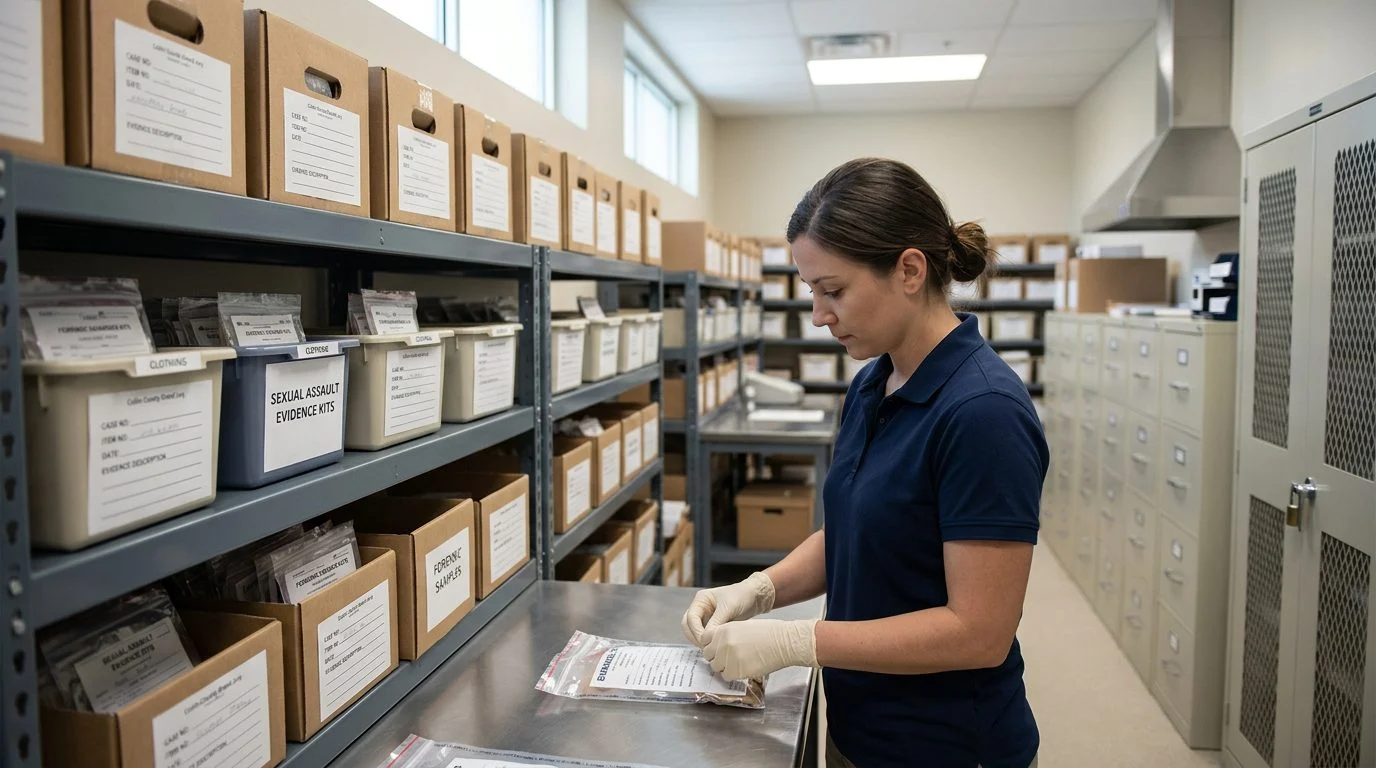
Collin County | Aggravated Sexual Assault Defense
Under Investigation or Facing a Grand Jury in Collin County?
Early decisions can shape everything that follows, so it helps to have a Texas criminal defense lawyer reviewing the facts with you from the start.
By Heather Barbieri · Published November 17, 2026
Collin County Aggravated Sexual Assault Grand Jury Indictment
If a grand jury may consider an aggravated sexual assault charge against you, you likely have many questions. A grand jury indictment is a written charge that the grand jury voted to bring.
This guide explains what an indictment is, what the charge requires, and what a defense lawyer reviews in a Collin County case. Barbieri Law Firm is an all-women criminal defense firm based in Frisco, Texas.
If you have just learned a grand jury may consider an aggravated sexual assault charge against you, you don't have to face it alone. Our team can talk with you about what comes next. Talk it through with our team — the first consultation is free, confidential, and carries no obligation.
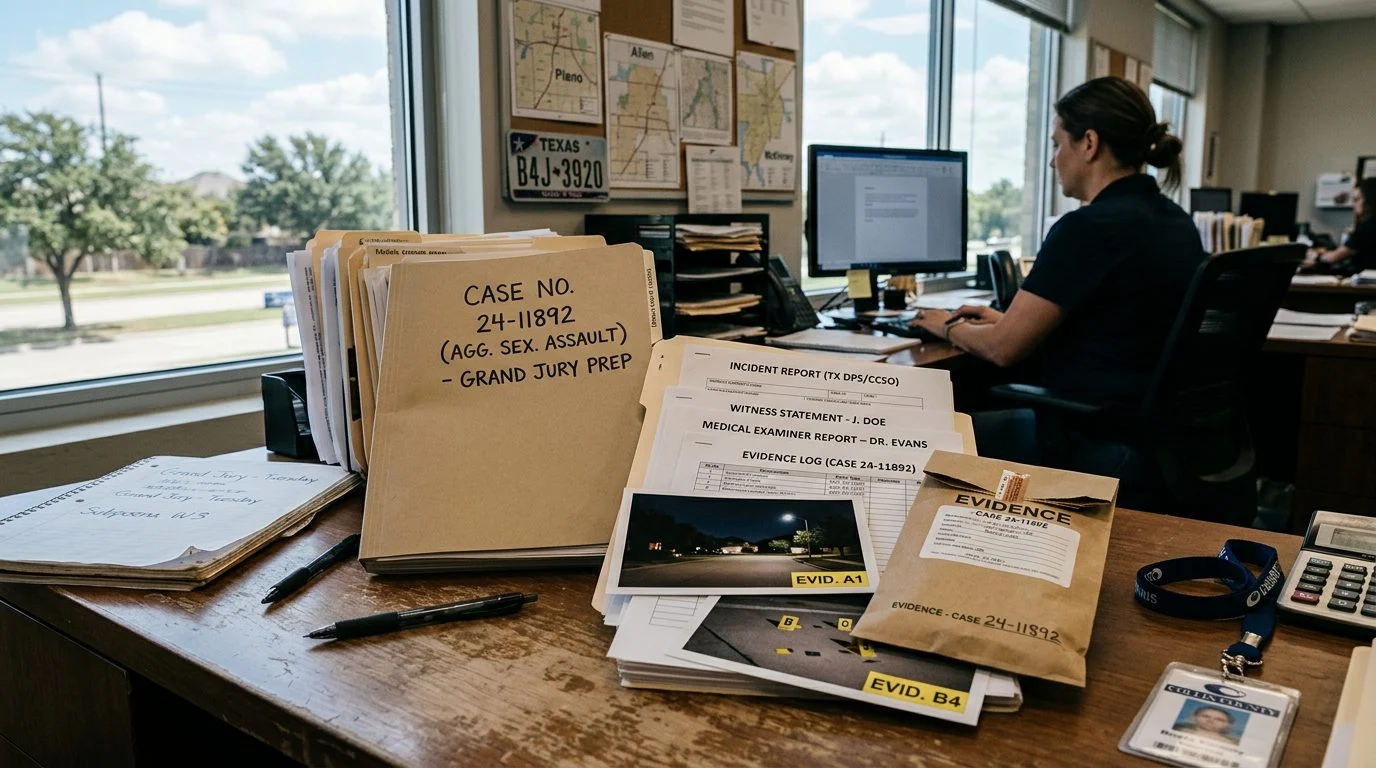
What a Grand Jury Indictment for Aggravated Sexual Assault Means
An indictment is the formal charge a grand jury issues after it votes. The grand jury must inquire into offenses subject to indictment, as Texas Code of Criminal Procedure art. 20A.051 describes.
Under Art. 20A.051, the grand jury must inquire into all offenses subject to indictment that any grand juror may know of or that the attorney representing the state or any other credible person brings to it. The vote requirement that at least nine grand jurors concur is in Art. 20A.301. Art. 20A.301 sets that vote requirement.
After all the testimony accessible to the grand jury has been given, the grand jury shall vote on the presentment of an indictment, as Art. 20A.301 provides. Texas law keeps grand jury proceedings secret (Art. 20A.202).
The prosecutor presents the state’s evidence and witnesses. The grand jury decides whether to indict.
What Aggravated Sexual Assault Covers Under Texas Law
Aggravated sexual assault is a first-degree felony under Texas Penal Code § 22.021. It starts with a sexual assault and adds at least one aggravating circumstance listed in the statute.
Those circumstances include:
- Causing serious bodily injury, or attempting to cause death
- Placing the victim in fear that death, serious bodily injury, or kidnapping will be imminently inflicted on any person, or that any person will become the victim of certain trafficking offenses, or threatening, by acts or words occurring in the presence of the victim, to cause any of those things
- Using or exhibiting a deadly weapon
- Administering, with the intent of facilitating the offense, a substance capable of impairing the victim’s ability to appraise the nature of the act or to resist the act.
- The victim being younger than 14, regardless of whether the person knows the victim’s age at the time of the offense.
A first-degree felony carries life, or any term from 5 to 99 years, in the Texas Department of Criminal Justice. A fine of up to $10,000 may be added, under § 12.32.
The exact wording of the indictment decides which circumstances the state alleges.
If your charge is aggravated assault, the same review steps apply to that offense’s elements and evidence. An aggravated assault lawyer reads the charging language closely before advising on any decision.
How the Grand Jury Stage Fits Into a Collin County Case
A case usually starts with an investigation, then a charge. The grand jury stage asks whether the evidence supports bringing that charge to court.
An indictment must meet formal requirements. A defect in those requirements is something a lawyer checks.
Felony cases in Texas move through several stages, and the steps that apply to your case depend on its facts.
Statements to police matter. Under Dickerson v. United States, Miranda warnings govern whether statements made during custodial interrogation can be used in court.
What Defense Work Includes at the Indictment Stage
A defense lawyer reviews the charge, the evidence, and your options. The work usually includes these steps:
- For child pornography and similar material covered by art. 39.15, a court must deny a defendant’s request to copy, photograph, or reproduce that material if the state makes it reasonably available, such as by giving ample opportunity to inspect it at a state facility.
- Exculpatory evidence. The state must disclose any exculpatory, impeachment, or mitigating evidence, including evidence that tends to negate guilt or would tend to reduce the punishment for the offense charged, under art. 39.14(h).
- Phone and location records. Police generally need a warrant to search a cell phone, as Riley v. California holds. The Court also held that a warrant is generally required for historical cell-site location records, as Carpenter v. United States explains.
- Statements. When the voluntariness of a statement is raised, the court must make its own finding, outside the jury’s presence, on whether it was voluntary, under art. 38.22.
- Bond. The lawyer reviews the amount and conditions and whether a motion to change them is appropriate.
- Right to counsel. You are entitled to consult in private with counsel in advance of a proceeding, under art. 1.051(a).
What to Expect: Step-by-Step Process
The case moves in stages, and each stage brings its own decisions.
- Free consultation. You review what you know about the indictment, the charge, and your bond status.
- Records review. The lawyer requests and reviews the charging papers and the state’s evidence through discovery.
- Bond review. If needed, the lawyer looks at motions to adjust conditions.
- Arraignment. You attend the court settings that follow the indictment.
- Pretrial work. The lawyer investigates, files motions where the facts support them, and talks with the prosecutor.
- Decision points. You decide on trial or resolution after the lawyer explains your options.
The timeline depends on the facts, the evidence, and the court’s schedule. No lawyer can predict how long any stage will take.
Not sure what your next step is?
Talk it through with our team — the first consultation is free, confidential, and carries no obligation.
Why Barbieri Law Firm for an Indictment in Collin County
Barbieri Law Firm is an all-women criminal defense firm in Frisco, Texas. It serves Collin County and the wider Dallas-Fort Worth area. The firm defends people accused of sex crimes and assaultive offenses, including aggravated sexual assault and aggravated assault.
Heather Jean Barbieri, Board Certified, Criminal Law — Texas Board of Legal Specialization. Our lawyers include Heather Barbieri and Carrie Thomas. Our support staff handles scheduling, records requests, and client communication.
We will review the evidence, including the charging papers, the statements, and any digital records, and explain your options. No lawyer can promise how a case will end.
Common Questions About Indictments and Aggravated Charges
How much time can an aggravated charge carry in Texas?
A first-degree felony carries life, or 5 to 99 years, in prison. A fine of up to $10,000 may be added.
Is it better to get a lawyer or an attorney?
The words describe the same licensed professional. What matters is that the lawyer is admitted in Texas and handles Texas criminal cases.
What should I not tell my attorney?
Tell your lawyer the full picture. As a client, you hold a privilege under the Texas Rules of Evidence to refuse to disclose, and to prevent any other person from disclosing, confidential communications made to facilitate the rendition of professional legal services to you. The rule also lists situations where this privilege does not apply, including a communication relevant to an issue of breach of duty by a lawyer to the client or by a client to the lawyer.
Should I talk to police before speaking with a lawyer?
When the voluntariness of an accused’s statement is raised, a Texas court must make its own finding, outside the jury’s presence, on whether it was voluntary, and the jury may consider the statement only if it believes beyond a reasonable doubt that it was voluntarily made, under art. 38.22.
Talk With a Collin County Defense Lawyer About Your Indictment
An indictment can arrive without warning. The days after it often bring questions about bond, court dates, and what the charge means for your life.
The initial consultation is free, confidential, and carries no obligation to continue. Call (972) 424-1902, schedule a free consultation, or send us your case details.
Attorney responsible for this site: Heather Barbieri, Barbieri Law Firm, Frisco, Texas.
How our team approaches an aggravated sexual assault matter
Reviewing the evidence
We review the police reports, any statements, and the evidence available so far, and explain what it shows and what it does not.
Explaining your options
We walk you through each option in plain language, including what may happen before any decision is made.
Protecting your position
We focus on keeping your statements and communications on your lawyer's side, so that nothing is said that could be used against you.
Preparing for what comes next
We help you understand each step of the process so you can make informed decisions with confidence.
Speak with a lawyer before you speak with investigators
Statements to police, messages, and social media posts about the allegation can become evidence that is difficult to undo. Talk to a lawyer before you respond to anyone about the case.
What to bring to your first consultation
The charge and any paperwork
Bring any subpoena, notice, or summons you have received, along with any documents from the police or prosecutor.
A timeline of events
Write down what you remember about the dates, places, and people involved while the details are still fresh.
Your questions
Think about what worries you most, whether that is your work, your family, or your record, so we can address it directly.
A confidential conversation
The first consultation is free, confidential, and carries no obligation to continue. Our team will answer your questions and explain your options.
Talk with our team about your Collin County case
Related practice areas
Request a Consultation
Fill out the short form and we will take it from there.