

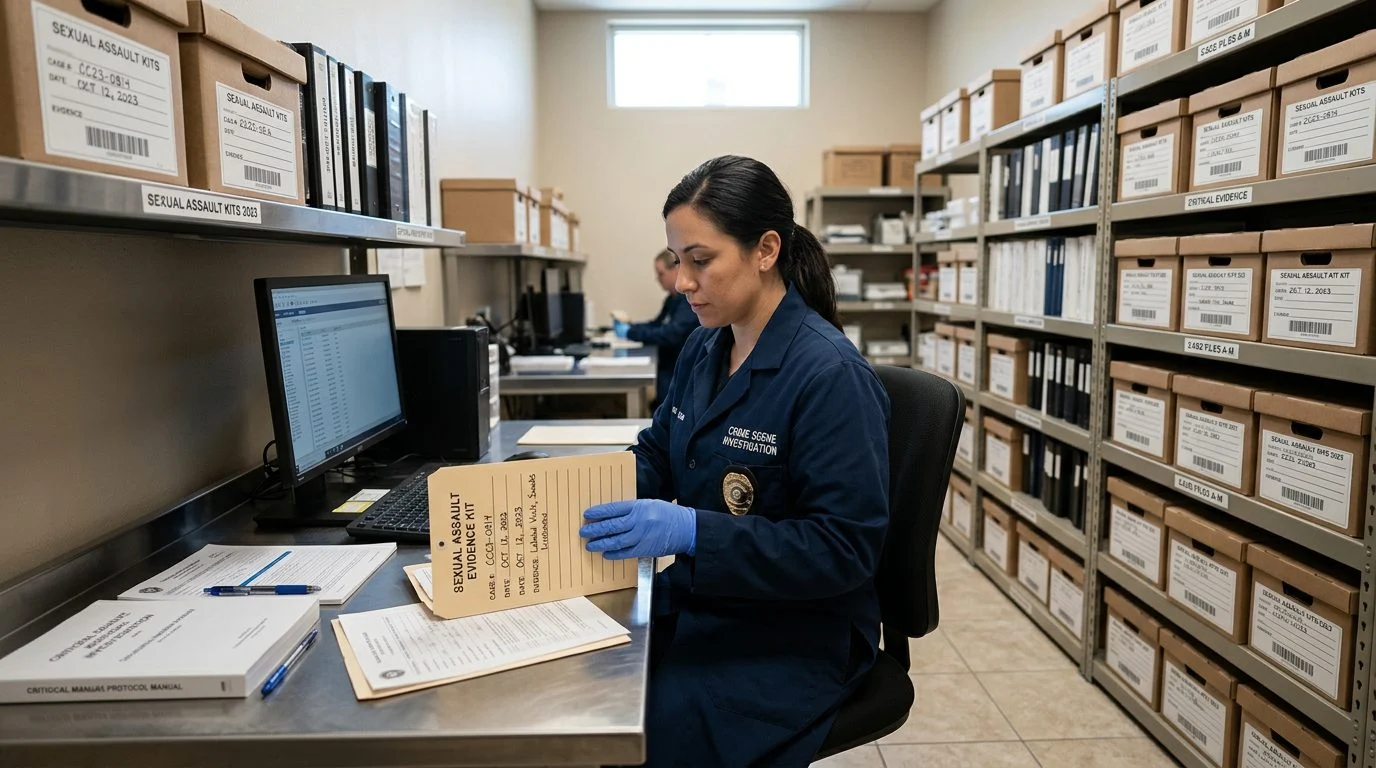
Aggravated Sexual Assault Defense · Collin County & Dallas-Fort Worth
Understanding the Forensic Evidence in Your Aggravated Sexual Assault Case
Barbieri Law Firm looks closely at how evidence was gathered, tested and written up, so you can see what the State's case actually rests on.
By Heather Barbieri · Published November 16, 2026
If you have been charged with aggravated sexual assault in Texas, the forensic evidence in your file may be the hardest part to understand. A forensic evidence review examines how the physical, biological and written evidence was collected, handled, tested and reported. A Texas sexual assault lawyer can run that review with you, step by step, and show what the evidence does and does not prove.
This page explains what a review looks at, how Texas discovery rules shape what you can see, and where a review stops. Barbieri Law Firm is based in Frisco, Texas, and defends people accused of sex crimes and assaultive offenses across Collin County, Dallas-Fort Worth and Texas.
What is a forensic evidence review, and who needs one?
A forensic evidence review is an examination, directed by your lawyer, of the physical, biological and written evidence the State plans to use in your case.
You may need one if you have been charged or told you are under investigation. The forensic material often shapes the decisions that come next, including any plea or trial choice.
Forensic reports are only as reliable as the work behind them. Someone collected each item, stored it, moved it and tested it. A review checks each of those steps against the written record.
Your lawyer’s work on this review rests on your Sixth Amendment right to the assistance of counsel for your defense. You do not need to understand every lab term before you act. Translating the reports into plain language is part of the review.
If you have been charged or told you are under investigation, our team can walk through the forensic evidence in your file with you. Talk it through with our team — the first consultation is free, confidential, and carries no obligation.
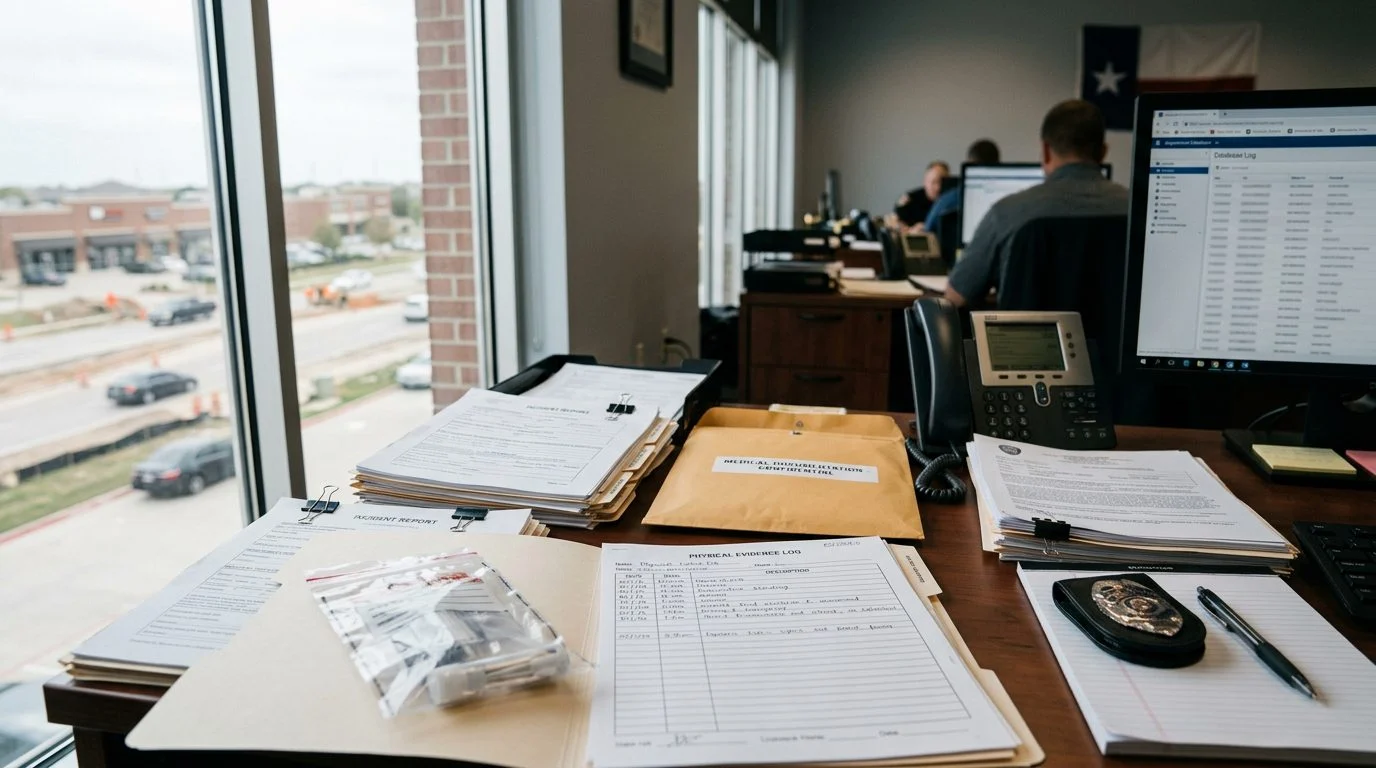
What forensic evidence usually matters in a Texas aggravated sexual assault case?
In a Texas case, the forensic evidence usually includes exam records, DNA results, physical items, medical records and phone data.
The charge carries serious stakes. Under Texas Penal Code § 22.021, aggravated sexual assault is a first-degree felony. The minimum prison term rises to 25 years in some cases, such as when the victim is younger than 10.
Common forensic items include:
- Sexual assault exam records and collection kits, including the kit log, medical notes and collection paperwork.
- DNA profiles, lab bench notes, instrument data and any statistics attached to a reported match.
- Photographs, swabs, clothing and bedding logs, and other physical items tied to the incident.
- Medical and toxicology records that bear on timing, injuries and the reported sequence of events.
Phone data needs its own look. Under Texas Code of Criminal Procedure art. 18.0215, an officer may not search a phone after a lawful arrest without a warrant under that article. The statute lists exceptions. The U.S. Supreme Court held in Riley v. California that a warrant is generally required before searching a cell phone, even one seized during an arrest. In Riley v. California, 573 U.S. 373, 401 (2014), the Court held that information on a cell phone is not immune from search, but a warrant is generally required before such a search, even when the phone is seized incident to arrest.
What does a review examine, step by step?
A review examines who handled each item, how it was tested, and whether the written record matches the rest of the file.
- Chain of custody: who collected, stored, moved and tested each item, and whether each handoff is documented.
- Collection and handling: whether protocols were followed, and whether the records show delays, gaps or contamination risks.
- Testing and wording: what the lab tested, what it did not test, and how a match or inconclusive result was described.
- Consistency: whether the forensic findings line up with dates, statements and medical notes.
- Missing material: reports mentioned but not produced, or results that were never explained.
Getting this material follows a legal process.
How does the process work, from first contact to decision?
The process starts with a consultation, moves through the file and the review, and ends with a decision on next steps.
- Consultation. You describe the charge and what you have received so far. The initial consultation is free, confidential, and carries no obligation to continue.
- Gather the file. Your lawyer requests the charging documents and the State’s disclosed evidence under art. 39.14.
- Build a timeline. The team organizes the forensic material and flags anything missing, incomplete or unexplained.
- Review the findings. Your lawyer explains in plain language which points help, which hurt and which remain open.
- Decide next steps. Options can include more records requests, an independent analysis where the facts call for one, or a plan for negotiation or trial.
Before any plea or trial, the State and the defense must acknowledge in writing or on the record what was disclosed, under art. 39.14(j).
What can a forensic review show, and what can’t it do?
A review can expose gaps, inconsistencies and unexplained results. It cannot decide your case or promise a result.
- A review shows what the forensic evidence proves, what it does not prove, and where the records are incomplete.
- A review can also confirm that the findings are sound. That may narrow the defense rather than widen it.
- A review does not by itself establish innocence or guilt.
- No lawyer can promise how a case will end. A review cannot promise that charges will be reduced or dismissed.
- Forensic findings are one part of the case. Statements, witness accounts and other records are reviewed alongside them.
Statements are a separate question. Under Dickerson v. United States, the admissibility of a statement made during custodial interrogation is not decided by the Miranda warnings alone. If you spoke with police, our lawyers can review the circumstances surrounding what you said and explain your options.
Why choose Barbieri Law Firm for this review?
Barbieri Law Firm is an all-women criminal defense firm in Frisco, Texas, that defends people accused of sex crimes and assaultive offenses.
- Focus: aggravated sexual assault, child sex crimes, online sex crimes, aggravated assault and family violence.
- Lawyers: Heather Barbieri and Carrie Thomas are the firm’s lawyers. Heather Jean Barbieri, Board Certified, Criminal Law — Texas Board of Legal Specialization.
- Team: support staff help organize the file while the firm’s lawyers review the evidence with you.
- Area: clients in Collin County, Dallas-Fort Worth and across Texas.
We will review the evidence, including the collection records, lab reports and phone data, and explain your options.
Not sure what your next step is?
Talk it through with our team — the first consultation is free, confidential, and carries no obligation.
Common questions about forensic evidence review
Most questions come down to what a review checks and how you get the evidence.
Does a review mean the State’s lab results are wrong?
No. A review checks how the evidence was collected, tested and reported. It does not assume the results are wrong.
Can I get the forensic evidence myself?
On a timely request, the state must produce and permit inspection of items such as offense reports and written or recorded statements of the defendant or a witness, subject to certain legal restrictions. Your lawyer handles those requests.
Can police search my phone after an arrest?
Under art. 18.0215, an officer generally needs a warrant to search a person’s cell phone after a lawful arrest. The statute lists exceptions, such as consent.
How long does a review take?
Timing depends on how quickly the State produces its file and how many items must be examined.
Talk with our team about the evidence in your case
If you have been charged, or told you are under investigation, you don’t have to make sense of the evidence alone.
Forensic reports, DNA tables and phone records can be hard to read when you are already dealing with a charge you did not expect. A Texas sexual assault lawyer on our team can walk through the charge and the evidence you have received so far.
Call (972) 424-1902, schedule a free consultation, or send your case details through our contact form.
Attorney responsible for this site: Heather Barbieri, Barbieri Law Firm, Frisco, Texas.
How our team approaches the evidence
We read the paperwork
We go through the collection records, lab reports and notes to see what was done, when it was done and by whom.
We question the handling
We look at how items were packaged, stored and transferred, and whether the records account for every step.
We explain what the results mean
We walk through what a test can and cannot show, in plain language, so you know what questions to ask.
We talk through your options
After the review, we explain what we found and the choices available to you, and we answer your questions.
A review is not a finding that the lab was wrong
What a forensic evidence review covers
Collection
Who collected the samples, where and how, and whether the collection followed accepted procedures.
Chain of custody
Each transfer of evidence from scene to lab to storage, and whether every hand-off is documented.
Testing and reporting
The methods used, the scope of the tests, and whether the written report says only what the data supports.
Requests for the file
Identifying the offense reports, statements and lab materials that should be requested from the State and reviewed with your lawyer.
Send us your case details and talk with our team about the evidence in your case.
Related practice areas
Request a Consultation
Fill out the short form and we will take it from there.