

Child Sex Crimes Defense | Frisco, Texas
Child Sex Crime Case Timeline in Texas: From Arrest to Trial
Each stage brings different decisions, paperwork and questions. Knowing what to expect lets you plan with a clear head and speak up at the right moments.
By Heather Barbieri · Published November 14, 2026
If someone you love has been charged with a child sex offense in Texas, you probably want to know how long a child sex crime case takes from arrest to trial. The honest short answer is that there is no set timeline. Each case moves through the same general stages, but the pace of each stage varies.
This guide walks through those stages in order. You’ll see where a case may sit, and why child cases can take more time than some other criminal cases.
Short Answer: Why There Is No Single Timeline
A child sex crime case has no single timeline because the stages depend on evidence, paperwork and the court’s calendar. The usual order is arrest, a magistrate hearing and bond, grand jury review, arraignment, discovery, pretrial motions, and then a plea or trial.
Texas criminal cases generally move through stages that include arrest, indictment, plea bargaining, trial and post-trial proceedings. This guide adds detail for cases that involve children.
Child cases can take more time at the evidence stage. Forensic interviews must be scheduled, and lab work, digital device review and records can take a while to arrive. Each delay can push back the next step.
Court calendars matter too. A judge’s docket, an unavailable witness or a reset hearing can change the date. Cases in Collin County and elsewhere in Texas follow the same general stages, but each court keeps its own calendar.
If your loved one has been arrested or charged, you don't have to work out the timeline alone, and we can talk through where the case stands. Talk it through with our team — the first consultation is free, confidential, and carries no obligation.

Arrest and the Magistrate Hearing
After an arrest, the first court step is a hearing before a magistrate. The magistrate addresses the charge and the bond, which is the money or conditions that let the accused stay out of jail while the case is pending.
Bond conditions can matter as much as the amount. Some orders limit contact with an alleged victim, bar visits to a home or school, or ban weapons. Judges set these terms case by case, so they can differ from one case to another.
Texas treats some violations as a separate crime. Under Penal Code § 25.07, knowingly or intentionally breaking certain bond conditions related to the safety of a victim or the community can be charged on its own. This applies in family violence, sexual assault or abuse, indecent assault, stalking and trafficking cases.
That’s why families should learn the exact terms early. A message or visit that seems harmless can still break a court order. Get a copy of the written terms and read them closely.
Grand Jury Review and Indictment
After charges are filed, a grand jury decides whether the case moves forward. The grand jury hears the State’s evidence, and the proceeding is not a trial.
Under Texas Code of Criminal Procedure art. 12.06, an indictment counts as presented once the grand jury has acted on it and the court has received it. How soon this happens depends on when the State finishes its investigation and presents the case.
Texas also sets time limits for bringing charges. Some offenses have no limit. Under article 12.01, indecency with a child under Penal Code § 21.11 has no limitation period.
Arraignment and the First Court Settings
Arraignment is the first formal court appearance after indictment, where the accused hears the charges and enters a plea. Entering a plea at this stage is a formal step, not the final decision in the case.
After arraignment, the court sets later dates. These can include pretrial settings, where the case’s progress is checked. Several settings usually come before trial, and the number changes from case to case.
Missing a court setting can create serious problems for the accused. Keep a written list of every date and what happened at each one. That list also helps you explain the case’s pace to family members who ask.
Discovery and Forensic Evidence in Child Cases
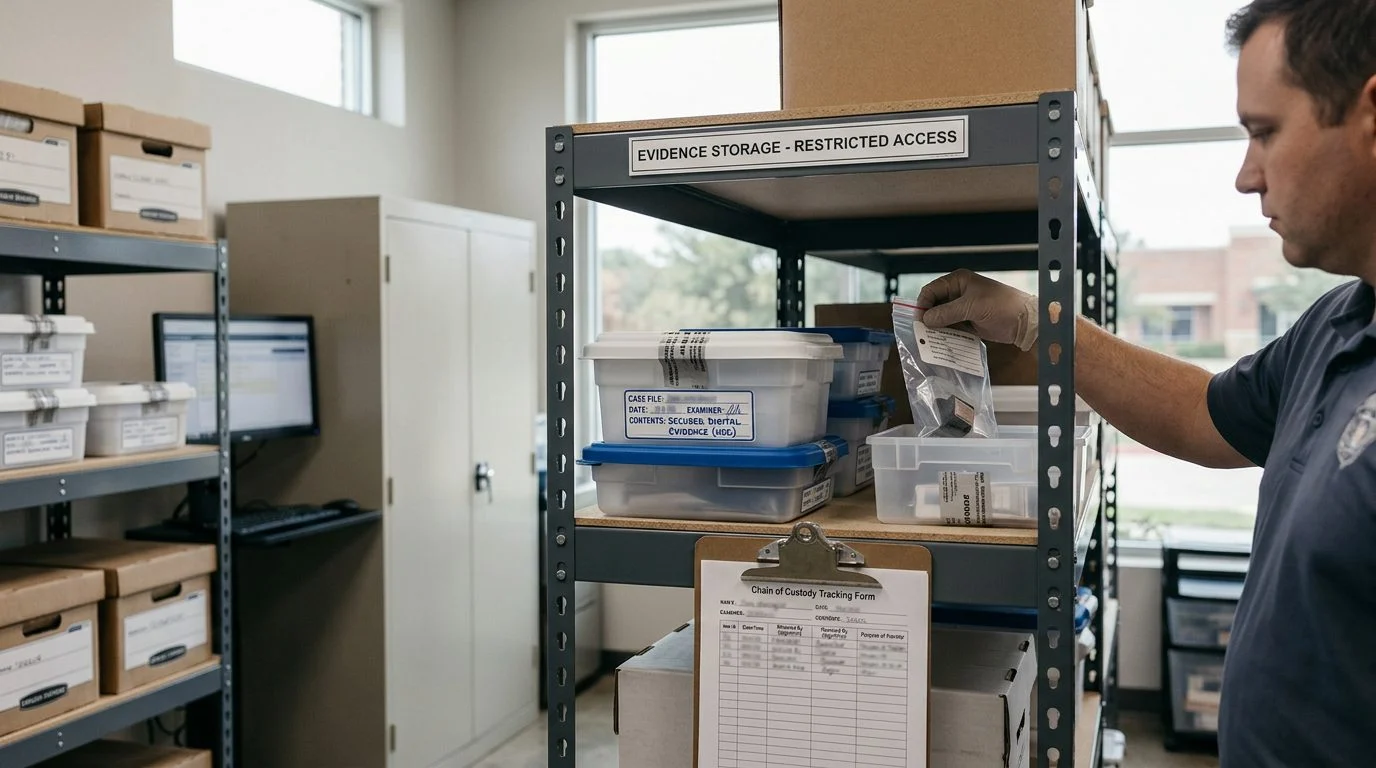
Discovery is the stage where the prosecution and the defense exchange evidence, and in child cases it can take a long time.
Child cases tend to involve evidence that takes time to gather and review. This can include recorded or forensic interviews of the child, medical or examination records, phone and computer data, messages and lab results. Materials often arrive in stages, and the defense needs time to review each batch.
Online cases add another layer. Cases involving online contact or images may involve a state or local task force that is part of the Internet Crimes Against Children program, a national network coordinated by the federal Office of Juvenile Justice and Delinquency Prevention, which investigates technology-facilitated child sexual exploitation.
Lab work, device exams and records requests can run on schedules that neither side controls. When that happens, the discovery stage stretches out. Ask the defense team what each delay means for the next step.
Pretrial Motions, Hearings and Continuances
Pretrial motions ask the judge to decide legal questions before trial, and they can add time to a case.
A motion can challenge whether certain evidence may be used, or whether the charge is legally sufficient. The judge holds a hearing and rules. Sometimes a ruling leads to new filings, and each step takes time on the court’s calendar.
A continuance is a postponement of a court date. Requests for more time can come from either side.
Motions are not all alike. A family should not assume how any one ruling will go, because each motion turns on its own facts and the law that applies to it.
Not sure what your next step is?
Talk it through with our team — the first consultation is free, confidential, and carries no obligation.
Plea Discussions or Trial Setting
If a case is not resolved, the court sets it for trial. Many cases end earlier through a plea agreement.
Plea discussions happen between the prosecutor and the defense after the evidence has been reviewed. A plea agreement is a deal in which the accused agrees to a plea in exchange for terms the State offers.
Counsel helps weigh the evidence and the options before that choice is made.
The trial date comes from the court’s calendar. It can move because of motions, continuances and the court’s docket. A trial setting is a court date, and it does not show how the case will be decided.

Talk With Us About Where Your Loved One’s Case Stands
The most useful next step is knowing which stage the case has reached. If your loved one has been arrested or indicted, the stages above can help you place the case. A bond review, a pretrial setting and a trial date each mean something different.
For the charge itself, read child sex crimes charge consequences in Texas. For the broader service, see our child sex crimes defense overview.
Barbieri Law Firm is based in Frisco, Texas. Our team defends people accused of sex crimes, aggravated sexual assault, child sex crimes, online sex crimes, aggravated assault and family violence across Collin County, Dallas-Fort Worth and Texas. The first consultation is free, confidential and carries no obligation to continue.
If your loved one has been charged, call (972) 424-1902 or send your case details through our contact form, and we’ll help you map where the case stands.
Common Questions
How long does a child sex crime case take in Texas?
There is no set length. Timing depends on the evidence, the court’s calendar and how often a setting is reset.
Can a child sex crime charge in Texas have no time limit?
Yes, for some offenses. Under article 12.01, indecency with a child under Penal Code § 21.11 has no limitation period.
Can breaking a bond condition be a separate charge?
Yes, in some cases. Under Penal Code § 25.07, violating certain bond conditions in these cases can be a separate offense.
Attorney responsible for this site:
Heather Barbieri, Barbieri Law Firm, Frisco, Texas.
How Barbieri Law Firm approaches the timeline
Early review of the evidence
We review the charging documents, interview records, digital evidence and any forensic reports as soon as we are retained, so you understand what the State has and what it still needs.
Protecting your rights at every stage
From the first contact with investigators through pretrial hearings, we advise you on when to speak, when to stay silent and what to avoid saying or posting.
Clear explanations of your options
We explain bond conditions, plea and trial options, and the risks of each path in plain language, so the decision stays yours.
Direct communication
You will know who to call and what to expect next, with questions answered by a lawyer on our team.
Speak with a lawyer before you answer questions
Talk with a lawyer before you answer questions, sign anything or send messages about the allegations.
The main stages of a Texas child sex crime case
Arrest and booking
Early statements made at this stage often matter most.
Bond and first court settings
The first court date usually introduces the charge and the next steps.
Investigation and discovery
Prosecutors and investigators gather interviews, forensic interviews, medical or digital records and other evidence. The defense reviews this material and may request more.
Trial or resolution
We prepare every case as if it will be tried, so each decision is made with full information.
Get your questions answered before the next court date. Your first consultation is free, confidential and comes with no obligation to continue.
Related practice areas
Request a Consultation
Fill out the short form and we will take it from there.