

Frisco, Texas | Child Sex Crimes Defense
Outcry Witness in Texas Child Sex Crime Cases
When a child's first statement about an alleged offense is repeated by an adult, that adult can become a central witness. Here is how that works and what it can mean for the person accused.
By Heather Barbieri · Published November 14, 2026
If your loved one has been charged with a child sex crime, you may have heard the phrase “outcry witness.” Here is what it means and why it matters.
An outcry witness is generally the first adult a child told about an alleged offense. Under Article 38.072 of the Texas Code of Criminal Procedure, that adult can sometimes repeat what the child said, even though an out-of-court statement is usually kept out of evidence.
This page offers general information about how a defense lawyer reviews the facts of a sex crimes case. It is general information, not advice about your loved one’s case.
What Article 38.072 of the Texas Code of Criminal Procedure Says
Article 38.072 makes a narrow exception to the hearsay rule for a child’s first report of an alleged offense. Hearsay is a statement made outside court and offered to prove that it is true. If your loved one has already spoken with investigators, our lawyers can review what was said and the circumstances around it, and explain what it may mean for the case. The statute is about the first telling, not the last one. This article lets certain child statements in through the adult who heard them. The outcry witness tells the court what the child said. That witness did not see the event. Keep that split in mind. The child may or may not testify at trial, and the case is built differently depending on that choice. That difference matters, because the jury hears the child’s words through another adult’s voice.
If your loved one's case turns on a child's first disclosure, we can talk through what that means, and the first consultation is free and confidential. Talk it through with our team — the first consultation is free, confidential, and carries no obligation.

Which Cases the Outcry Statute Reaches
The outcry rule covers only certain listed offenses, so the exact charge matters. Under Penal Code § 22.011, a child is a person younger than 17 for purposes of that sexual assault offense. Indecency with a child under Penal Code § 21.11 also covers a child younger than 17. Under Penal Code § 21.02, a person commits continuous sexual abuse if, during a period that is 30 or more days in duration, the person commits two or more acts of sexual abuse while 17 years of age or older, against a victim who is a child younger than 14 years of age or a disabled individual. Aggravated sexual assault is a first-degree felony under Penal Code § 22.021. The minimum prison term is increased to 25 years if the victim is younger than 10 at the time of the offense, or if the victim is younger than 14 and the offense is committed in one of the manners described in the statute, such as causing serious bodily injury, using a deadly weapon, acting with another person, or administering a substance to impair the victim. Family violence is defined separately in Texas Family Code § 71.004, which defines the term and does not address outcry statements. Family Code § 71.004 covers certain acts by a member of a family or household, including threats that cause fear of imminent harm. Our practice areas include family violence defense and child sex crimes defense.
Who the Outcry Witness Is and What Counts as an Outcry
The outcry witness is usually a parent, relative, teacher, or counselor, the first adult the child told. A remark that the child was upset is different from a statement describing what someone did. Courts look closely at the words the child used and who heard them.
Details can shift over time. A first account is often short. Later forensic interviews, school talks, and court testimony may add or change details. That is why the first adult’s notes, texts, or memory of the child’s exact words can matter so much.
How the Court Decides Whether the Statement Comes In
A judge decides whether the outcry statement can come in, before the jury weighs it. This is a question of admissibility. Admissibility is different from credibility. The judge asks whether the statement can be heard at all. The jury then decides how much to believe it.
The defense can question the outcry witness about the first conversation. Topics include when it happened, where, who was present, and what words the child used. Those details can show how the first conversation actually went.
Early review matters. The dates and filings in the case file can set the pace for every later step, so timing is worth tracking from the start.
Why the Outcry Witness’s Account and Timing Matter to the Defense
The outcry witness’s account and the timing of the first disclosure often shape how the case is tested.
Timing is a key point. How long after the alleged event the child first spoke, and what prompted it, can change how the account is viewed. Compare the first account with later statements. Differences in wording, order, or detail are points the defense examines.
Who the child spoke with first matters too. Questions that suggest an answer, or repeated talks about what happened, can change a child’s words. These are facts the defense looks at closely. It’s easy to assume the first conversation was minor. In court, it often matters most.
If a child later recants, the first outcry becomes central. Our guide on child recantations explains what happens next. How any case unfolds depends on the facts, the record, and the court’s rulings.
Repeated Violation of Court Orders Is a Different Offense
Repeated violation of certain court orders or conditions of bond is a separate offense, with its own elements. Penal Code § 25.072 makes it a separate offense to engage two or more times, during a period that is 12 months or less in duration, in conduct that violates certain court orders or conditions of bond under Section 25.07 in family violence, child abuse or neglect, sexual assault or abuse, indecent assault, stalking, or trafficking cases. Penal Code § 25.072 sets the felony level for this offense at third degree, and at second degree in certain cases.
Readers who search for “section 072” may land on either statute. The outcry rule sits in the Code of Criminal Procedure, not the Penal Code.
Where does the outcry issue fit in time? It often comes up before trial, so it shapes the early months of a case. Our guide on child sex crime timelines walks through the stages around that hearing.
Not sure what your next step is?
Talk it through with our team — the first consultation is free, confidential, and carries no obligation.
Talking Through an Outcry Witness Issue in Your Loved One’s Case
The first step is a conversation about who the outcry witness is and when the first disclosure happened. Bring what you have, including any charging papers, dates, and the names of the adults the child spoke with first. Bring the dates you remember, even if they are rough.
Barbieri Law Firm, based in Frisco, Texas, defends people accused of child sex crimes, sex crimes, aggravated sexual assault, and family violence. No lawyer can know how a case will end, but a careful review of the facts is a sound first step. Call (972) 424-1902 or send your case details through our contact form. The initial consultation is free, confidential, and carries no obligation to continue.
Attorney responsible for this site: Heather Barbieri, Barbieri Law Firm, Frisco, Texas.
Frequently Asked Questions
What is an outcry witness in a Texas case?
An outcry witness is the adult who first hears a child describe an alleged offense. Article 38.072 lets the court admit that person’s testimony about the child’s statement in certain cases, even though the statement is normally hearsay.
Who can serve as the outcry witness in a Texas case?
Usually it is the first person 18 or older, other than the defendant, to whom the child made a statement about the offense. The statement must describe the offense in some discernible way, not just a general complaint, for the court to treat that person as the outcry witness.
Does the judge check an outcry statement before the jury hears it?
Yes. The judge holds a hearing outside the jury’s presence to decide whether the statement is reliable, based on its timing, content, and the circumstances in which it was made. The prosecution must also give the defense notice of its intent to use the outcry witness before trial, as the statute requires.
What should my loved one do if an outcry statement is the basis for a charge?
Your loved one should speak with a criminal defense lawyer soon, because the outcry hearing and notice deadlines affect how the case proceeds. Barbieri Law Firm offers a free, confidential initial consultation with no obligation to continue. You can call (972) 424-1902 or send your case details.
How Barbieri Law Firm approaches an outcry witness issue
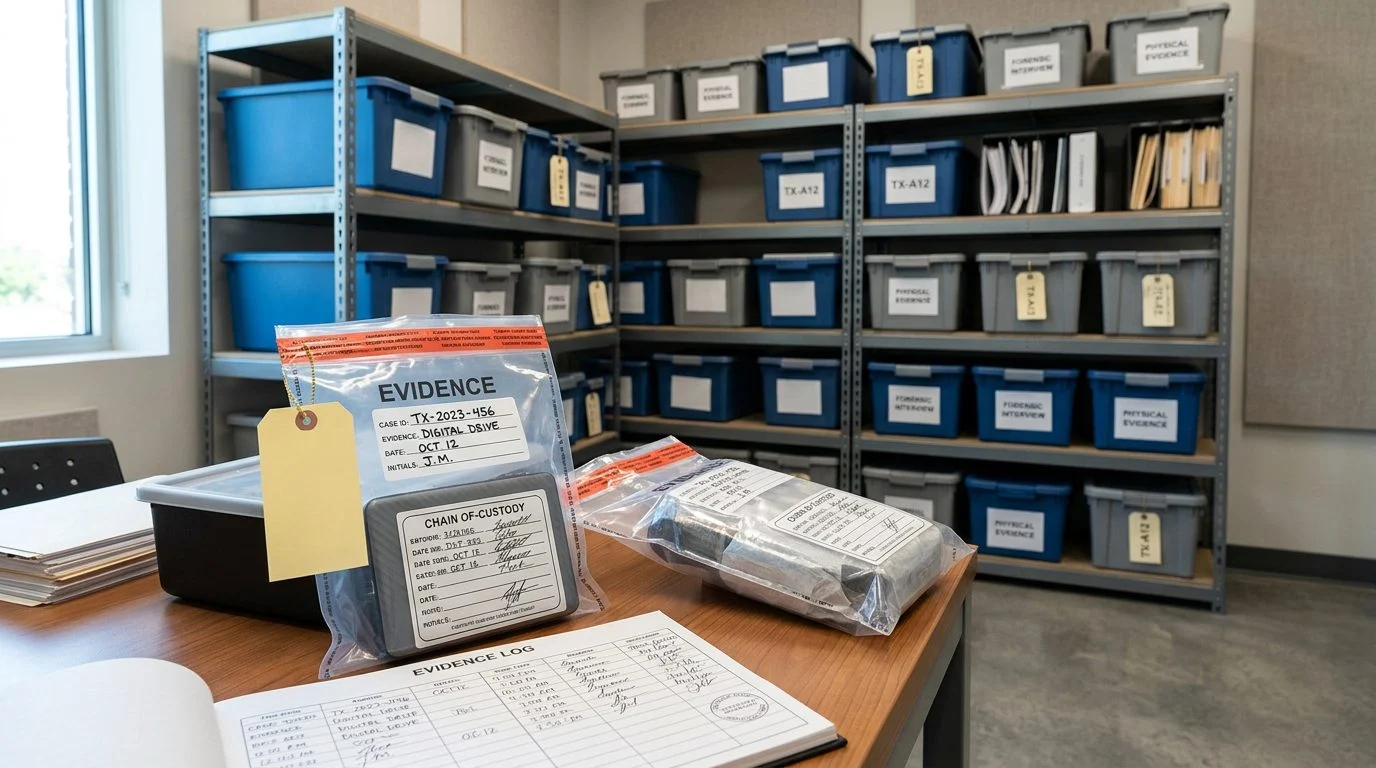
We review the first statement
We look at who heard the child's statement, when it was made, and how it was recorded or repeated, including any notes, reports and interview records.
We examine the outcry witness's account
We compare what the witness says the child reported with other accounts, the timing of the disclosure and the surrounding circumstances.
We evaluate the evidence for the defense
We identify the legal questions raised by the outcry testimony and explain how they may affect the case, so you understand your options from the start.
Important: talk to a lawyer before you answer questions
Statements made to police, child protective services, school staff or family members can become part of a case. Before you discuss the allegation, speak with a criminal defense lawyer who can explain the process.
Questions we ask in every outcry witness case
Who heard the statement first?
The identity, relationship and role of the first adult listener can shape how the testimony is evaluated.
How was the statement repeated?
We look at the exact words used, how they were recorded and whether they were changed as they were passed along.
What happened before and after?
Context matters. We review what prompted the disclosure, what followed it and whether other statements were made.
Is the testimony admissible?
We assess whether the outcry testimony meets the legal requirements the State must satisfy, and we raise every objection the facts support.
Speak with Barbieri Law Firm about your case. Your first consultation is free, confidential and without obligation.
Related practice areas
Request a Consultation
Fill out the short form and we will take it from there.