

Criminal Defense | Collin County and Dallas-Fort Worth
Accused of Child Abuse in a Texas Custody Battle? Talk to a Criminal Defense Lawyer First
Allegations raised during a custody dispute can lead to police interviews, CPS involvement and criminal charges, often all at once. Here is how we help.
By Heather Barbieri · Published November 13, 2026
Being accused of child abuse during a custody battle can turn your life upside down in a single week. You did not choose this, and the decisions in front of you feel urgent. Here is the short answer: in Texas, one accusation can open a criminal case, a CPS investigation, and a custody dispute at the same time, and each runs on its own rules.
A Child Abuse Accusation Can Open Several Cases at Once
A single report can start a criminal investigation, a CPS investigation, and a custody fight at the same time. The Texas DFPS abuse reporting guidance explains that CPS civil investigations of a child’s welfare are separate from law-enforcement criminal investigations of child-abuse allegations. That split matters.
Custody matters move on their own track.
This page covers the criminal case first, then how it touches family and CPS matters.
An accusation in the middle of a custody fight can feel like it is closing in, and you do not have to face it alone. A free, confidential consultation is a good place to start talking. Talk it through with our team — the first consultation is free, confidential, and carries no obligation.

Which Texas Charges Can Come From an Accusation Like This?
Depending on the facts, an accusation can involve several offenses, and each carries its own range of punishment.
- Aggravated sexual assault, under Texas Penal Code § 22.021, is a first-degree felony. The minimum term rises to 25 years if the victim is younger than 10.
- Sexual assault, under Texas Penal Code § 22.011, is a second-degree felony, a first-degree felony in certain cases, or a state jail felony if the offense is committed under Subsection (a)(1) and the actor has not received express consent as described by Subsection (b)(12).
- Indecency with a child, under Texas Penal Code § 21.11, is a second-degree felony when it involves sexual contact. It is a third-degree felony when it involves exposure.
- Sexual performance by a child, under Texas Penal Code § 43.25, is a second-degree felony, or a first-degree felony if the child is younger than 14.
- Online solicitation of a minor, under Texas Penal Code § 33.021, is a second-degree felony when a person knowingly solicits a minor online to meet for sexual activity.
A first-degree felony carries imprisonment for life or for 5 to 99 years, and it may add a fine of up to $10,000 (Texas Penal Code § 12.32). That range is the law. It does not show where any single case will land, and no lawyer can predict that.
Registration is also offense-specific. The Code of Criminal Procedure art. 62.001 definitions list online solicitation of a minor and several sexual offenses, so the exact charge decides which rules apply.
What Does a Defense Review in These Cases?
A defense starts by testing whether the state can prove each element of the charge with the evidence it actually has.
- Forensic interview. Many children’s advocacy centers record these. Professional standards call for open-ended questions and avoiding repeated questioning of a child (OJJDP child forensic interview guidance). We measure the recording against that standard.
- CPS records. We compare the timeline and every prior statement from the child, the accuser, and witnesses.
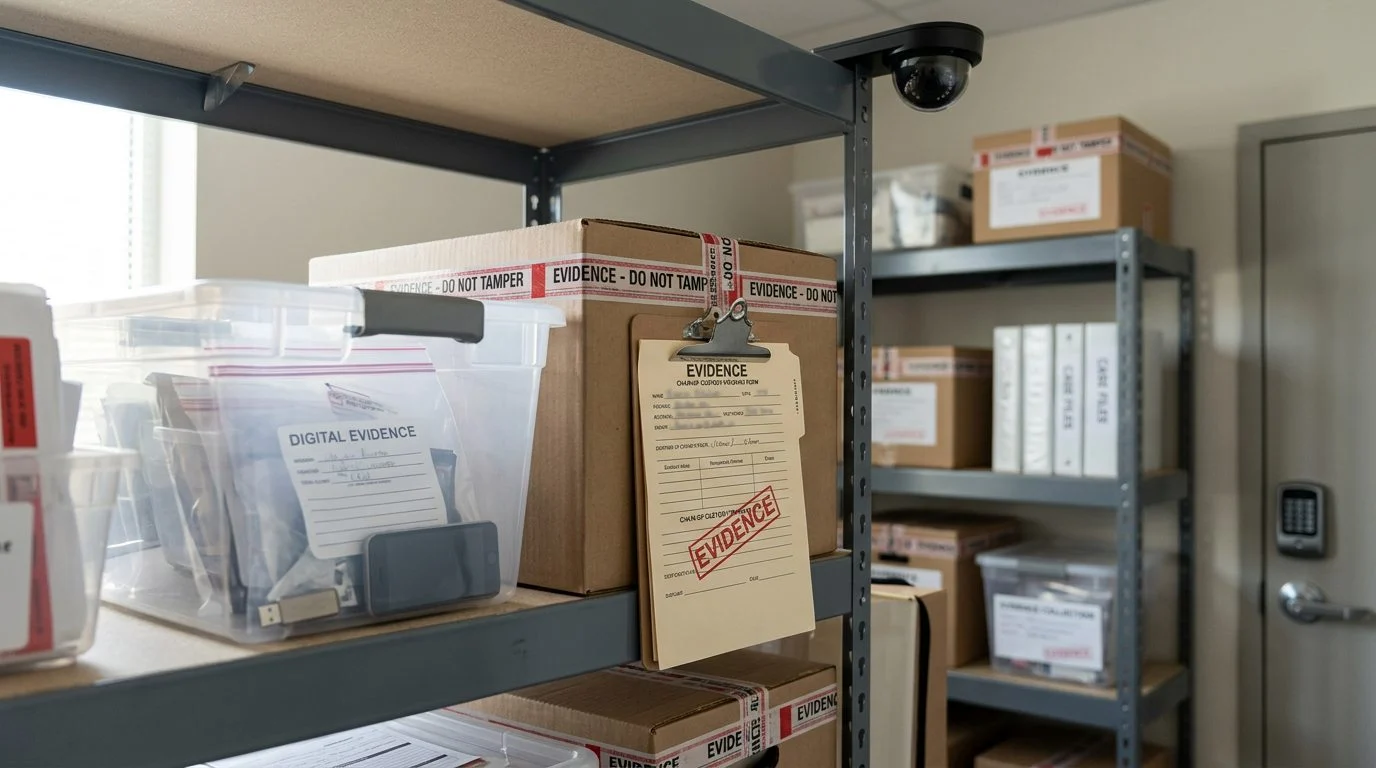
- Digital evidence. We ask how phone, message, and online data was collected, whether warrants were proper, and whether chain of custody holds.
- Timing. We ask when the accusation surfaced compared with custody filings or support disputes. These are questions to test, not conclusions about the accuser.
- Bond and protective orders. A court can issue a temporary ex parte order without notice or a hearing if it finds a clear and present danger (Texas Code of Criminal Procedure art. 7B.002). In a protective order, a court may also bar going near a protected child’s home or school (Texas Family Code § 85.022).
How Does a Case Like This Move Forward?
A case usually moves through a consultation, protective steps, evidence review, pretrial work, and then negotiation or trial.
- Free, confidential consultation. You explain what happened and what you have been told. There is no obligation to continue.
- Protective steps. We review bond terms, contact limits, and how to handle questions from police, CPS, or the other parent.
- Evidence collection. We request recordings, records, and digital data.
- Pretrial work. Where the facts support it, we file motions that challenge the evidence or the charging theory.
- Negotiation and options. We review what the prosecutor offers and discuss trial candidly, so you can decide.
Timing depends on the county, the court, and how complex the evidence is. We explain each stage as it arrives.
How Do Family and CPS Matters Affect the Criminal Case?
Speak with us before you answer questions in any of these settings.
A pending criminal case can also affect a temporary custody order, visitation, or a CPS safety plan. We explain how each order connects to the criminal case and what the court is deciding. Keep a written record of every court date and order as it arrives.
Do not contact the child or the accuser in any way that could break a court order or bond condition. A prosecutor, not the accuser, makes the charging decisions. We focus on your criminal defense case. We do not handle family or CPS matters.
Why Work With Barbieri Law Firm on This Kind of Case?
Barbieri Law Firm is an all-women criminal defense firm in Frisco, Texas. It defends professionals accused of sex crimes and assaultive offenses. The firm serves Collin County, Dallas-Fort Worth, and Texas.
Heather Jean Barbieri, Board Certified, Criminal Law — Texas Board of Legal Specialization.
Carrie Thomas is also a lawyer at the firm. Our team includes assistants and office staff who keep your file organized.
Our approach is process-driven. We review every element, every recording, and every record before recommending a path. We explain what we find in plain terms.
Not sure what your next step is?
Talk it through with our team — the first consultation is free, confidential, and carries no obligation.
Your Questions, Answered
Here are short answers to common questions about these cases.
Can a custody filing alone lead to a criminal charge?
Does a CPS finding decide whether I committed a crime?
Can the accuser end the criminal case?
The prosecutor makes charging decisions. The accuser’s wishes do not settle the case on their own.
Should I talk to police or CPS now?
Talk with us first.
Will a conviction always require registration?
Whether a conviction requires registration turns on the specific offense and on how the definitions in art. 62.001 apply to it.

Talk Through Your Situation Before Anything Else
Your next step is a free, confidential initial consultation, with no obligation to continue. An accusation has landed in the middle of a custody fight. The decisions about your bond, your case, and your children feel urgent right now. Call (972) 424-1902 or send your case details through our contact form.
Attorney responsible for this site: Heather Barbieri, Barbieri Law Firm, Frisco, Texas.
How our team approaches these cases
Reviewing the allegation
We review the accusation, the reports, the timeline and any records connected to the custody dispute so you understand what the State has and what it may be missing.
Protecting your statements
We advise you on interviews with police, CPS and investigators before you say anything that could be used in the criminal case or the custody case.
Coordinating both sides
We look at how the criminal allegation and the family court matter may affect each other, and explain the options available to you.
Clear, direct communication
We explain each step in plain language and keep you informed.
Before you speak about the allegation
Talk with us before you give a statement to police, CPS or investigators, and avoid discussing the accusation in text messages, social media or with the other parent. Early statements can affect both the criminal case and the custody case.
Situations we handle
Child abuse allegations
Criminal charges or investigations that arise from accusations made during a divorce, custody modification or parenting dispute.
Child sex crimes allegations
Defense for parents, relatives and caregivers accused of child sex offenses, including cases that begin with a family court complaint.
Family violence allegations
Defense for family violence charges and related accusations that surface when a custody relationship breaks down.
Police and CPS investigations
Guidance before, during and after interviews, home visits and investigative steps by police or Child Protective Services.
Your first consultation is free, confidential and comes with no obligation to continue. Speak with Barbieri Law Firm about your case.
Related practice areas
Request a Consultation
Fill out the short form and we will take it from there.