

Child Sexual Abuse Evidence Challenges in Texas
By Heather Barbieri · Published October 20, 2026
What evidence is commonly used in Texas child sexual abuse prosecutions, such as forensic interviews, DNA, and digital records, and how is it challenged?
Texas child sexual abuse cases often rely on the child’s account, a recorded forensic interview, medical findings, and DNA or digital records when they exist. Each type can be tested for how it was gathered, handled and explained. That testing is where most child sexual abuse evidence challenges in Texas begin.
Not every case has physical or digital proof. Many rest mainly on what the child said and how that statement was recorded and repeated. In those cases, the interview record and the timeline of who heard what, and when, often carry the most weight.
This guide walks through each common type of evidence. It also covers the questions defense review usually asks about each one. For the broader process, read our child sex crimes defense guide.

How are forensic interviews used, and how are they challenged?
A forensic interview is a structured conversation with a child about possible abuse. A trained interviewer usually conducts it, often at a child advocacy center. It is usually recorded, and the recording is often the most important piece of this kind of evidence.
Defense review looks closely at how the interview was done. Key questions include:
- Was the interviewer trained, and did the interview follow a set protocol?
- Were the questions open-ended, or did they point the child toward a particular answer? Questions that point a child toward an answer can suggest answers to the child.
- Was the whole interview recorded, or only parts of it?
- How many interviews did the child have, and who was present?
Earlier statements matter too. A child may have talked about the topic with a parent, a school employee or a friend before the interview. Those conversations can shape what a child says later. The defense asks whether those statements were written down, and when they happened.
The recording and the interviewer’s notes are the main tools for checking consistency. A written timeline shows who spoke with the child and in what order. It also shows whether the account changed over time, and how. A change in wording does not always mean the account is untrue, so each change needs context.
How does outcry testimony work under Texas law?
Texas law has a special rule for some statements a child makes about abuse.
Defense review commonly examines several points:
- Who was the first adult the child told, and when?
- What exact words did the child use, as that adult remembers them?
- Did the child speak up on their own, or did the statement come in answer to questions?
- Did the account change over time, and what caused any change?
The defense can also question the outcry witness about context. What was happening at home or at school? Did the witness have a reason to believe or doubt the child? What conversations came before the statement? Memory of exact words can shift over time, so the date of each conversation matters.
Other rules also shape what a jury hears.
How is DNA evidence challenged in child sexual abuse cases?
DNA results show that genetic material was present. They do not, by themselves, show when it got there, how it got there, or under what circumstances. That gap is the starting point for most DNA challenges.
Defense review usually looks at several areas:
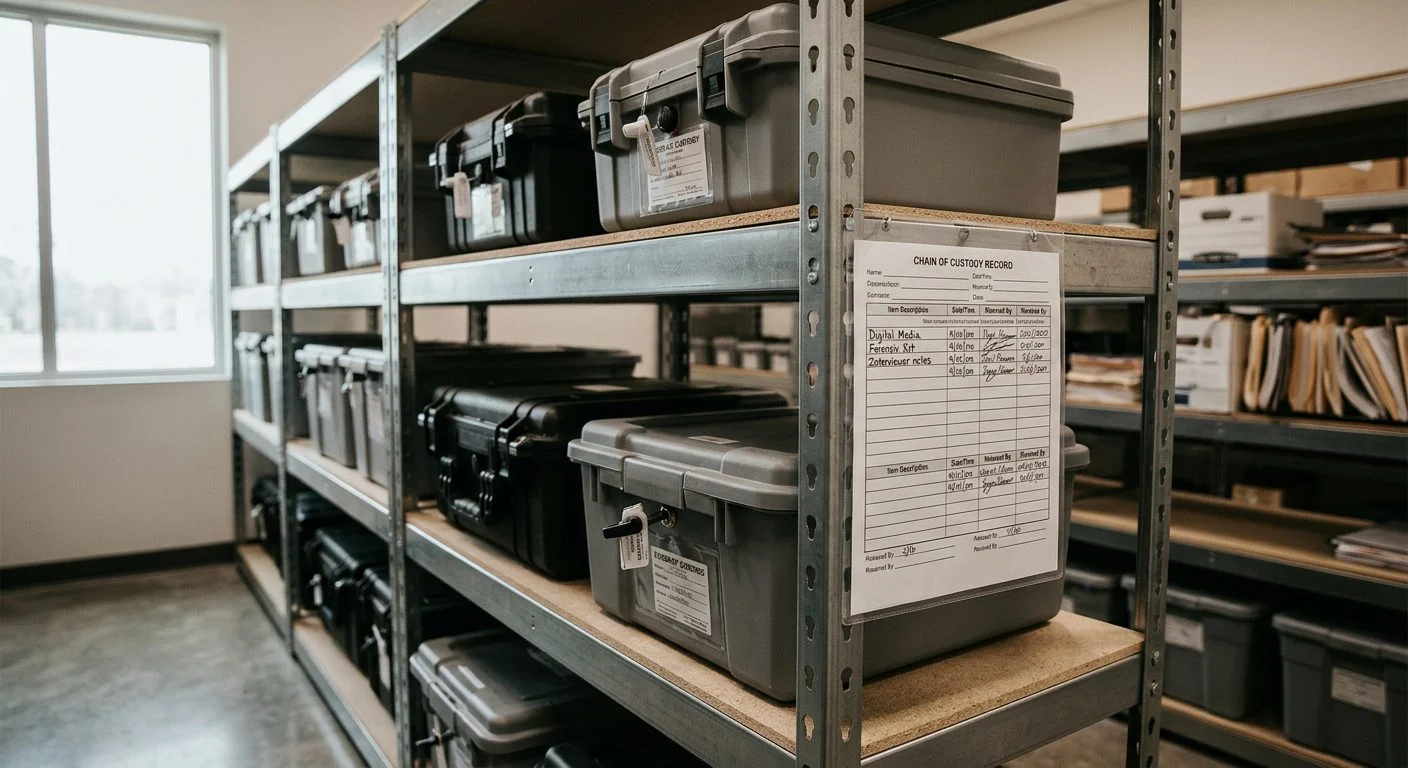
- Chain of custody: who collected the sample, where it went, and who handled it at each step.
- Lab protocols, and whether they were followed.
- Contamination risk during collection, storage or testing.
- The scope of what was tested. A result on one item does not cover others.
- How the results were explained to the jury, and whether the explanation went beyond what the testing showed.
Innocent explanations also matter. Genetic material can be present through ordinary contact, shared household items, or contact that has nothing to do with the charged conduct. Each case turns on its own facts, so these explanations are examined one by one.
DNA also connects to time limits. Texas Penal Code § 12.01 says a person adjudged guilty of an offense under this code shall be punished in accordance with this chapter and the Code of Criminal Procedure. The rule that some sexual assault prosecutions have no limitation period when collected biological matter has not yet been DNA tested, or was tested and does not match the victim or any readily identified person, is set out in Texas Code of Criminal Procedure art. 12.01.
How are digital records and online evidence challenged?
Digital evidence includes phone extractions, text and app messages, images and video files, metadata, IP addresses, and cloud or social media account records. Each item can be challenged for who made it, when, and how it was pulled from the device.
Attribution is often the central question. Who had access to the phone or account? Were passwords shared? Can the content be tied to the accused person, rather than another user of the same device? A message on a shared family tablet does not automatically point to one person.
Search questions matter as well. Did the warrant describe the devices and accounts to be searched? Did the search stay within that scope? If a search went beyond its written limits, the defense can raise that issue.
Technical questions come next. Dates and time zones can be wrong or misread. Deleted content can be recovered in ways that need explaining. The defense can ask whether the extraction tool and process were reliable. It can also ask for the full extraction report, not only the excerpts a party chose to show.
How Texas law defines a minor and how that affects the charge
Texas law uses age thresholds to decide which offense applies. The child’s exact age at the time of each alleged act matters. A date that is off by a few weeks can change which provision applies.
Several age rules matter here. Under Texas Penal Code § 21.11, indecency with a child applies to a child younger than 17. Under Texas Penal Code § 22.011, sexual assault of a child applies regardless of whether the person knows the child’s age at the time.
Continuous sexual abuse has its own age rule. Under Texas Penal Code § 21.02, the child must be younger than 14 or disabled, and the accused must be 17 or older.
Age is usually proven with records such as birth certificates or school records. Those records can be checked for accuracy. Texas also requires a judge to make an age-based finding in some cases, under Texas Code of Criminal Procedure art. 42.017.
The accused person’s age can matter too. Indecency with a child includes an affirmative defense if the accused was not more than three years older than the victim and of the opposite sex, did not use duress, force, or a threat, and meets the registration conditions under Texas Penal Code § 21.11(b). Whether that defense fits depends on the facts.
How do statutes of limitations affect evidence in these cases?
Time limits for child sexual offenses vary by offense. The timing of a disclosure can affect which limits apply, so the dates need careful review. Texas law lists some offenses with no limitation period.
Time also changes the evidence itself. Memories can shift. Physical evidence can degrade. Messages can be deleted or lost. Witnesses can become harder to locate. Each of these affects how well the proof can be tested.
Some time does not count toward the limit. Under Texas Code of Criminal Procedure art. 12.05, the time an accused person is absent from the state is not counted. Neither is the time an indictment, information or complaint is pending. Each date in a case should be checked against the law in effect at the time of each alleged act.
If a child sexual abuse investigation affects someone you care about
If an investigation affects someone you care about, the first step is understanding the evidence and the questions it raises. You may be reading about a forensic interview or a DNA report while worried about a child or relative. That is a hard place to be.
No lawyer can predict how a particular piece of evidence will be treated. The evidence described here is reviewed case by case, and each item depends on how it was gathered and explained.
Frequently asked questions
What are the most common child sexual abuse evidence challenges in Texas?
Defense review usually tests how evidence was gathered, handled and interpreted. Recorded interviews, DNA and digital records are common targets.
Can DNA show when abuse happened?
No. DNA results show that genetic material was present. They do not, by themselves, show when or how it got there.
Is there a time limit for child sexual abuse charges in Texas?
It depends on the offense and the facts. Some offenses have no limitation period under Texas law.
If you want to talk through the evidence in your situation, Barbieri Law Firm offers a free, confidential initial consultation with no obligation to continue. Call (972) 424-1902, or send your case details through our contact page.
Attorney responsible for this site: Heather Barbieri, Barbieri Law Firm, Frisco, Texas.
Ready to take the next step?
Related practice areas
- Child Sex Crime Collateral Consequences in Texas
Request a Consultation
Fill out the short form and we will take it from there.