

Criminal Defense · Frisco, Texas
Text Messages in a Texas Criminal Case? Talk to a Lawyer Before You Respond
A phone can hold years of conversations, and a prosecutor may see all of them. Here is how texts tend to come into a case and what to think about first.
By Heather Barbieri · Published November 20, 2026
The short answer: a judge can see texts, but seeing them is not the same as the jury hearing them
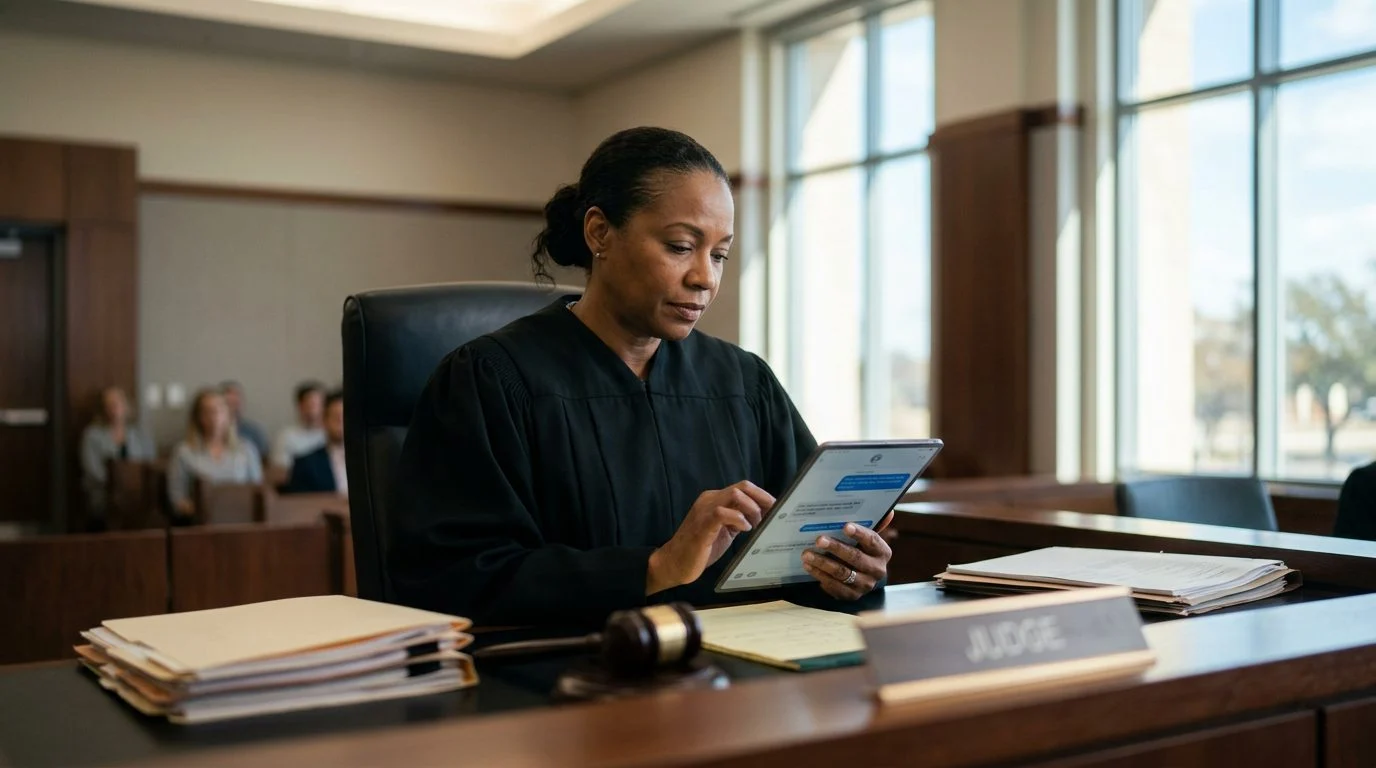
A judge can read text messages in a Texas case, and the judge often decides whether they reach the jury. Reading a message and admitting it as evidence are two separate steps. Whether a particular text will be considered depends on the facts of the case.
The judge acts as a gatekeeper. Two people can read the same text and reach different conclusions about what it means.
In a protective-order hearing, the judge has a set task. At the close of the hearing, the court must find whether family violence has occurred (Texas Family Code § 85.001). A text may be part of the evidence the judge weighs for that finding. That is why a message that seems minor can matter a great deal.
If a text message is part of a charge or protective order in your family's case, our team will review it with you and explain your options. You don't have to sort it out alone. Talk it through with our team — the first consultation is free, confidential, and carries no obligation.
Can text messages be used as evidence in court?
We will review with you whether the evidence in your case can be used, and explain what that means for your options.
Relevance comes first. A message that shows a threat, a plan or the state of a relationship may meet that test.
Texts can also be the conduct itself. Under Texas law, a person commits an offense by knowingly or intentionally violating a covered protective order, or a bond condition set in a family violence, sexual assault or abuse, indecent assault, stalking, or trafficking case that relates to the safety of a victim or the community, through threatening or harassing communication with a protected person or family or household member, or through any communication when the order prohibits all communication. It covers direct communication with a protected person in a threatening or harassing manner. It also covers communication in any manner, except through the person’s attorney or a court-appointed person, when the order bars all contact. Whether a message to a protected person can support a charge depends on whether it is threatening or harassing, or whether the order prohibits all communication, and on whether it violates a covered order or bond condition.
In general, texts face the same basic questions as letters or emails. Who wrote them? What do they say? When were they sent? The phone details are what make texts different in practice.
How a text gets admitted: proving who sent it and what it says
A message on a screen does not prove by itself who typed it. Courts look at context to answer that question. Useful proof can include the sender’s phone number or account, the content of the exchange, the way the conversation flowed, and testimony from a participant or from the person who pulled the messages from a phone.
Screenshots and printouts are common, but they are not automatically accepted. A screenshot that cuts off the phone number, the date or the rest of the conversation invites a challenge. How the messages were captured can become a dispute of its own. Someone may ask who had the phone, who knew the password, and whether the messages were changed before they were saved.
A person may also deny sending a message. When that happens, the case may turn on other proof, such as account records or the testimony of people who saw the exchange.
Hearsay: when a text counts as the sender’s own statement
A text offered to prove that what it says is true can face a hearsay objection. Hearsay generally means an out-of-court statement offered to prove the truth of what it says. Courts recognize exceptions to that general rule.
Courts often treat a person’s own words differently when the other side offers them against that person.
A text may also be offered for a different reason. The stated purpose of the text matters. A lawyer can raise that point in response.
How texts are collected: phone searches and warrants
Texts usually reach a case through a seized phone, a forensic copy of the phone, a cloud backup, or a message the other person saved and handed over. A forensic copy is a full extraction of a phone’s data made by a technical examiner. A cloud backup is data stored by an account service.
A warrant is a written order from a judge that authorizes a search. The scope of a warrant matters. So does whether officers stayed within it.
How a phone was searched can become a basis to challenge the evidence. A defense lawyer may file a motion to suppress, which asks the court to keep certain evidence out. Whether that request succeeds turns on the specific search and the record in the case.
Texts in family violence and protective-order cases
In family violence cases, texts are often offered to show the relationship, a threat, or a pattern of conduct. The same admission questions apply.
Texas law defines family violence to include certain acts by a member of a family or household against another member. That includes an act intended to cause physical harm, bodily injury, assault or sexual assault. It also includes a threat that reasonably places the member in fear of imminent physical harm, bodily injury, assault, or sexual assault (Texas Family Code § 71.004). Under Texas Family Code § 71.004, “family violence” includes an act by a member of a family or household against another member of the family or household that is a threat that reasonably places the member in fear of imminent physical harm, bodily injury, assault, or sexual assault, but does not include defensive measures to protect oneself.
A protective order can limit communication. A court may prohibit a person found to have committed family violence from communicating with a protected person in a threatening or harassing manner (Texas Family Code § 85.022).
Reconciliation between the parties does not affect an order’s validity or an officer’s duty to enforce it. Under Penal Code § 25.07(d), reconciliatory actions or agreements by the people affected do not affect the order’s validity.
Not sure what your next step is?
Talk it through with our team — the first consultation is free, confidential, and carries no obligation.
What cannot be used as evidence in court, and where a text can be challenged
No text is automatically admitted. A judge can keep one out for several reasons. It may be hearsay that fits no exception.
Evidence gathered through an unlawful search may be challenged in a motion to suppress.
Even when a judge admits a text, its meaning stays open. Tone, slang, timing and context can change what a message means. A ruling that a text can come in does not settle what the message meant when it was sent. That question often comes down to the full conversation.
If a text message is part of your situation
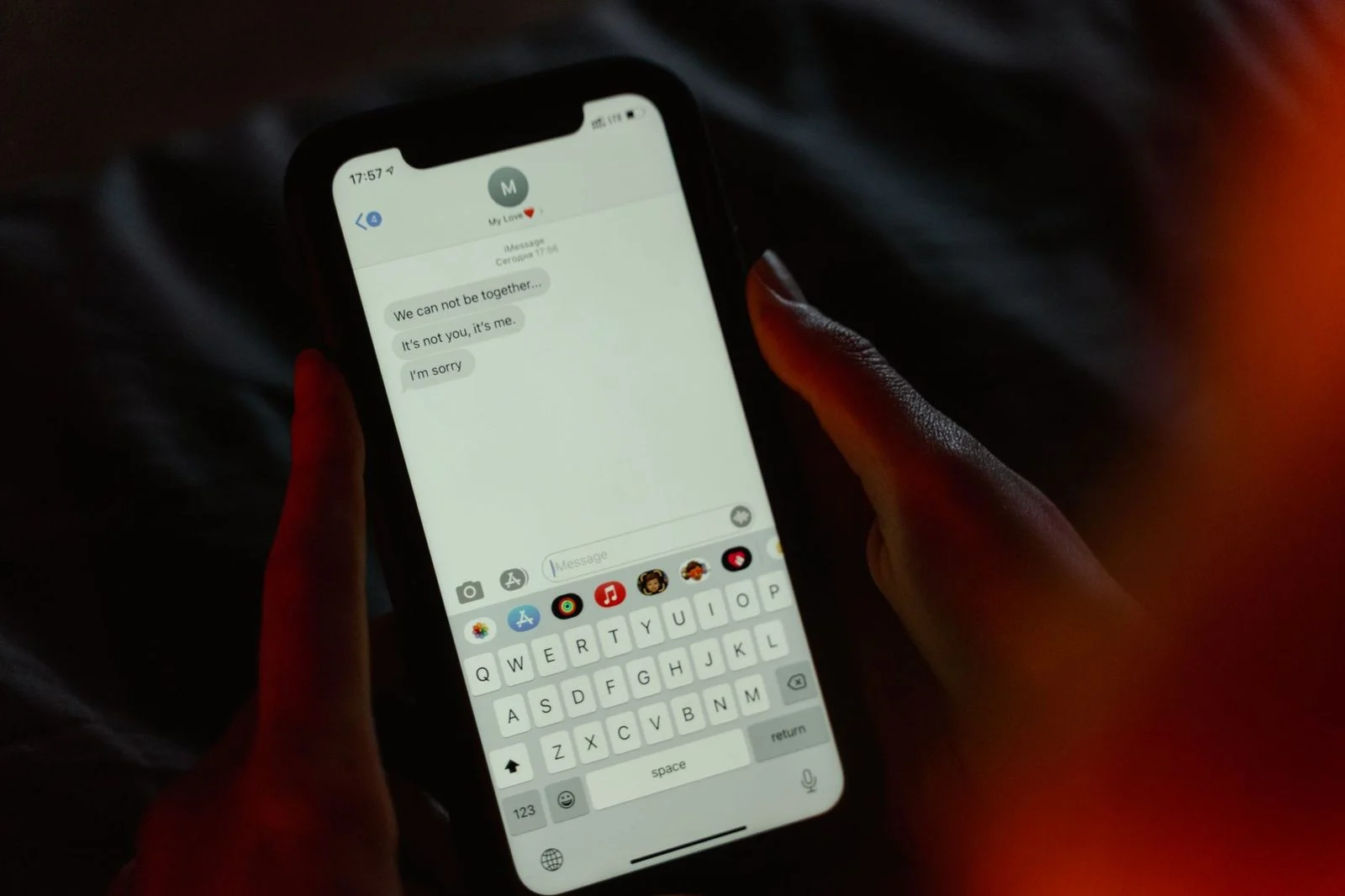
A lawyer can review a text message with you and explain the options that fit your facts. You may be trying to make sense of a message named in a charge, a police report or a protective order. You may also be worried about a message a family member or friend sent or received. These situations are stressful, and it is normal not to know what happens next.
A first conversation with our firm covers the messages themselves. It also covers the phone or extraction if one exists, the charge, and the timeline of events. We explain the options that apply to those facts. The first consultation is free, confidential, and carries no obligation to continue.
If a text message is part of your situation, call Barbieri Law Firm at (972) 424-1902 or send your case details through the contact page.
Can a judge read my text messages?
Yes, a judge can review text messages offered in a case.
Can a text message violate a protective order in Texas?
It can. Texas Penal Code § 25.07 covers certain communications made in violation of a bond condition or protective order.
Can a text be used against me in a family violence case?
It can be offered to show a threat, a relationship, or a pattern of conduct. The same questions about authenticity and hearsay still apply.
Attorney responsible for this site: Heather Barbieri, Barbieri Law Firm, Frisco, Texas.
Kinds of messages that come up in these cases
Messages from a phone or social account
Texts, app messages and social media posts can be collected from a phone, a cloud account or the other person's device. Where a message came from and who sent it are often central questions.
Messages tied to a protective order or bond condition
Some communications are restricted by a bond condition or protective order. Whether a message falls under one of those restrictions depends on its wording, timing and the order itself.
Messages offered to show a relationship or timeline
Prosecutors and defense lawyers may each use messages to describe what happened and when. Context, including what came before and after, can change how a message reads.
Deleted or edited messages
Messages that were deleted, edited or pulled from a backup raise questions about how they were recovered and whether the full conversation is shown.
How our team approaches text message evidence
We review the full conversation
We look at the complete thread, the dates, the sender and the surrounding messages, not only the excerpt that was flagged.
We ask how the messages were obtained
We examine how the phone, account or records were accessed and whether that process raises questions we need to address.
We explain your options in plain language
We will walk you through what the evidence shows, what it may not show, and the choices available to you at each stage.
Before you reply, stop and call a lawyer
Messages you send after an arrest or accusation can become evidence. Do not delete, edit or forward messages, and do not contact the other person about the case, until you have talked with a lawyer about what to do.
Have a text message question about your Texas case?
Related practice areas
- Online Sex Crimes Defense Lawyer
- What is the legal age of consent in Texas according to the Texas Penal Code?
- Is sexting illegal in Texas?
- Statute of Limitations for Texas Sex Crimes and Aggravated Assault
Request a Consultation
Fill out the short form and we will take it from there.