


Criminal Defense | Frisco, Texas
Charged with Online Solicitation of a Minor? Understand the Law and Your Options Early
Barbieri Law Firm defends clients accused of online sex crimes across Collin County, Dallas-Fort Worth and Texas, and reviews every charge with the same care from the first call.
By Heather Barbieri · Published November 16, 2026
If you’re searching for online solicitation of a minor federal law Texas, here is the short answer. A federal charge arises under a separate body of law from Texas law. You may be facing this charge now, and you may be trying to understand what it means for you.
Online Solicitation of a Minor: Texas Law Explained
Texas makes it a crime for a person 17 or older, with the intent to commit a listed offense, to communicate sexually with a minor online or send a minor sexually explicit material, and for anyone to knowingly solicit a minor online to meet for sex. Texas Penal Code § 33.021 covers online solicitation of a minor, and the offense is defined by the conduct and intent described in that section. The contact must happen over the internet, by email, by text, through another electronic message system, or through a commercial online service. A “minor” is someone younger than 17, or someone the accused believes is younger than 17. The statute uses the words “intentionally” and “knowingly,” so the accused’s state of mind matters. A defense review often begins with the specific elements of the charge. The statute also says it is not a defense to the solicitation charge that the meeting did not happen.
If your loved one is facing this charge, you don't have to work out the Texas rules alone. Our team can talk through the case with you. Talk it through with our team — the first consultation is free, confidential, and carries no obligation.

What Does Online Solicitation of a Minor Look Like?
The charge involves electronic messages, such as texts, email, messaging apps, social media, or an online service. The statute defines “sexually explicit” broadly. It covers any communication, language, or material, including a photo or video, that relates to or describes sexual conduct. Some cases begin when an adult communicates with someone who is, or whom the adult believes is, a minor. A charge can rest on what was written, so the exact wording matters. Context matters too. Questions include who started the contact, what was said before and after, and whether a meeting was proposed. For a general picture of online enticement, the National Center for Missing & Exploited Children describes common tactics. The Texas Attorney General’s cyber safety page also publishes Texas information on online solicitation of minors.
Is It Illegal to Be Friends With a Minor Online?
No, friendship alone is not the conduct this statute describes. The statute targets sexually explicit communication with a minor or sending a minor sexually explicit material, when done by a person who is 17 years of age or older with the intent to commit an offense listed in Article 62.001(5)(A), (B), or (K), Code of Criminal Procedure, and it also targets soliciting a minor to meet for sexual contact, sexual intercourse, or deviate sexual intercourse. Each of these requires the intent the statute spells out. Because the law turns on content and intent, the messages themselves are central to the case. Simply being in contact does not decide the charge.
The statute also gives defenses to the solicitation-to-meet charge. It is a defense that the accused was married to the minor, or that the accused was not more than three years older than the minor and the minor consented to the conduct. One mistake to avoid is guessing what a message meant. Reading a few messages and assuming the worst is one error. Assuming they are harmless is another. Neither guess replaces a review of the complete record.
What Are the Penalties for Online Solicitation of a Minor?
The offense is a third-degree or second-degree felony, and the level depends on the subsection charged and the minor’s age. A violation of subsection (b), the sexually explicit communication or distribution offense, is a third-degree felony. It becomes a second-degree felony if the minor is younger than 14, or whom the accused believes is younger than 14. A solicitation to meet under subsection (c) is a second-degree felony.
A third-degree felony carries prison for up to 10 years and at least 2 years under Penal Code § 12.34. A second-degree felony carries prison for up to 20 years and at least 2 years under Penal Code § 12.33. A second-degree felony may also include a fine of up to $10,000, in addition to prison. The punishment can also go up one level. If it is shown at trial that the offense happened during regular school hours, and the accused knew or reasonably should have known the minor was enrolled in school, the punishment moves to the next higher category. Families usually ask about penalties first. A defense review looks at the charged subsection, the alleged age, and the school-hours question together.
Sex Offender Registration and What Happens If You Fail to Register
A conviction for this offense can bring sex offender registration duties under Texas law. The Texas definitions in Code of Criminal Procedure art. 62.001 list a violation of Penal Code § 33.021 among the offenses they cover. When registration ends depends on the offense and how the case was resolved. The chapter sets different end points for different situations, as shown in Code of Criminal Procedure art. 62.101. Questions about registration should come up early in the case. Failing to meet registration duties can create separate legal trouble. That is one more reason to address these questions now, not after a deadline has passed.
Additional Consequences of Being Convicted
A conviction can affect life well beyond the sentence. Families often ask about work, professional licenses, housing, and family relationships. Registration, covered above, is one of these consequences. Other consequences can continue long after a sentence ends. Whether any given consequence applies depends on the case and the conviction. For that reason, it helps to make a written list before the first meeting. Write down the questions you have about the charge and your case. Add every court date and deadline you know about, and any letters from police or the court. Bring that list to your first conversation with our team.
Not sure what your next step is?
Talk it through with our team — the first consultation is free, confidential, and carries no obligation.
Decoy and Adult Sting Cases: What Is Entrapment?
Entrapment is a defense that applies when law enforcement induced the charged conduct, not when police only gave a chance to commit an offense. Under Penal Code § 8.06, it is a defense that the accused engaged in the conduct because a law enforcement agent induced it. The inducement must use persuasion or other means likely to cause persons to commit the offense. Merely giving someone an opportunity to commit an offense is not entrapment.
Some online solicitation cases begin with a decoy operation, in which someone posing as a minor answers messages online. The definition of “law enforcement agent” is in Penal Code § 8.06(b) and covers state, local, and federal personnel. It also covers people acting on their instructions. Whether entrapment applies depends on the facts of the contact and the police conduct. Each case is reviewed on its own record.
How a Lawyer Defends Online Solicitation of a Minor Charges
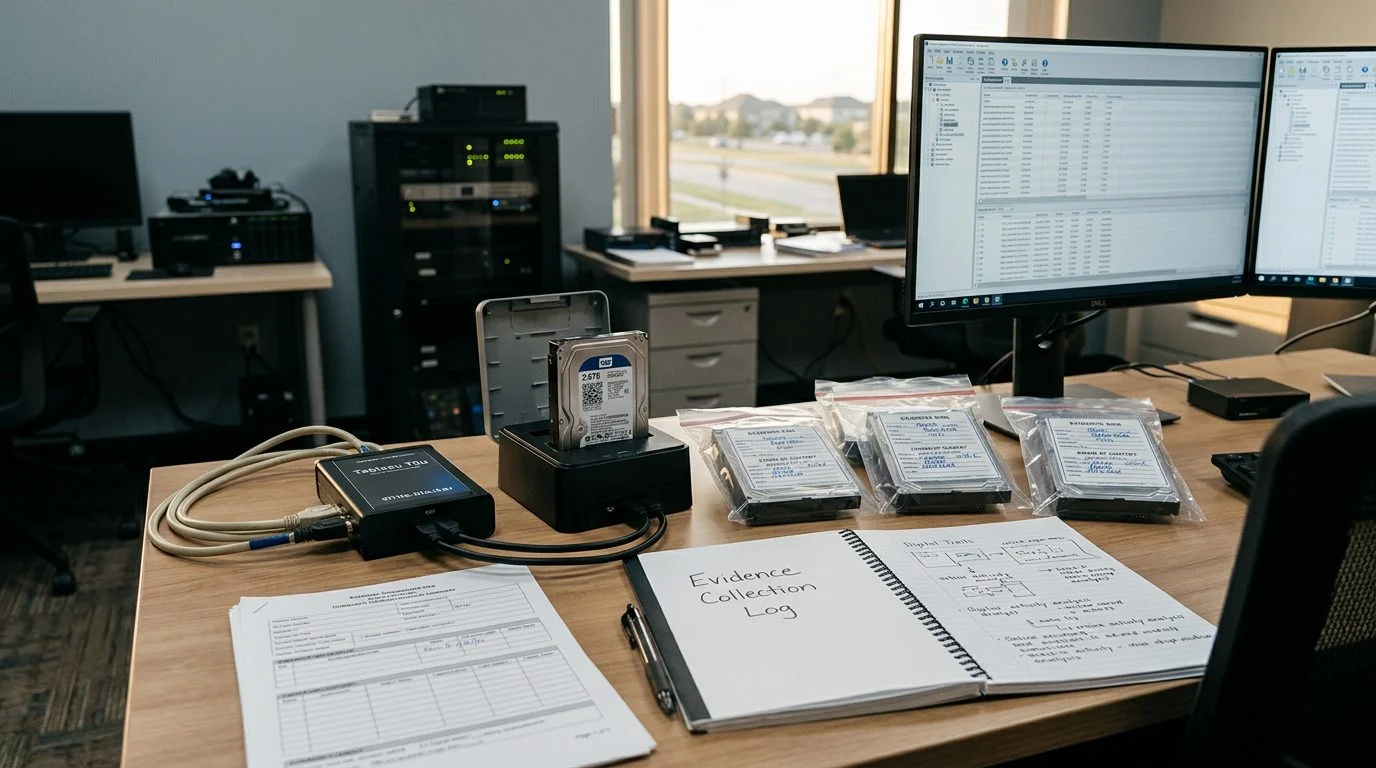
A defense review starts with the full set of messages, how the contact began, the ages involved, and the investigation behind the charge. Our team reviews the evidence, including the messages, investigation records, and any statements. We then explain the options that may apply. Investigations of this kind may involve task force work. The federal Internet Crimes Against Children Task Force Program describes its role in investigating technology-facilitated child sexual exploitation. The review also looks at the accused’s belief about age, the statute’s defenses, any entrapment question, and whether the school-hours increase is claimed. No lawyer can promise a particular result. Every case is reviewed on its own facts.
You Are Facing This Now: Talk to a Texas Criminal Defense Lawyer
If you are facing this charge now, you can talk with our team about the case before making any decisions. You did not choose this situation, and it’s hard to know what comes next. Barbieri Law Firm is based in Frisco. The firm handles sex crimes and online sex crimes cases for clients in Collin County, across the Dallas-Fort Worth area, and throughout Texas. Call (972) 424-1902 or send your case details through the contact form. The first consultation is free, confidential, and carries no obligation to continue.
Is online solicitation of a minor a felony in Texas?
Yes. Under Penal Code § 33.021, the offense is a third-degree or second-degree felony, depending on the subsection and the minor’s age.
Does federal law apply to online solicitation of a minor in Texas?
Federal law is a separate body of law. Under Texas law, the same conduct may be prosecuted under the Texas section, another law, or both.
Is entrapment a defense to online solicitation of a minor in Texas?
Texas Penal Code § 8.06 makes entrapment a defense. Giving someone an opportunity to commit an offense is not entrapment.
Does a conviction require sex offender registration in Texas?
A conviction can bring registration duties, because the Code of Criminal Procedure’s definitions list a violation of § 33.021.
Is it illegal to be friends with a minor online?
Friendship alone is not the conduct the statute describes. The charge turns on sexually explicit communication with a minor, distributing sexually explicit material to a minor, or a solicitation to meet, with the required intent.
Attorney responsible for this site: Heather Barbieri, Barbieri Law Firm, Frisco, Texas.
How We Approach an Online Solicitation Case
We review the charging documents
We read the charge, the allegations and the timeline closely so you understand exactly what the State must prove.
We examine the digital evidence
We review messages, device data, account records and how the evidence was collected, and we identify questions that need answers.
We explain your options
We walk you through the possible paths forward in plain language so you can make informed decisions about your case.
We treat your privacy seriously
Everything you share with our team is kept confidential, and we handle sensitive matters with discretion.
Before You Speak With Anyone, Pause
Do not post about the allegations, and do not discuss the details with anyone until you have spoken with a criminal defense lawyer.
What Your First Consultation Covers
Your Situation
Tell us what you have been told, what you have received and what questions are most urgent for you.
The Evidence
We discuss the evidence we have seen so far and what additional information we need to review.
Your Options
We explain the possible next steps, the risks of each and how the process typically unfolds in Texas courts.
Talk With Barbieri Law Firm. The First Consultation Is Free, Confidential and Comes With No Obligation to Continue.
Related practice areas
- Online Sex Crimes Defense Lawyer
- Sex Crimes Defense Lawyer in Collin County
- Sex Crimes Defense Lawyer in Prosper
- Online Sex Crimes Defense Lawyer in McKinney
Request a Consultation
Fill out the short form and we will take it from there.