

Frisco, Texas | Collin County and Dallas-Fort Worth
Charged With Indecency With a Child Online in Texas?
Barbieri Law Firm is an all-women criminal defense firm in Frisco. We review the messages, accounts and evidence in your case and explain your options. Your first consultation is free, confidential and comes with no obligation.
By Heather Barbieri · Published November 7, 2026
Under Texas Penal Code § 21.11, a person commits an offense if, with a child younger than 17 years of age, the person engages in sexual contact with the child or causes the child to engage in sexual contact, or, with intent to arouse or gratify the sexual desire of any person, exposes the person’s anus or any part of the person’s genitals knowing the child is present. Online cases often add a second statute, online solicitation of a minor, which has its own elements. Below, we explain what the State must prove, how digital evidence is built and tested, and what a conviction can mean.
What Texas Indecency With a Child Requires
Indecency with a child can be committed in two separate ways.
- Sexual contact: touching a child’s anus, breast or genitals, even through clothing, or causing the child to touch the accused’s private parts, if committed with the intent to arouse or gratify the sexual desire of any person.
- Exposure: exposing your own anus or genitals while knowing the child is present, or causing the child to expose theirs.
The statute says it applies regardless of whether the person knows the child’s age. Intent is often the main fight. The State must show the purpose behind the act, not just the act itself.
Check the degree on your charging papers. Sexual contact is a second-degree felony, and exposure is a third-degree felony, under § 21.11(d). Messages alone do not describe either act, so an online chat case usually points to a different statute. That statute is online solicitation of a minor, Penal Code § 33.021, covered on our online sex crimes page.
If a charge like this has you worried about your children and your freedom, you don't have to face it alone. Call us or send your case details. Talk it through with our team — the first consultation is free, confidential, and carries no obligation.

How an Online Indecency Case Is Built
Online cases are usually built from messages, devices and account records. The file is mostly digital.
These cases often start in a chat. Common setups include a conversation with someone the accused believed was a minor, a decoy or undercover profile, a meeting arranged by message, or images sent on a phone or computer. The National Center for Missing & Exploited Children explains how online enticement works and the tactics used.
The State often relies on:
- Saved chats and screenshots
- Device extraction reports, which are copies of data pulled from a phone or computer
- Account records and IP addresses, the numbers that tie a device to an internet connection
- Payment, location or calendar data
- Recorded calls or meeting evidence
Test the digital evidence with these questions:
- Who controlled the account and the device, and when?
- Do the timestamps match the order and time zone of the messages?
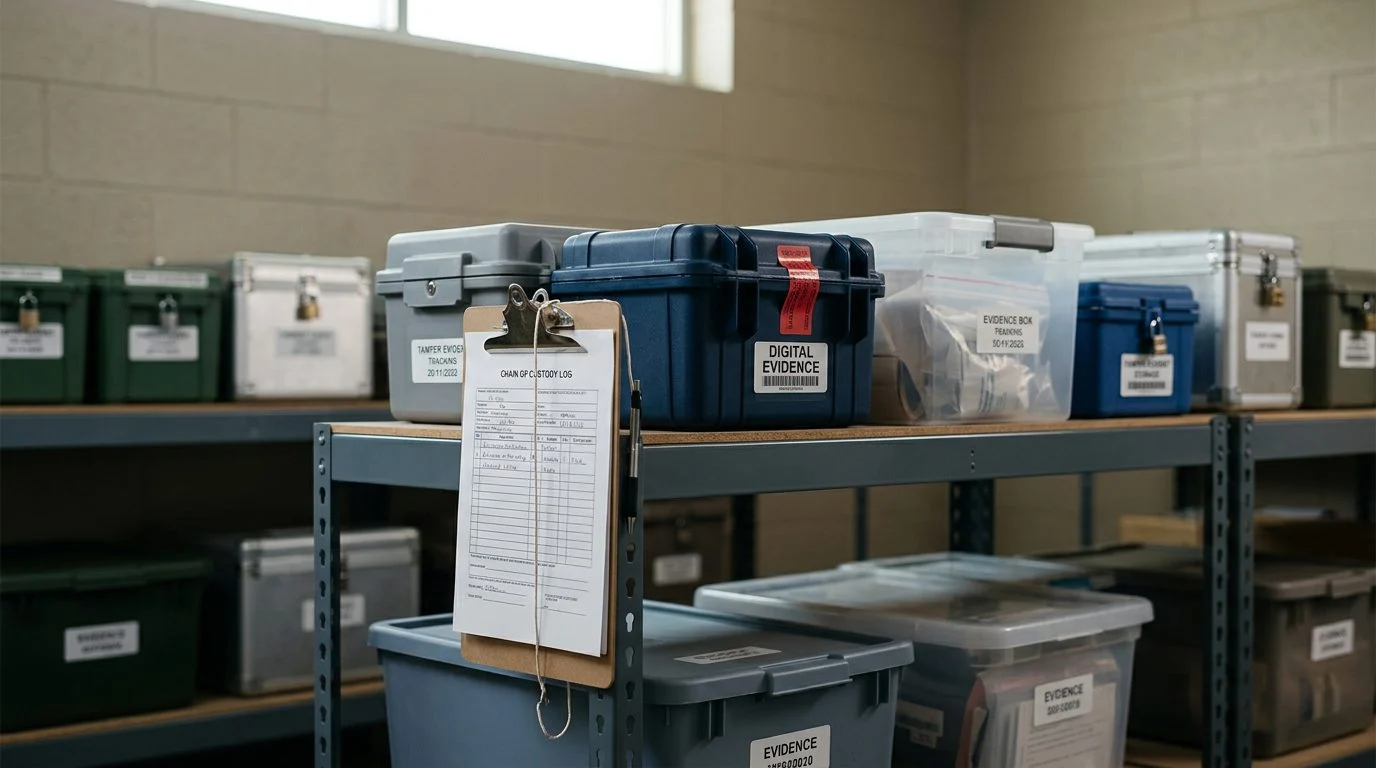
- Is the chain of custody complete? That means a written record of who handled the evidence and when.
- Can each message be read in full context, or was it pulled from a longer exchange?
If a child is involved, the file may include a forensic interview, which is a recorded interview of the child. OJJDP guidance on child forensic interviews describes professional standards, including avoiding repeated questioning and using open-ended questions. We measure the interview against those standards.
Defenses the Evidence May Support
Here are the common lines of review.
- Identity: someone else used the same phone, a shared account, or an account that was never yours.
- Intent: the messages or conduct do not show intent to arouse or gratify sexual desire.
- Reliability: gaps in the extraction, wrong timestamps, or statements that conflict with other records.
- Investigation: problems with stops, searches, warrants or interviews, which can be challenged where the facts support it.
The statute also sets out defenses with conditions. Under § 21.11(b), an affirmative defense (a defense you raise, with conditions the law lists) can apply. It covers an accused who was not more than three years older than the child, of the opposite sex, who used no duress, force or threat, and who met the registration conditions in subsection (b)(3). Under Texas Penal Code § 21.11, Subsection (b-1) provides an affirmative defense if the actor was the spouse of the child at the time of the offense.
Online solicitation has its own defenses. Under Penal Code § 33.021(e), the defense covers a marriage to the minor, or a case where the accused was not more than three years older and the minor consented, if the conduct described in subsection (c) was committed. We check each item in the file against these conditions rather than using a template.
Your Rights When Police, CPS or a Custody Court Contacts You
Talk with a lawyer before you answer police, CPS or a custody judge about the accusation. Statements you make to anyone can end up in the criminal file. That includes a text to the other parent, a CPS interview, or testimony in a custody hearing.
CPS investigations follow written procedures, including an ongoing child-safety assessment, as the DFPS Basic Investigation Process handbook describes. A CPS matter can run alongside a criminal case, so each step needs a plan.
If you are on bond, read every condition exactly as written. Penal Code § 25.07 makes it a crime to violate certain bond conditions and protective orders in a sexual abuse case. That statute defines sexual abuse to include acts described in § 21.11, so these rules can apply to your case. They can bar going to or near a residence or school where a protected child lives or attends, and they can bar contact with a protected person, except through your attorney.
Do not delete messages, accounts or devices before you talk with a lawyer. Deleted data can make the record harder to explain. A request to see your children, or any family court order, should be reviewed with your lawyer before you act on it.
What a Conviction or Registration Can Mean
A conviction can bring prison time, fines and sex offender registration. The range depends on the charge and the subsection.
For a third-degree case, a prior final felony conviction, other than a state jail felony punishable under § 12.35(a), can raise punishment to second-degree level under § 12.42.
Registration follows a conviction, not a charge. Under Code of Criminal Procedure art. 62.001, a sexually violent offense is one of the listed offenses committed by a person 17 or older, and the listed offenses include Section 21.11(a)(1) (indecency with a child by sexual contact). Under Texas Code of Criminal Procedure Art. 62.001, a violation of Section 21.11 (Indecency with a child), Penal Code, is listed among the offenses that make up a reportable conviction or adjudication under Chapter 62.
Review any plea offer against the prison range, the registration result, and the effects on custody and work. Make that decision with the full picture in front of you.
How the Defense Works: Steps and Timeline
The defense moves in five steps, from the first meeting to court settings.
- Consultation. The first consultation is free, confidential and without obligation to continue. We hear the charge, the bond terms and your most urgent concerns.
- The record. We gather the charging papers, bond terms, police reports, device extractions, and any recordings or interview materials.
- Evidence review. We test the digital record, the identification, the intent element and the investigation. We keep you informed of what the review finds.
- Options. We explain paths such as motions, negotiation and trial. You make the decisions once you have the full picture.
- Court settings. Arraignment, pretrial and other hearings follow the court’s schedule. Timing is set by the court, not by us.
Heather Barbieri and Carrie Thomas, with our support staff, handle each matter in the way that fits that case.
Not sure what your next step is?
Talk it through with our team — the first consultation is free, confidential, and carries no obligation.
Why Barbieri Law Firm for This Charge
Barbieri Law Firm is an all-women criminal defense firm in Frisco, Texas. We defend professionals accused of sex crimes and assaultive offenses in Collin County, Dallas-Fort Worth and across Texas.
Heather Jean Barbieri, Board Certified, Criminal Law — Texas Board of Legal Specialization. She leads the firm. Our lawyers include Heather Barbieri and Carrie Thomas.
Our approach is simple. We review every piece of evidence, including the digital record and any interview materials. Then we explain your options. No lawyer can say in advance how a case will end, and we will not claim otherwise.
A charge like this can make you afraid for your children, your job and your freedom, all at once. You do not have to sort through that alone. Call (972) 424-1902, schedule a consultation, or send us your case details.

Questions Before You Reach Out
Will I have to register if I’m charged?
Registration follows a conviction, not a charge. The subsection charged affects the duty.
Can I be charged over messages alone?
Messages alone can support a charge of online solicitation of a minor, and it is not a defense to the solicitation charge that the meeting did not occur.
Should I talk to police or CPS to explain myself?
Talk with a lawyer first, because what you say can be used later.
Can my divorce or custody case affect my criminal case?
They can interact. Review both with your lawyer together.
What happens at the first consultation?
We go over the charge, the bond terms, the timeline and your questions. What you share stays confidential.
Where a defense against this charge begins Those three items shape every next step.
Attorney responsible for this site: Heather Barbieri, Barbieri Law Firm, Frisco, Texas.
How our team approaches an online charge
Evidence review
We examine the messages, account records, devices and the way the investigation was carried out, and explain what each piece of evidence means for your case.
Early attention
Contacting a lawyer early gives us time to gather records and prepare your defense before the next steps in the case.
Attorneys who listen
Heather Barbieri and Carrie Thomas meet with you in confidence, hear your side of events and answer your questions directly.
Plain-language answers
We explain the charge, the possible consequences and the steps ahead in clear terms, so you can make informed decisions.
Before you speak with investigators
Do not delete messages, accounts or devices, and do not contact the person who made the report. Ask for a lawyer before you answer questions about the accusation.
What we examine in your case
Messages and online conduct
We review the full conversation, not just selected messages, to see what was said, when and in what context.
Identity and the account
We look at who had access to the accounts and devices involved and whether the evidence ties them to you.
How the investigation was run
We examine how law enforcement identified the suspect, obtained records and conducted any undercover contact.
Each element of the charge
We test each one against the evidence and explain where the case is strong or weak.
Speak with our team before you answer another question
Related practice areas
- Online Sex Crimes Defense Lawyer | Collin County & Texas
- Online Sex Crime Plea Offers in Texas: How to Review Them Before You Answer
Request a Consultation
Fill out the short form and we will take it from there.