

Online Sex Crimes Defense | Frisco and Collin County, Texas
Charged With an Online Sex Crime in Texas? Talk to a Criminal Defense Lawyer Before You Talk to Police
Barbieri Law Firm defends professionals accused of online sex crimes across Collin County, Dallas-Fort Worth and Texas. Heather Barbieri will review the evidence and explain your options.
By Heather Barbieri · Published October 16, 2026
An online sex crime charge can start with a chat, a text or an email. If you’re a professional facing one in Texas, the choices you make early can shape what comes next. This page explains what the charge means, what a defense reviews, how the process works and how to reach Barbieri Law Firm. Think of it as a clear starting point, not a prediction about how your case will end.
What an Online Sex Crime Charge Means for a Professional in Texas
A key charge in these cases is online solicitation of a minor. Texas Penal Code § 33.021 covers a person age 17 or older who, over the internet, by text or through a commercial online service, communicates in a sexually explicit manner with a minor or distributes sexually explicit material to one. The person must act with intent to commit certain listed sex offenses.
The statute defines a minor as someone younger than 17. It also covers someone the accused believed was younger than 17. A case can involve an undercover officer posing as a minor, so what the accused believed matters.
A separate part covers knowingly soliciting a minor to meet, with intent that the minor engage in sexual contact, sexual intercourse or deviate sexual intercourse. It is not a defense that the meeting never happened. It is a defense if the accused was married to the minor, or was not more than three years older and the minor consented.
A charge can come before any conviction. An arrest, a search or a police contact can happen before anyone decides what the evidence shows. That is why early decisions matter. This page is for professionals facing a charge or an active investigation, and for the family members helping them decide what to do next.
If police have contacted you about online messages, you don't have to face the next steps alone, so call (972) 424-1902 or send your case details for a free initial consultation. Talk it through with our team — the first consultation is free, confidential, and carries no obligation.

What the Defense Covers
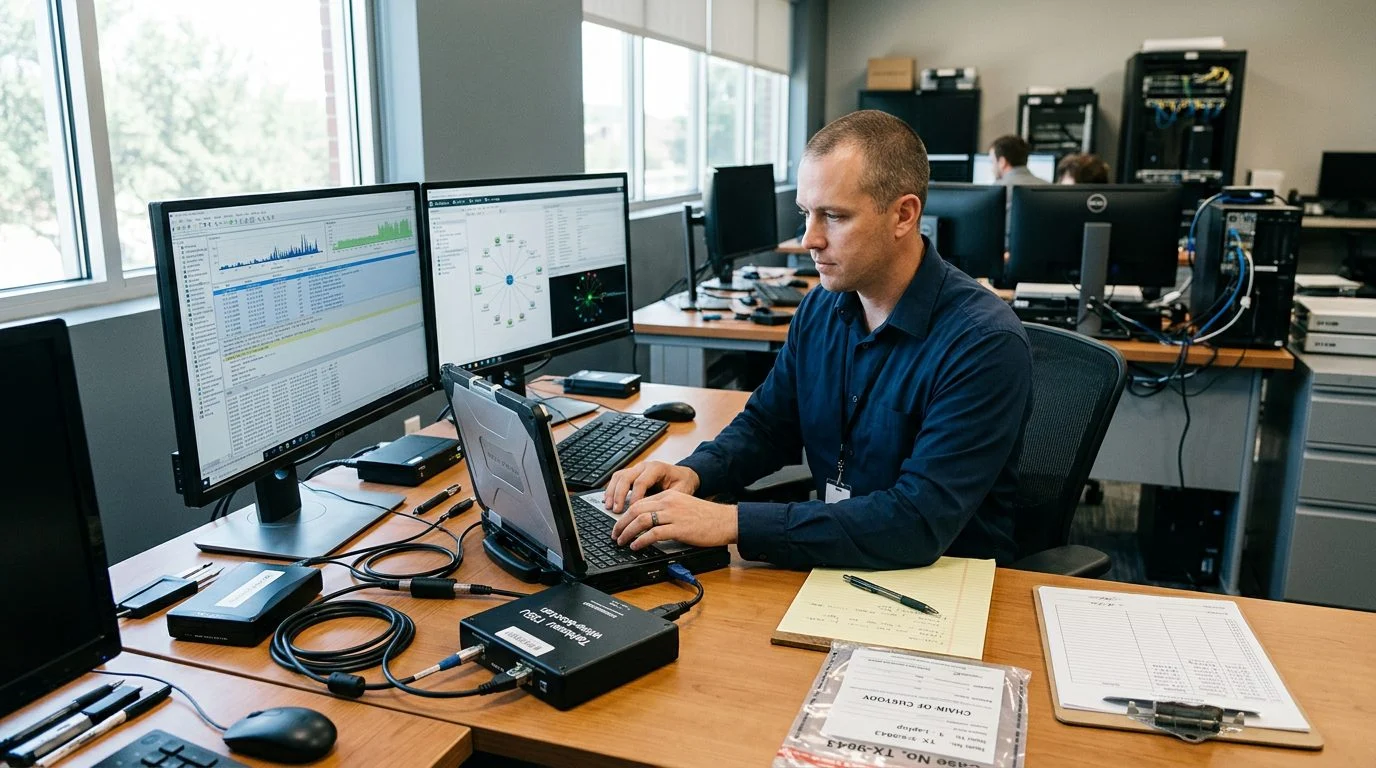
An online sex crime charge lawyer for professionals in Texas reviews the full record, from the messages to how police obtained them. The review typically covers these areas:
- Messages and records. Chat logs, account records and how each item was obtained.
- The investigation. Any sting or undercover operation, the timeline, and whether police followed required procedure.
- Devices. Phones, computers and other devices, and what forensic material the State has or has not produced.
- Identity and intent. Who was actually on the other end of the conversation, and what the accused meant to do.
- Each element. The State’s proof, tested against every element of the charged offense.
- Entrapment. Under Texas Penal Code § 8.06, being induced by a law enforcement agent, through persuasion or other means likely to cause the offense, is a defense. Merely giving someone an opportunity is not entrapment. That line matters in undercover online cases.
- Negotiation and trial. Talks with the prosecutor, and trial preparation when the facts support it.
- Professional concerns. How the case may affect your work and licensing, planned from the start.
Why Early Attention Matters for a Professional’s Case
The first days after police contact can shape what the State can prove and which options stay open.
Speak with a lawyer before any interview. Do not delete, change or reset devices or accounts without advice. Write down what happened and when, and share those notes with your lawyer.
A charge can also touch employment, professional standing and personal relationships. Those concerns belong in the defense plan from the first meeting, not added later. Early review also gives your lawyer more time to request and review records.
How the Process Works: Step by Step
The process starts with a free initial consultation, with no obligation to continue. Here is what follows.
- Consultation. The lawyer reviews the charge, the timeline and your questions.
- Document review. The charging papers, the evidence the State has shared, and device and account records.
- Written options. A plain explanation of the strengths and weaknesses the review reveals. No lawyer can promise a particular result.
- Action. Negotiation, motions or trial preparation, guided by the facts and your decisions.
- Resolution. Dismissal, plea terms or supervision terms, with next steps explained in writing.
The court’s schedule sets much of the pace. No lawyer can fix a timeline at the first meeting. Our team handles scheduling and records, so you have a clear point of contact at each step.
Possible Penalties, Enhancements and Resolutions
Online solicitation to meet under subsection (c) is a second-degree felony. Texas Penal Code § 12.33 sets second-degree punishment at 2 to 20 years in the Texas Department of Criminal Justice, plus a fine of up to $10,000.
Subsection (b) is a third-degree felony. It becomes a second-degree felony if the minor is younger than 14, or the accused believed the minor was. Punishment also moves up one category if the conduct happened during regular school hours and the accused knew or reasonably should have known the minor was enrolled.
Prior convictions can raise the stakes. Under Texas Penal Code § 12.42(b), if a defendant on trial for a second-degree felony has previously been finally convicted of a felony other than a state jail felony punishable under § 12.35(a), the defendant is punished for a first-degree felony on conviction. Under § 12.42(d), a defendant on trial for a felony (other than a state jail felony punishable under § 12.35(a)) who has previously been finally convicted of two felonies faces imprisonment for life or for 25 to 99 years, but only if the second prior felony was committed after the first prior conviction became final. A prior conviction for a state jail felony punished under § 12.35(a) may not be used for enhancement under § 12.42(d). Both subsections apply except as provided by § 12.42(c)(2) or (c)(4). Subsection (c)(2) provides a mandatory life sentence for certain repeat sexually violent offenses, and under Government Code § 508.145 a person serving that sentence is not eligible for parole. Under Penal Code § 12.42(g)(1), a grant of deferred adjudication counts as a conviction only for the § 12.42(c)(2) enhancement and only for the offenses listed there, not for the § 12.42(b) or (d) enhancements described above.
Under Texas Code of Criminal Procedure art. 42A.101, a judge may place a defendant on deferred adjudication community supervision after a guilty or no contest (nolo contendere) plea. The judge must find that doing so serves society and the defendant. Article 42A.102 lists exceptions.
If no adjudication follows, the judge must dismiss and discharge at the end of the supervision period, under Article 42A.111. Early dismissal is not allowed for offenses that require sex offender registration under Chapter 62. A discharge may not be considered a conviction for certain legal disqualifications, except as § 12.42(g) provides.
Why Barbieri Law Firm
Barbieri Law Firm is an all-women criminal defense firm in Frisco, Texas. It defends professionals accused of sex crimes and assaultive offenses across Collin County, Dallas-Fort Worth and Texas.
Heather Jean Barbieri, Board Certified, Criminal Law — Texas Board of Legal Specialization.
Heather Barbieri is the lawyer for the firm. Our team handles scheduling and records.
Our approach is direct. We review the evidence in writing, including the messages, devices and investigation. We then explain your options in plain language and keep you informed as the case moves.
Not sure what your next step is?
Talk it through with our team — the first consultation is free, confidential, and carries no obligation.
Frequently Asked Questions
What should I do if police contact me about online messages?
Speak with a lawyer before any interview. Don’t delete or change devices or accounts without advice.
Does a free consultation commit me to hiring the firm?
No. The free initial consultation carries no obligation to continue.
Can an online sex crime charge affect my job or license?
Yes, it can. The review plans for those concerns as part of the defense.
Can a charge end without a conviction?
Texas judges may use deferred adjudication in some cases. However, deferred adjudication for an offense under Penal Code § 33.021 is still a reportable adjudication that requires sex offender registration under Code of Criminal Procedure Chapter 62 (art. 62.001(5)), so a dismissal after supervision does not remove that requirement.
How are fees handled?
Fee questions are answered during the free initial consultation.

Call for Your Free Initial Consultation
A free initial consultation, with no obligation to continue, is the first step toward understanding your options.
If police have contacted you about online messages, you don’t have to face the next steps alone. Call (972) 424-1902 or send your case details today.
Attorney responsible for this site: Heather Jean Barbieri, Barbieri Law Firm, Frisco, Texas.
How We Approach an Online Sex Crime Case
Review the charging documents
We review the charge, the affidavit and the digital evidence, including devices, messages and account records, and explain what the State must prove.
Protect your rights from the start
We advise you on how to handle police contact, interviews and requests for access to your phone or accounts.
Plain-language communication
We explain each step of the process and your options in clear terms, so you can make informed decisions.
A focused criminal defense practice
Heather Barbieri and our team focus on defending professionals accused of sex crimes and assaultive offenses.
Important: Do Not Destroy or Change Anything
Do not delete messages, accounts or devices, and do not give a statement to investigators before speaking with a lawyer. Acting quickly with advice can matter.
Charges We Defend
Online Sex Crimes
Defense against charges arising from online messages, images, video or account activity.
Child Sex Crimes
Defense against allegations involving minors, including the investigation and digital evidence that often accompany them.
Aggravated Sexual Assault
Defense against the most serious sexual offense charges, with careful review of the allegations and the evidence.
Family Violence and Assault
Defense against assaultive offenses, including family violence and aggravated assault charges across Texas.
Start With a Free Initial Consultation, With No Obligation to Continue
Related practice areas
Request a Consultation
Fill out the short form and we will take it from there.