


Online Sex Crimes Defense | Collin County, Texas
Indicted for an Online Sex Crime in Collin County? Here Is What to Do Next
A calm, practical plan for the first days after charges, from a Frisco defense team that focuses on sex crime cases.
By Heather Barbieri · Published November 16, 2026
If you have just learned you are named in an online sex crime case
An online sex crime indictment is a formal written charge that a grand jury returns. It is an accusation, not a finding of guilt.
Maybe a detective called. Maybe officers served a warrant, or a protective order arrived at your home. Maybe a lawyer or family member gave you the news.
You have never been in legal trouble. Now you’re thinking about your license, your job, your marriage and whether you’ll be arrested in front of colleagues.
That fear is normal. It also shows why the first decision matters most. Before you answer questions from police or prosecutors, speak with a defense lawyer. What you say can be used later, and you can’t take it back.
This page explains what an online sex crime indictment means in Collin County, how the grand jury process works, how bond works and what usually comes next.

What an indictment is and what it is not
An indictment starts the court process. It does not decide guilt.
A grand jury hears the State’s evidence and decides whether there is enough reason to move the case forward. If it agrees, it returns a “true bill,” which is the indictment.
Texas law treats an indictment as “presented” once the grand jury has acted on it and the court has received it (Texas Code of Criminal Procedure Art. 12.06).
Being accused of a crime is a serious matter, and you do not have to face it alone. Questions about what happens next in your case can be discussed with a lawyer in a free, confidential consultation.
An indictment names the offense. It does not show you all the evidence. In online cases, the State may rely on chat logs, screen names, account records and devices. You may not see that material until later.
Read the charge with your lawyer. The exact wording tells you what the State must prove.
How a Collin County grand jury reaches an indictment in an online case
A prosecutor presents the State’s evidence, and the grand jury decides whether to return an indictment.
Online solicitation of a minor is one charge in these cases. Under Texas Penal Code § 33.021(c), a person commits an offense if, over the Internet, by electronic mail or text message or other electronic message service or system, or through a commercial online service, the person knowingly solicits a minor to meet another person, with the intent that the minor will engage in sexual contact, sexual intercourse, or deviate sexual intercourse with the actor or another person. The solicitation must carry intent for sexual contact, sexual intercourse or deviate sexual intercourse.
That offense is a felony of the second degree. A “minor” is someone younger than 17, or someone the accused believes is younger than 17. It is not a defense that the meeting never happened.
The statute gives two defenses. The accused was married to the minor, or he was not more than three years older than the minor and the minor consented. Whether either one applies depends on the facts.
Punishment can increase if the offense occurred during school hours. That applies when the accused knew, or should have known, the minor was enrolled in school.
Sexual assault charges are more serious. Under Texas Penal Code § 22.011, sexual assault is generally a second-degree felony, but it can be a first-degree felony in the circumstances listed in Subsection (f)(1). It can be a first-degree felony in listed circumstances. A first-degree felony carries life or 5 to 99 years in prison, and may also carry a fine up to $10,000 (Texas Penal Code § 12.32).
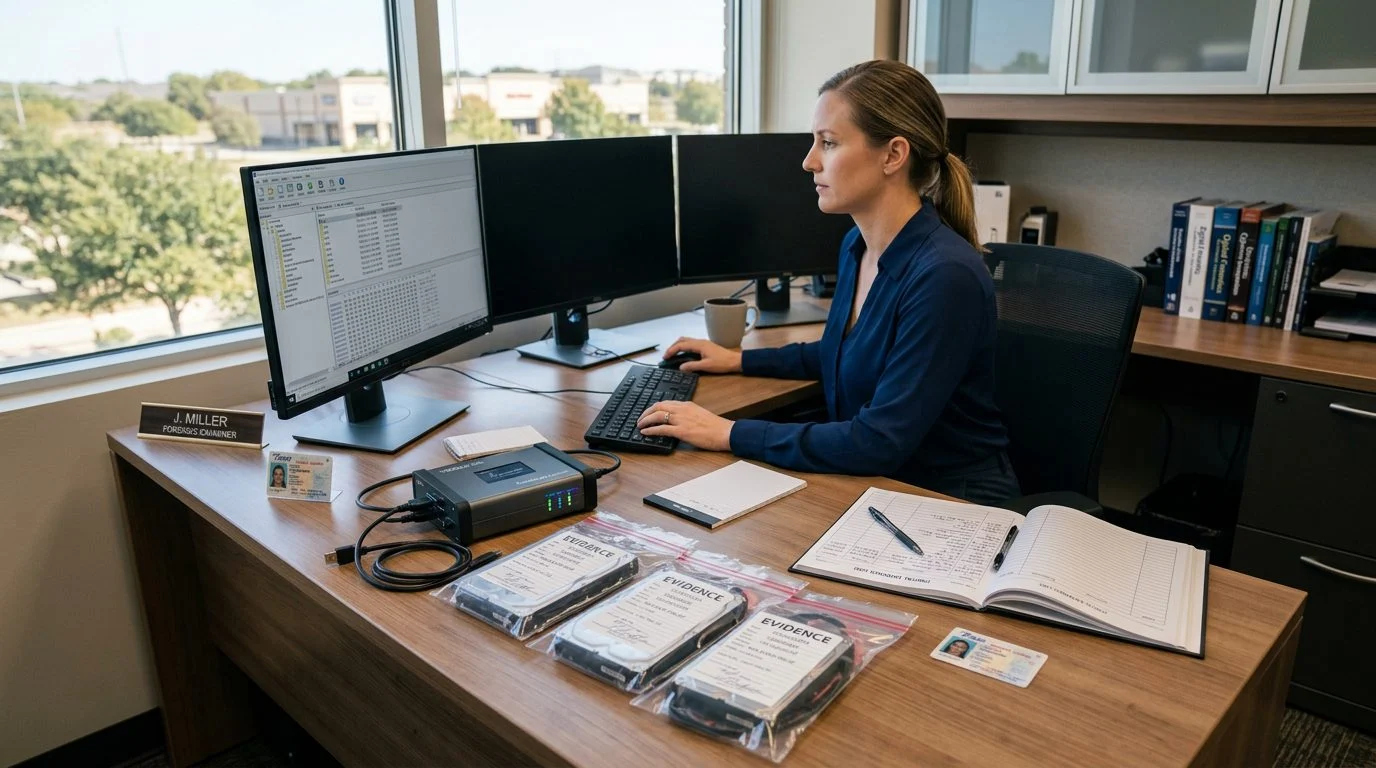
The State may rely on chat transcripts, account records, device data and forensic reports. Suspected online child exploitation can be reported to the NCMEC CyberTipline, which refers tips to law enforcement for possible investigation.
Timing matters too. An indictment can come months after first police contact.
How bond works after an indictment or warrant
The court sets bond and the conditions you must follow while the case is pending.
A defense lawyer can review your work, family ties and proposed conditions before a bond hearing. Ask for every condition in writing before you leave custody. Know what each one means for your home, your job and your children.
A protective order is a separate court order. Under Texas Code of Criminal Procedure Art. 7B.005, a court may prohibit the alleged offender from threatening or harassing communication. It may also bar going to or near the protected person’s home, workplace or business, or a child-care facility or school. It may bar possessing a firearm.
If an order includes a location limit, the court must name each prohibited location, unless the court has received a request to maintain confidentiality of information revealing the locations. It must also state the minimum distance the alleged offender must keep, if any, unless the court has received a request to maintain confidentiality of information revealing the locations.
Under Texas Penal Code § 25.07, a person commits an offense when, while violating a bond condition or a court order (including a protective order issued under Subchapter A, Chapter 7B, Code of Criminal Procedure) in a family violence, sexual assault or abuse, indecent assault, stalking, or trafficking case and related to the safety of a victim or the safety of the community, the person knowingly or intentionally takes one of the prohibited actions the statute describes, which include committing family violence; communicating in a threatening or harassing manner with a protected individual or a member of the family or household; communicating a threat through any person to a protected individual or a member of the family or household; going to or near the residence or place of employment or business of a protected individual or a member of the family or household, or a child care facility, residence or school a protected child normally attends, as specifically described in the order or condition of bond; possessing a firearm; harming, threatening or interfering with the care, custody or control of a pet, companion animal or assistance animal possessed by a protected person; or tampering with the normal functioning of a global positioning monitoring system. Where the order prohibits all communication, communicating in any manner except through the person’s attorney or a person appointed by the court is also an offense. The offense is a Class A misdemeanor, but depending on the facts it can be a state jail felony or a felony of the third degree. One example is violating an order issued under Subchapter A, Chapter 7B, Code of Criminal Procedure, after a conviction of or placement on deferred adjudication community supervision for an offense, if the order was issued with respect to a victim of that offense. Another is violating the order or bond condition in one of the listed ways other than possessing a firearm, while possessing a deadly weapon.
Do not contact the protected person, directly or through others, while an order or bond condition bars contact. Under § 25.07(a)(2)(C), where an order bars all contact, communication is allowed only through the person’s attorney or a person appointed by the court.
What happens after indictment: arraignment, evidence review and pretrial steps
After an indictment, the case moves through arraignment, evidence review and pretrial settings. Those steps can take months.
The Texas court system courseware lists the general stages of a Texas criminal case. They include arrest, indictment, plea bargaining, trial and post-trial proceedings.
At arraignment, the court reads the charge to you, and you enter a plea.
Reviewing the evidence takes time. In online cases, it can include phone and computer images, forensic copies and chat logs. Your lawyer can review how that evidence was gathered.
No lawyer can predict how your case will end. Any talk about a plea should wait until you and your lawyer have reviewed the evidence together.
Expect early settings and bond conditions first. Then comes evidence review, and trial settings come only later, if the case gets that far.
Protecting your career, family and reputation while the case is pending
The first steps are planning who hears the news, what gets said and how your work is handled.
Work. An arrest can happen at a workplace. Ask your lawyer how to handle timing, employer communications and any licensing questions before anyone calls your office.
Family. A bond condition or protective order can limit where you go and whom you contact, including at home. Decide with your lawyer what your spouse and children hear, when, and from whom.
Public records. Court records can be searched, so plan for others learning of the charge. Do not post about the case online.
Devices and accounts. Do not delete devices, accounts or messages without advice from your lawyer. Keep court papers and bond paperwork in one place.
Why talk with Heather Barbieri about an online sex crime case
Barbieri Law Firm is an all-women criminal defense firm in Frisco, Texas. Heather Barbieri is the lawyer responsible for this page.
Heather Jean Barbieri, Board Certified, Criminal Law — Texas Board of Legal Specialization.
The firm defends professionals accused of sex crimes and assaultive offenses across Collin County, Dallas-Fort Worth and Texas.
Our lawyers, Heather Barbieri and Carrie Thomas, will review the evidence, including chat records and device data. We will explain your options in plain terms.
Our team can help with scheduling and document requests, so you can focus on your family and your work.
Questions you may have before you call
The short answers below cover the questions you are likely to ask first.
Will I be arrested at work?
A lawyer cannot control police timing. A lawyer can help plan communications with your employer and colleagues.
Will I go to jail?
The court decides bond and its conditions. A defense lawyer can address both at a bond hearing.
Do I have to talk to the detective?
Anything you say to police can be used later. Speak with a defense lawyer before you answer questions.
What should I do right now?
Keep your court papers and bond paperwork. Write down a timeline of contacts, and do not delete devices or accounts without advice.
If a detective’s call, a warrant or a protective order has you worried about your license, your family and your freedom, you don’t have to face the grand jury and bond questions alone. Our free initial consultation is confidential, with no obligation to continue. Call (972) 424-1902 or send us your case details.
Attorney responsible for this site: Heather Barbieri, Barbieri Law Firm, Frisco, Texas.
How Barbieri Law Firm Approaches Your Case
We Review the Charging Papers
We read the indictment and the charges with you so you understand exactly what the State alleges.
We Examine the Digital Evidence
We review the devices, messages, accounts and records involved, and explain how each item may matter to your defense.
We Plan Your Communications
We help you decide what to say, to whom, and when, including how to respond to your employer, family and investigators.
We Explain Your Options
We walk you through the possible paths forward in plain language, so you can make informed decisions. No lawyer can predict how a case will end.
Protect the Evidence Now
Do not delete messages, accounts, photos or devices, and do not answer questions about the case without speaking to a lawyer first. Deleting information can create new problems, and a lawyer can advise you on any request for your phone or passwords.
Questions Many Clients Ask Early On
Will I be arrested at work?
A lawyer cannot control police timing. A lawyer can help you plan how to communicate with your employer and colleagues.
Will I go to jail?
The court decides bond and its conditions. Your defense lawyer can address both at a bond hearing.
Who handles my case?
Heather Jean Barbieri, Board Certified, Criminal Law — Texas Board of Legal Specialization, leads the defense of online sex crime cases at Barbieri Law Firm, with support from our team.
What does a consultation cost?
The initial consultation is free, confidential and carries no obligation to continue.
Talk With Barbieri Law Firm About Your Next Steps
Related practice areas
- Online Sex Crimes Defense Lawyer
- Online Sex Crime Charge During Divorce or Custody in Texas
Request a Consultation
Fill out the short form and we will take it from there.