


Texas Crime Lawyer: What Happens After a Charge
By Heather Barbieri · Published October 10, 2026
A crime lawyer defends a person accused of a crime. The lawyer explains the charge, reviews the evidence, advises on options, and speaks for the client in negotiations and in court. In Texas, the exact wording of the charge decides which facts matter most. This page explains that role in plain terms. It also covers the charge types Barbieri Law Firm handles across Collin County and Texas. The firm does not handle every kind of offense, so check your charge against that list first.
What a Crime Lawyer Does in a Texas Criminal Case
A crime lawyer works for the person accused, not for the State. The job has three parts: advising the client on rights and options, reviewing the case, and handling negotiations and court appearances.
Prosecutors represent the State. A defense lawyer looks at the case from the client’s side. The lawyer tests what the State can actually prove and explains each path forward.
A charge can start with a phone call from a detective, a message from a family member, or a paper handed over at booking. Many people don’t understand the first document they receive. That is normal, and it is where a lawyer starts.
Barbieri Law Firm handles these charge types: sex crimes, online sex crimes, child sex crimes, aggravated sexual assault, aggravated assault, family violence, and theft for students and non-citizens. The firm does not handle every offense. If your charge falls outside those areas, this page will not answer your specific question.
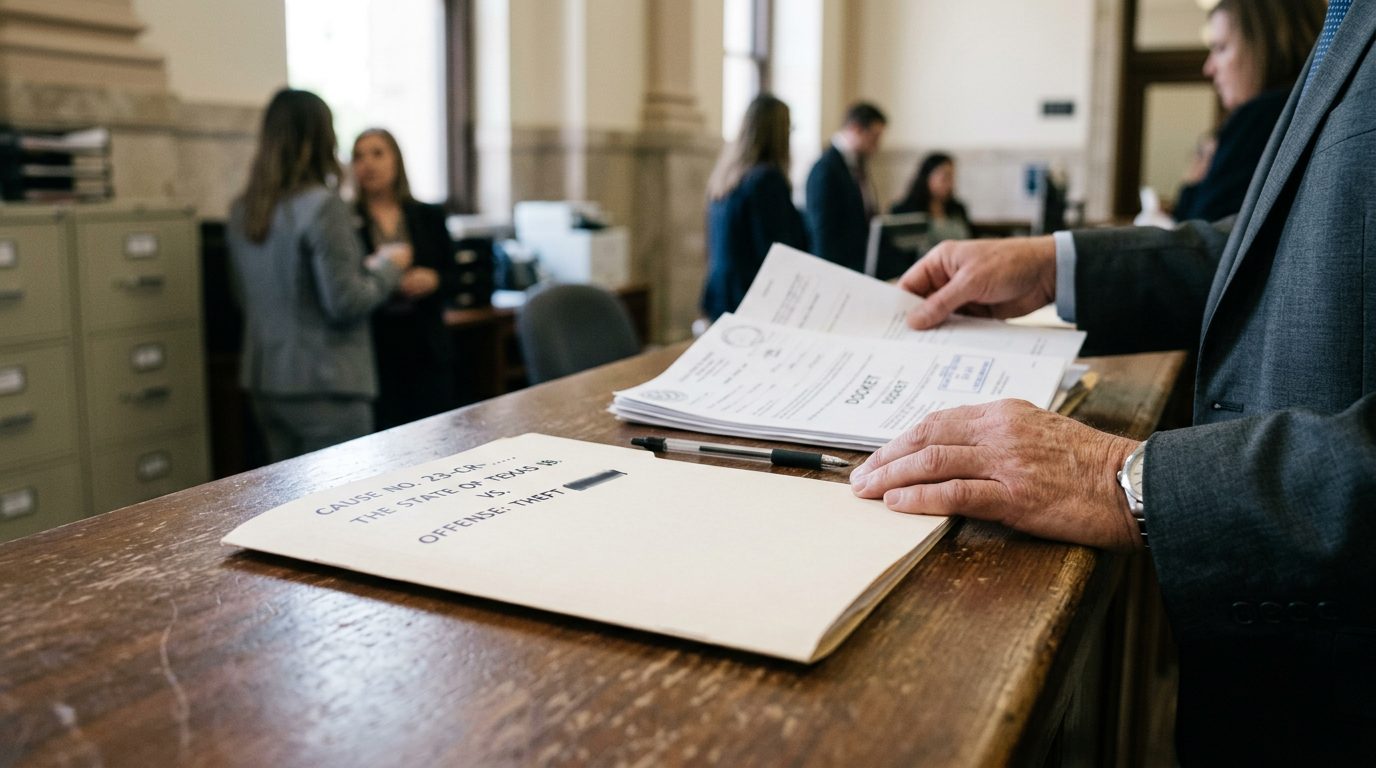
The Early Stages: Arrest, Bond, and Questioning
The early stages move fast, and early choices matter. A case usually moves from investigation to arrest or charging, then booking, bond, and a first court setting. Each step can bring new paperwork with new terms.
Bond conditions can change daily life. A court may limit contact with a named person or restrict where you can go. In a family violence or sexual assault case, violating a bond condition can be its own offense. Reconciliation between the protected people does not cancel the order.
An officer investigating a possible violation may not arrest the protected person for violating that order. Penal Code § 25.07
Statements matter too. Under Texas law, an “act” includes speech. We review texts, online messages and recorded statements closely, because the exact words and their context matter. Before you answer questions about a message, get advice on what it could mean.
Reviewing the Evidence and the Charge
A crime lawyer reviews the exact charge first, then the evidence behind it. The wording of the charge decides which facts the State must show.
Under Texas Penal Code § 22.02, aggravated assault starts with an assault as defined in Section 22.01, plus at least one additional circumstance listed in that statute. It can involve a deadly weapon or serious bodily injury.
“Bodily injury” covers physical pain, illness, or any impairment of physical condition. Medical records, photographs, and police reports are reviewed closely to see what injury they actually document.
In a theft case, value often controls the grade. Value is generally the fair market value at the time and place of the offense. Penal Code § 31.08 If the accused proves they paid for the property or had a legal interest in it, that amount comes off the value.
Typical evidence includes phone records, messages, recordings, police reports, witness statements, and forensic or medical reports. A lawyer may review how that evidence was collected and kept. Options can include talks with the prosecutor, pretrial motions, or trial. The right path depends on the facts.
The State’s Burden of Proof in a Texas Criminal Case
We look closely at how the charge is written and at the evidence offered for each part of it. Texas statutes list those parts. For theft, the State must show that a person unlawfully appropriates property with intent to deprive the owner. We compare each part of the accusation with the evidence and explain what we find.
Sexual assault turns on consent in many cases. The statute treats an act as without consent in listed situations. Examples listed in Penal Code § 22.011(b) include the actor compelling the person to submit or participate by physical force, violence, or coercion; the actor knowing the person is unconscious or physically unable to resist; and the actor having intentionally impaired the person’s power to appraise or control their own conduct by administering a substance without the person’s knowledge. Each statutory definition is compared with the actual facts of the case.
Some offenses have their own rules. For continuous sexual abuse, jurors need not agree on each specific act or the exact date. They must agree that two or more acts occurred during a period of 30 or more days.
This review focuses on the evidence itself. The job is to test whether the State can prove what it alleges. No lawyer can promise an outcome, because each case rests on its own evidence.
Is Criminal Defense Work Hard? What the Job Involves
Yes, criminal defense work is demanding. It involves tight timing, heavy personal stakes, complex evidence, and frequent court dates.
A crime lawyer’s days are mostly reading and talking. The lawyer meets with the client, reviews the charging papers and evidence, drafts motions, and talks with the prosecutor. Then comes preparation for hearings or trial. Digital evidence, such as phone extraction reports or recorded messages, takes extra time to review.
Online cases add weight. Online solicitation of a minor can be a felony even if the meeting never happens. It is not a defense that the meeting did not occur. Every message in the case deserves careful review.
Under Penal Code § 43.26, a possession of child pornography charge requires that the person knowingly or intentionally possessed the material and knew that it depicts a child younger than 18.
This page does not address lawyer income. Your focus should be your own case, and how your lawyer will keep you informed.
How to Judge Whether a Criminal Defense Lawyer Fits Your Case
A good fit depends on three things: the lawyer’s experience with your charge type, a clear plan for reviewing evidence, and clear answers about fees and communication. Heather Jean Barbieri, Board Certified, Criminal Law — Texas Board of Legal Specialization, leads the firm. That certification belongs to her and applies to no one else at the firm.
The firm’s practice focus is the charge types listed above, in Collin County, Dallas-Fort Worth, and across Texas. Ask the firm to back up any claim it makes about itself.
At a consultation, you can raise these questions. How will the lawyer review your evidence? Who will you talk to day to day? How are fees set, and will the terms be in writing?
Common questions
Does a crime lawyer have to prove innocence? No. The lawyer tests whether the State can prove the charge, and does not have to offer a different story.
Will you review text messages in my case? Yes, we review messages and their context as part of looking at the evidence. Under Texas law, an “act” includes speech, so words can be treated as conduct.
Can violating a protective order be a separate charge? It can be. In a family violence or sexual assault case, violating a bond condition or order can be its own offense. Penal Code § 25.07
Talk With Barbieri Law Firm About Your Situation
If a call, a bond paper, or a message has left you trying to make sense of a charge, you are not alone in that moment. You may also be worried about someone you love who is facing an accusation. You don’t have to work out the next steps on your own. Call (972) 424-1902 or send your case details to schedule a free initial consultation. No lawyer can promise an outcome, but the firm will review your paperwork and explain your options.
Attorney responsible for this site: Heather Jean Barbieri, Barbieri Law Firm, Frisco, Texas.
Ready to take the next step?
Related practice areas
Request a Consultation
Fill out the short form and we will take it from there.