

Online Sex Crimes Defense | Collin County, Texas
Charged With an Online Sex Crime in Collin County? Talk to a Defense Lawyer First.
Barbieri Law Firm, an all-women criminal defense firm in Frisco, will review the charge, the messages, the devices and the timeline, then explain your options.
By Heather Barbieri · Published October 21, 2026
An online sex crimes charge is built on messages, images or files kept on a phone, tablet or computer. If you face one in Collin County, a Collin County online sex crimes defense lawyer starts with three questions: the device, the age question and the full message record. Barbieri Law Firm is an all-women criminal defense firm based in Frisco, Texas. It defends people accused of online sex crimes across Collin County, Dallas-Fort Worth and Texas.
Who This Page Is For and What an Online Sex Crimes Charge Involves
An online sex crimes charge is an accusation based on electronic messages, images or files. This page is for adults and families who were contacted, questioned, arrested or charged over that kind of material.
The main charges in these cases include:
- Online solicitation of a minor. Texas Penal Code § 33.021 covers sexually explicit messages sent to a minor by a person 17 or older who intends to commit an offense listed in Article 62.001(5)(A), (B), or (K), Code of Criminal Procedure. It also covers messages that ask a minor to meet for sexual contact.
- Possession or promotion of child pornography. Texas law makes it an offense to intentionally or knowingly possess, or access with intent to view, visual material that depicts a child engaging in sexual conduct, and to promote or possess with intent to promote such material. The grade can rise based on facts such as the age of the child shown.
Cases often start when another person reports a message, when police search a device, or when an online account is investigated. Reports of suspected online child exploitation can reach police through the NCMEC CyberTipline, which refers them to law enforcement for possible investigation. If a child protective investigation opens, the DFPS parents’ guide explains the process.
If police took your phone or a message you wrote is now part of an investigation, you do not have to face it alone. Let's talk through your options. Talk it through with our team — the first consultation is free, confidential, and carries no obligation.

The Three Issues That Usually Decide These Cases
Device evidence, the age question and the full message record usually decide these cases. Each one shapes how a charge is read.
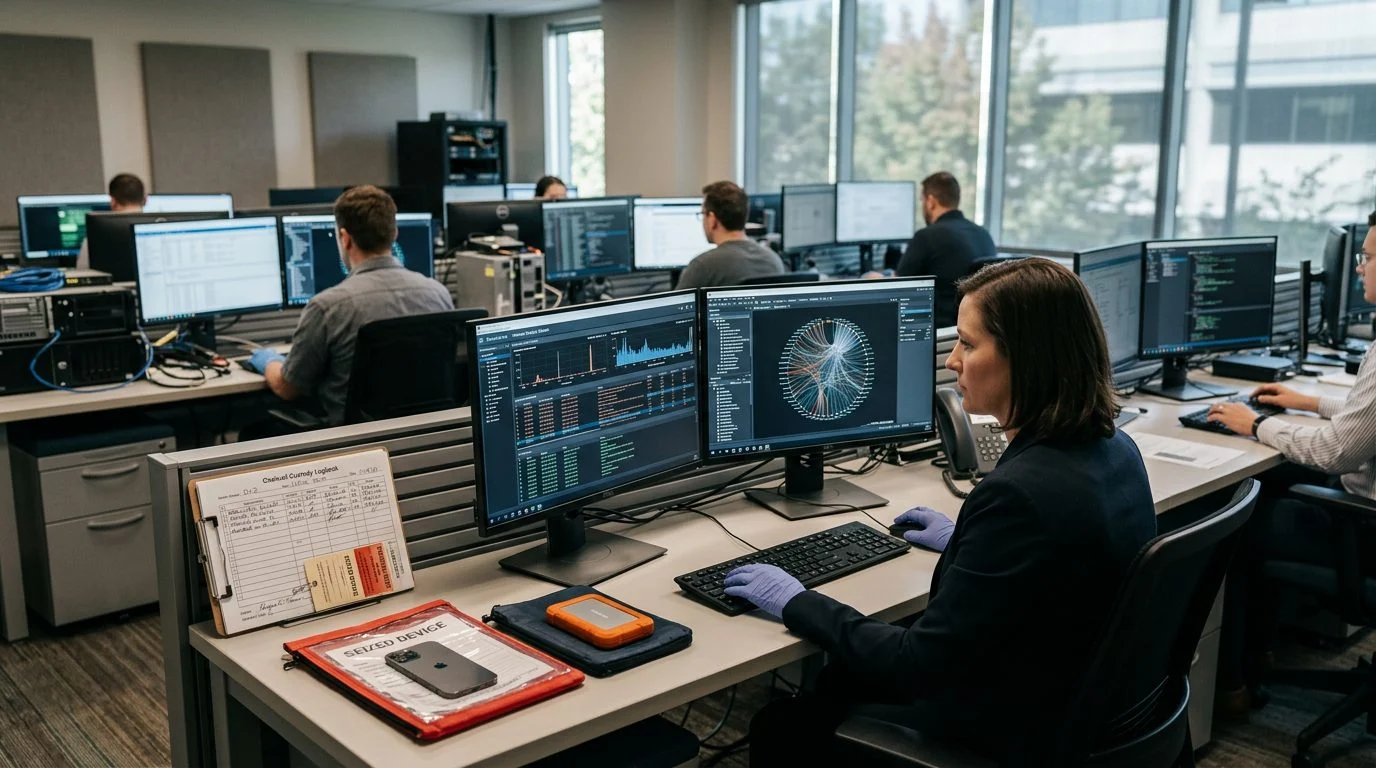
- Device evidence. Look at how a phone, computer or cloud account was seized, searched and tied to you. Ask who else had access, and whether files were saved, deleted or only viewed.
- The age question. The statute defines a minor by actual age and by what the accused believes. Under Texas Penal Code § 33.021, a minor includes an individual the actor believes to be younger than 17. Beliefs about age, and what the messages say about age, matter.
- The message record. Who started the conversation, what was sent, and what the accused knew about the other person. A single screenshot rarely shows the full story.
For image charges, the State must prove the person knew or should have known the child was younger than 18 when the image was made. For computer-generated images, the State may instead prove the person knew or should have known the depiction appeared to be of a child younger than 18, or believed it was of an actual child younger than 18 when the image was made, under § 43.26.
Entrapment is a defense only when a law enforcement agent induces the conduct. Giving someone a chance to offend is not entrapment, under Texas Penal Code § 8.06.
What the Firm Reviews in Your Case
The firm reviews the paperwork, the device data and the full conversation before it explains your options.
- Search warrant or consent paperwork, and a record of who held each device or account.
- Forensic extraction reports, file names, timestamps and metadata that show when files were created, opened or saved.
- Complete message threads, not isolated images, to show timing, context and who wrote what.
- Police reports, recorded interviews and any statement you made.
- Bond conditions and any no-contact order. Breaking certain bond conditions is its own offense in cases such as family violence and sexual assault, under Texas Penal Code § 25.07.
Each item can change the picture. A timestamp can show when a file was opened. A full thread can show whether a message was a reply to someone else. We will review the evidence, explain your options, and no lawyer can promise a particular result.
How the Process Works, Step by Step
The process starts with a free consultation and moves through evidence review and court stages.
- Free first consultation. Your first consultation is free, confidential and without obligation to continue. We discuss the charge, the dates and the agencies involved.
- Document intake. You share any charge notice, bond papers and a list of devices or accounts taken.
- Early protection. We review bond and no-contact conditions. We advise you on any contact with investigators or the other person.
- Evidence review. We review devices, messages and age records. We explain what we find and what remains unknown.
- Court stages. Texas cases move through discovery, motions, negotiations, and either a plea decision or trial.
Timing depends on the court’s schedule and the facts of the case.
Why Barbieri Law Firm Handles This Work
Barbieri Law Firm is an all-women criminal defense firm in Frisco, Texas, that defends people accused of sex crimes and assaultive offenses. The firm handles online sex crimes, child sex crimes, aggravated sexual assault, aggravated assault and family violence matters. It serves Collin County, Dallas-Fort Worth and across Texas.
Heather Jean Barbieri, Board Certified, Criminal Law — Texas Board of Legal Specialization.
Our lawyers include Heather Barbieri and Carrie Thomas. Our team also includes assistants and office staff who support the work. Our review of online cases starts with the three issues above: the device, the age question and the message record. Heather Barbieri is the attorney responsible for this page.
Questions People Ask Before Calling
Most people ask about police contact, the first call and the age question.
Do I have to speak with police before I talk to a lawyer?
A lawyer can advise you before you decide whether to speak with investigators about messages or devices.
What happens on the first call?
We review the charge, the device or message issue and the dates involved. Then we explain how we would review the evidence.
Does the age I believed the other person was matter?
Yes. Under the statute, a minor includes someone the accused believes is under 17, so beliefs about age are part of the review.
What if the device was shared or belonged to someone else?
Who had access and how files are tied to a person are among the first things we review.
Can entrapment be a defense?
It can be, but only when a law enforcement agent induced the conduct. Giving someone an opportunity to offend is not entrapment.
Do you handle cases outside Collin County?
Yes. The firm handles matters in Collin County, Dallas-Fort Worth and across Texas.
Can you promise the charge will be dropped?
No lawyer can promise a particular result. We will explain your options after reviewing the evidence.
Not sure what your next step is?
Talk it through with our team — the first consultation is free, confidential, and carries no obligation.

Talk With Us About Your Device, Messages or Age Question
If police have your phone or computer, or a message you wrote is now part of an investigation, the next decisions concern what to say and who to speak with first. Bring what you have: the charge notice, bond papers, and any account names or messages you remember. We will sort out what matters first.
You do not have to sort through these questions alone. Call (972) 424-1902, schedule a consultation, or send us your case details through the same page.
Attorney responsible for this site: Heather Barbieri, Barbieri Law Firm, Frisco, Texas.
How We Approach Your Case
Confidential From the First Call
Your consultation is confidential and comes with no obligation to continue. You can share the details of your case openly.
A Careful Review of the Evidence
We review the charge, the messages, the devices and the dates involved, including how the digital evidence was collected.
Clear Explanation of Your Options
We explain how we would review the evidence and what your options look like, so you can make informed decisions.
Lawyers Who Focus on Defense
Our lawyers focus on defending professionals accused of sex crimes and related offenses across Collin County, Dallas-Fort Worth and Texas.
Before You Speak With Investigators
Investigators may ask about messages, accounts or devices. Talk with a lawyer before you answer questions or decide how to respond.
Issues We Review in Online Sex Crimes Cases
Messages and Social Media
We look at the context of the conversations, the platforms involved and who had access to each account.
Devices and Digital Evidence
We examine how phones, computers and other devices were seized, searched and preserved.
Investigations and Interviews
We review what was said to investigators and whether the investigation followed proper steps.
Next Steps After a Charge
We explain the process ahead, the decisions you will face and how we would prepare your defense.
Start With a Free, Confidential Consultation
Related practice areas
Request a Consultation
Fill out the short form and we will take it from there.