

Online Sex Crimes Defense | Frisco, Texas
Charged Over an AI-Generated Sexual Image? Talk to a Frisco Criminal Defense Lawyer First
Barbieri Law Firm, an all-women criminal defense firm, defends people accused of online sex crimes involving AI-generated or altered images across Collin County, Dallas-Fort Worth and Texas. We will review the image, the accusation and the evidence with you and explain your options.
By Heather Barbieri · Published October 22, 2026
Looking for an AI generated sexual images charge lawyer Texas can count on? This page explains what the charge covers, what evidence matters, and what to expect. Barbieri Law Firm is an all-women criminal defense firm based in Frisco, Texas. It handles sex crimes, online sex crimes, and assaultive offense cases across Collin County, Dallas-Fort Worth, and Texas.
What an AI-Generated or Edited Sexual Image Charge Covers
Texas calls one type “deep fake media.” The law describes it as a visual depiction made or altered with software, machine learning, or artificial intelligence. It must appear to a reasonable person to show a real person doing something that never happened, and it must be indistinguishable from an authentic depiction (Texas Penal Code § 21.165).
Editing a real photo or video can also lead to a charge. Texas law defines “visual material” to include a file in any digital format that can be shown on a screen (Texas Penal Code § 21.16).
This page is written for adults who:
- learned they are under investigation
- were arrested or referred to a prosecutor
- were contacted by police, a school, or an employer about an image
Cases involving minors are covered on our child sex crimes defense page.
If police or a prosecutor has contacted you about an image made or altered with AI, we can review the charge and the evidence with you and explain your options. Talk it through with our team — the first consultation is free, confidential, and carries no obligation.

Statutes and Charge Types That May Apply
Several Texas laws can apply to sexual images, and each covers different conduct. The exact charge matters because it sets the elements and the penalty.
- Deep fake media. Texas Penal Code § 21.165 covers knowingly producing or distributing by electronic means deep fake media that depicts the person with visible computer-generated intimate parts or with the visible intimate parts of another human being as the intimate parts of the person, or engaging in sexual conduct in which the person did not engage, without the depicted person’s effective consent. Consent counts only if the person signed a plain-language written agreement describing the media.
- Intimate visual material. Under Texas Penal Code § 21.16, the State must prove, among other elements, that the defendant disclosed visual material depicting another person with intimate parts exposed or engaged in sexual conduct, without that person’s consent, while knowing or having reason to believe the material was obtained or created under a reasonable expectation that it would remain private. The offense is a state jail felony. A state jail felony is punishable by confinement in a state jail for not more than two years or less than 180 days, and may also carry a fine of up to $10,000, unless an enhancement applies.
- Under Texas law, a minor commits an offense if the minor intentionally or knowingly promotes by electronic means to another minor visual material depicting a minor, including the actor, engaging in sexual conduct, if the actor produced the material or knows another minor produced it. It is a Class C misdemeanor.
- Images of minors. Texas Penal Code § 43.26 covers child sexual material, including computer-generated images that use a child’s image made with artificial intelligence. Texas Penal Code § 43.261 covers electronic sharing of sexual material between minors.
The grade of the offense and the prosecutor’s charging decision change the exposure. The defense reads the exact allegations in the charging papers. Related charges, such as harassment, are reviewed in the same case file.
What the Defense Reviews in the Evidence
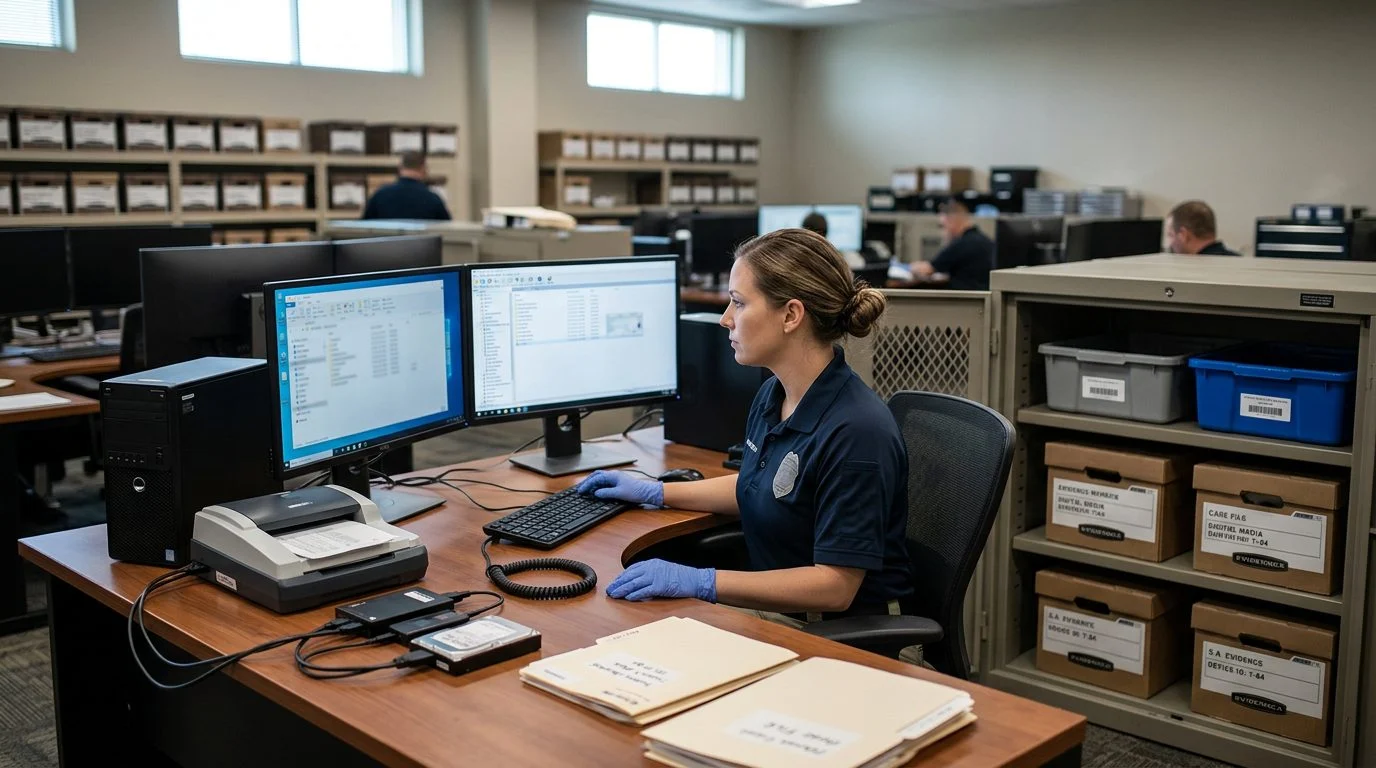
A defense review starts with where the image came from and who could reach the device or account. These are the main points to check:
- Origin. Was the file made from scratch, edited from an existing photo, or downloaded? What software or platform does the state say produced it?
- Device and accounts. Which phone, computer, cloud storage, or messaging account does the state link to the image? How does the state prove access?
- Metadata and timestamps. File dates and edit history can show when and how a file changed. Forensic findings show whether the state can confirm who made or altered it.
- Distribution. Was the image sent, posted, or stored? If so, to whom and when?
- Identity. Can the person shown be identified as a real individual? Does the evidence support that claim?
When a minor is involved, federal programs may also be part of the investigation. The Internet Crimes Against Children Task Force Program supports investigations of technology-facilitated child sexual exploitation. The National Center for Missing & Exploited Children explains the federal definition of child sexual abuse material.
Defenses and Issues a Lawyer Examines
The main defense questions are who created or sent the image, what the accused knew, and how police gathered the evidence. Each offense has its own proof requirements, so each issue is tied to the exact statute charged.
- Authorship and access. Could other people use the device or account? Can the state prove the accused made, altered, or sent the file?
- Knowledge and intent. Deep fake charges require knowing conduct without effective consent. Intimate material charges require disclosure of visual material depicting another person with intimate parts exposed or engaged in sexual conduct, without the depicted person’s effective consent, with intent to harm that person, when the person knows or has reason to believe the material was obtained by the person or created under circumstances in which the depicted person had a reasonable expectation that it would remain private, causing harm, and revealing the depicted person’s identity in any manner.
- Consent. Under § 21.165, consent counts only when it is in a signed plain-language agreement. Texas Penal Code § 21.165 reads: “(b-2) Consent required by Subsection (b) is valid only if the person appearing to be depicted knowingly and voluntarily signed a written agreement that was drafted in plain language.” Under § 21.16, it is not a defense that the depicted person created the material or sent it to the accused.
- Labels and disclaimers. A “fake” label or disclaimer does not defeat a deep fake charge under § 21.165.
- Investigation. Gaps in the chain of custody, the scope of a search warrant, and how evidence was collected and labeled all matter.
- Statements. The lawyer reviews how any police interview was conducted and what was said.
The lawyer checks each issue against the actual record and explains which ones apply to the case.
What to Expect: The Process From First Contact to Case Review
For an AI generated sexual images charge lawyer Texas case, the process starts with a consultation and moves through evidence review, options, and regular updates. The typical path has five steps.
- First contact. Share the basic facts and any notice, arrest papers, or charging documents by phone, through the contact form, or by sending your case details.
- Consultation. The free initial consultation is confidential and carries no obligation to continue.
- Evidence review. The lawyer reviews discovery, including forensic reports, device and account records, and the officer’s narrative.
- Options and planning. The lawyer explains the paths available, such as motions, negotiation, or trial preparation, and what each one requires.
- Ongoing updates. You stay informed as the case moves through the court and as deadlines come up.
Timelines vary with how quickly discovery arrives and how the court sets the case. The schedule for your charge is explained at the consultation.
Why Clients Consult Barbieri Law Firm
Barbieri Law Firm is an all-women criminal defense firm in Frisco, Texas. It handles sex crimes, online sex crimes, and assaultive offense cases across Collin County, Dallas-Fort Worth, and Texas. Its lawyers include Heather Barbieri and Carrie Thomas.
Heather Jean Barbieri, Board Certified, Criminal Law — Texas Board of Legal Specialization.
The firm does not predict how any case will end. It explains the evidence and the options so you can decide with clear information.
Not sure what your next step is?
Talk it through with our team — the first consultation is free, confidential, and carries no obligation.
Frequently Asked Questions
Is an AI-generated image of a real person a crime in Texas?
Texas law can apply when an AI image appears to show a real person in a situation that never happened, without that person’s effective consent.
Can I be charged if the image was never shared?
Some charges focus on making or possessing material, while others focus on sending or disclosing it.
Does the law change if the image shows a minor?
Yes. Images involving minors can fall under § 21.165 itself, where a depicted person younger than 18 years of age makes the offense a third-degree felony, and can also fall under separate statutes such as the Texas offense of possession or promotion of child pornography. Our child sex crimes defense page covers those cases.
Does a “fake” label stop a charge?
No. Under Texas law, a disclaimer or label is not a defense to a deep fake charge.
What should I do if police contact me?
A criminal defense lawyer can advise you before you answer questions about the image.
If you’ve been notified of an investigation or charge over an image made or altered with AI, share the notice and the basic facts with Barbieri Law Firm. The initial consultation is free, confidential, and carries no obligation to continue. Call (972) 424-1902 or send your case details through the contact page.
Attorney responsible for this site: Heather Barbieri, Barbieri Law Firm, Frisco, Texas.
How We Approach an AI-Generated Image Case
We Review the Image Itself
We look closely at how the image was created, what it depicts, where it appeared and whether it was ever shared with anyone else.
An All-Women Criminal Defense Firm
Barbieri Law Firm is led by Heather Barbieri and includes Carrie Thomas. Our team handles sensitive sex crimes matters with discretion and respect.
Options Explained in Plain Language
We walk you through the possible paths in your case and what each one could mean for your life, your work and your record.
Before You Respond, Speak With a Lawyer
Do not post, forward, delete or discuss the image with anyone, including the person who sent it, before you have spoken with a criminal defense lawyer. A hasty step can make your situation harder to defend.
Common Questions We Hear
Is an AI-generated image of a real person a crime?
Texas law can apply when an image appears to show a real person in a sexual situation that never happened. Whether a specific charge fits your facts depends on the image, how it was made and shared, and the evidence. We will review those details with you.
What if the image was never shared?
Some charges focus on creating or possessing an image, while others focus on sending or disclosing it. The difference matters, and we will explain how it applies to your situation.
Who is involved in the case?
Accusations can involve a classmate, coworker, former partner or someone you met online. We look at the relationship, the timeline and the communications that were exchanged.
Can an AI-generated image case be defended?
Every case depends on its facts. We will test the State's evidence, including how the image was created, who had access to devices and accounts, and what can be proven.
Get Answers About Your Case. Your Free Consultation Is Confidential and Without Obligation.
Related practice areas
- Online Sex Crimes Defense Lawyer | Collin County & Texas
Request a Consultation
Fill out the short form and we will take it from there.