


Aggravated Sexual Assault Defense | Frisco, Texas
Charged With Aggravated Sexual Assault Involving Serious Bodily Injury?
Talk with a Frisco criminal defense lawyer early, before the facts are shaped by others. Our team will review the evidence and explain the options in plain language.
Barbieri Law Firm at a Glance
Free
Confidential first consultation, with no obligation to continue
Collin County
Defending clients across Collin County, Dallas-Fort Worth and Texas
All-Women
Criminal defense firm led by Heather Barbieri
By Heather Barbieri · Published November 17, 2026
If you have been charged with aggravated sexual assault in Texas, the charge is a first-degree felony. Texas law adds an extra fact to a sexual assault charge when the State alleges serious bodily injury, a deadly weapon, or certain threats. That extra fact is often where a defense starts.
This page explains what those terms mean, what the State must prove, and how a case can move from start to finish. It is written for you if you have been arrested, indicted, or contacted by police about this charge.
What Aggravated Sexual Assault Means Under Texas Law
Aggravated sexual assault is a more serious sexual offense than sexual assault under Texas law. The statute lists several ways a case becomes aggravated:
- Causing serious bodily injury, or attempting to cause death
- Using or exhibiting a deadly weapon
- Placing the victim in fear, through acts or words, that death, serious bodily injury, or kidnapping will be imminently inflicted
- Acting in concert with another person
- Giving the victim a substance capable of impairing the victim’s ability to appraise or resist the act, with the intent of facilitating the offense
- A victim younger than 14, or an elderly or disabled individual
The offense is a first-degree felony. A first-degree felony carries imprisonment for life or for any term from 5 to 99 years, and a fine of up to $10,000 may be added. In some cases, such as a victim younger than 10, the minimum term rises to 25 years under § 22.021(f).

Serious Bodily Injury, Explained
Serious bodily injury is a defined legal term, and the State must show the injury meets that definition. Under Penal Code § 1.07, it means bodily injury that creates a substantial risk of death, causes death, causes serious permanent disfigurement, or causes protracted loss or impairment of a bodily member or organ.
That is a much higher bar than ordinary bodily injury. Pain alone meets the basic definition, but it does not meet the serious one.
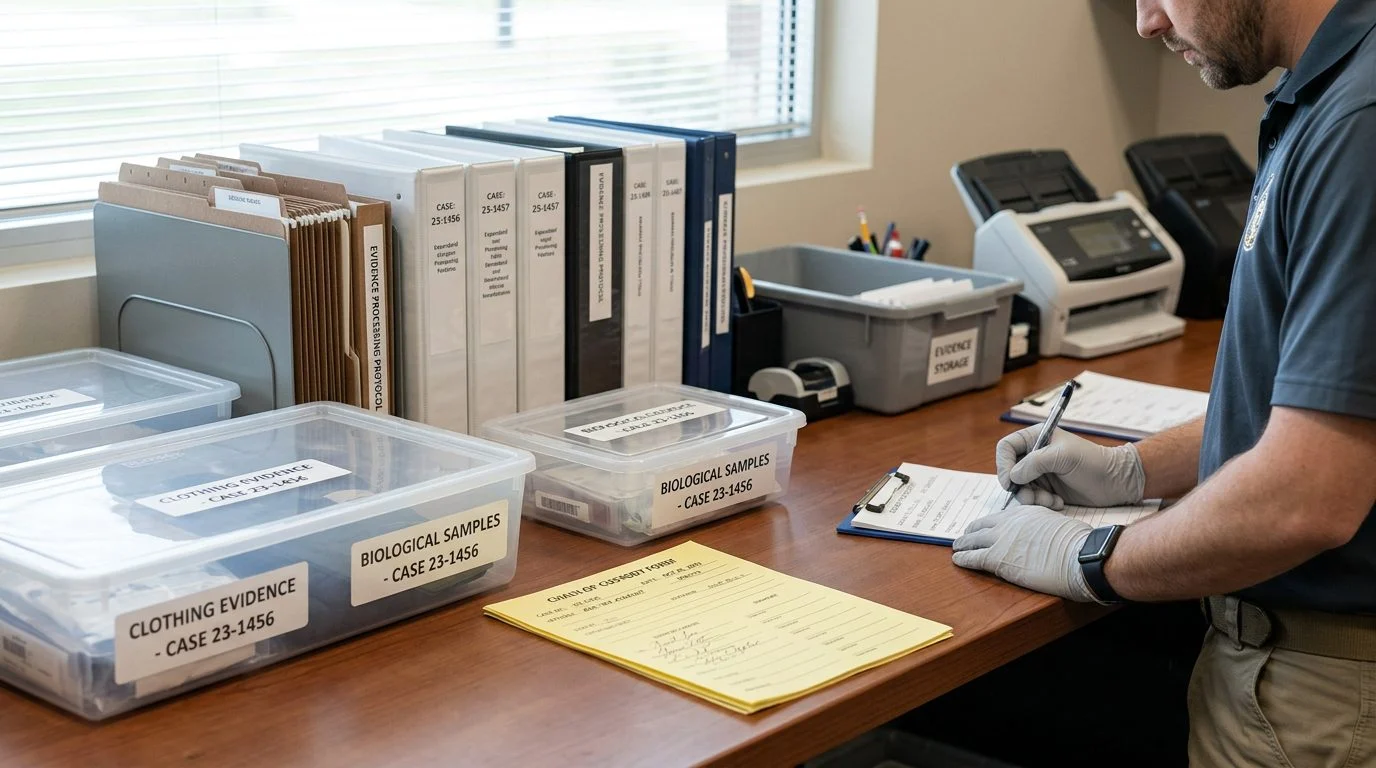
In practice, the question often turns on the medical file. Emergency records, treating providers’ notes, imaging, and photographs show what the injury was and how it was described over time. A defense review checks when each record was made, who made it, and whether later notes match the first report.
Deadly Weapon and Other Aggravating Facts
A deadly weapon is a firearm, anything manifestly designed, made, or adapted for the purpose of inflicting death or serious bodily injury, or anything that in the manner of its use or intended use is capable of causing death or serious bodily injury. The definition appears in Penal Code § 1.07.
That second part matters. An object does not need to be built as a weapon. An everyday item can qualify if the State alleges it was used in a way that could cause death or serious bodily injury.
The threat-based aggravator works differently. It covers acts or words that place the victim in fear of imminent death or serious bodily injury, so no weapon needs to be shown for that part. Read the charging language to see which aggravating fact is alleged.
A defense typically reviews the police report, the complaining person’s account, physical evidence, and any recordings or messages from before and after the incident. For a closer look at weapon allegations, see aggravated assault with a deadly weapon in Texas.
What the State Must Prove, and How Assault Differs
The State must prove each part the charge alleges, including the aggravating fact. For aggravated sexual assault, the state generally must prove the sexual contact or penetration described in § 22.011 and § 22.021, the required mental state, and the aggravating fact. Lack of consent is also an element, except when the alleged victim is a child: under § 22.011(a)(2) and § 22.021(a)(1)(B), the child-victim route does not require proof of lack of consent.
Consent means assent in fact, whether express or apparent, under § 1.07.
Assault is a different offense. Assault under Texas law can be committed in three alternative ways:
- Intentionally, knowingly, or recklessly causing bodily injury
- Intentionally or knowingly threatening imminent bodily injury
- Intentionally or knowingly causing physical contact the other person will regard as offensive or provocative
Keep these assault elements apart from the sexual assault elements when you read a charge. Serious bodily injury or other aggravating circumstances can set aggravated assault apart from simple assault. Read the charging document closely, because it frames the whole defense.
How a Defense Is Built
A defense starts with the facts of your case, and the State’s file is the first place to look.
Common areas a defense examines include:
- Medical, forensic, and sexual assault examination records
- DNA testing, how the sample was collected, and whether handling is documented
- Consent-related evidence, such as texts, messages, photographs, and witness accounts
- Identity, location, and timeline questions
- Self-defense or mistaken-belief questions, where the facts support them
- Whether the injury or object meets the legal definition the State alleges
If police want to search your phone, the U.S. Supreme Court has said they generally need a warrant, even after an arrest. The Supreme Court’s ruling does not hold that information on a cell phone is beyond all search; it holds that a warrant is generally required before such a search, even when a cell phone is seized incident to arrest, as stated in Riley v. California. No lawyer can ensure an outcome, and every case is different.
How the Case Moves, Step by Step
A case usually moves from arrest to charging, then discovery, then negotiation or trial. Each stage shapes what the defense must do next.
- Arrest and questioning. Under Dickerson v. United States, whether a statement from custodial questioning can be used depends on whether police gave the Miranda warnings. You may ask for a lawyer before answering questions. Once you are a defendant in an adversarial judicial proceeding, you also have the right to consult with counsel in private, sufficiently in advance of a proceeding to prepare for it, under art. 1.051.
- Charging. A felony indictment needs at least nine grand jurors to concur.
- Discovery and motions. The defense reviews the State’s file, evaluates forensic results, and files motions when needed.
- Negotiation or trial. Plea discussions, pretrial hearings, and jury trial are possible paths. How long each stage takes depends on the evidence and the court’s schedule.
Time limits for bringing charges come from Code of Criminal Procedure art. 12.01. Those limits depend on the offense, and some sex offenses have no time limit under certain conditions. Check the exact charge and its dates early.
What Is at Stake Beyond Prison
Beyond prison time, a conviction can affect your registration status, your family, and your work. Registration is often the first issue to check.
Under the definitions in Code of Criminal Procedure art. 62.001, aggravated sexual assault committed by a person 17 or older is a “sexually violent offense.” That label is central to Texas sex offender registration under Chapter 62.
- Family matters. If you have children, a criminal case can affect custody and family court proceedings. Raise this early so both issues are planned together.
- Work and licenses. A felony charge or conviction can affect employment, professional licenses, and background checks.
- Protective orders and weapons. If a protective order or firearm question is part of your case, bring the paperwork to your first meeting.
Consequences differ with the charge, the outcome, and your own circumstances, so each case needs its own review.
Why Barbieri Law Firm, and How to Start
Barbieri Law Firm is an all-women criminal defense firm in Frisco, Texas. It defends people accused of sex crimes and assaultive offenses across Collin County, Dallas-Fort Worth, and Texas.
Heather Jean Barbieri, Board Certified, Criminal Law — Texas Board of Legal Specialization.
Our lawyers are Heather Barbieri and Carrie Thomas. Our team handles aggravated sexual assault, aggravated assault, and family violence cases, among other sex crimes and assaultive offenses.
Your first step is a free initial consultation. The first consultation is free, confidential, and with no obligation to continue. We will review the charging document, the police report, medical records, and any video or messages, then explain your options. The office number is (972) 424-1902.
Frequently Asked Questions About Aggravated Sexual Assault in Texas
The answers below cover the terms and deadlines most central to an aggravated sexual assault charge in Texas.
What does assault causing bodily injury mean?
A person commits assault by intentionally, knowingly, or recklessly causing bodily injury, under § 22.01.
What classifies as serious bodily injury in Texas?
It is bodily injury that creates a substantial risk of death, causes death, causes serious permanent disfigurement, or causes protracted loss or impairment of a body part or organ.
How can an assault be shown under Texas law?
Assault can be shown by causing bodily injury, threatening imminent bodily injury, or causing offensive physical contact, each with the mental state the statute requires.
What is the statute of limitations for sexual assault charges in Texas?
Code of Criminal Procedure art. 12.01 sets time limits by offense. Some sex offenses have no time limit under certain conditions.
Can the charge be reduced?
Plea discussions are one part of a case, and outcomes depend on the facts. No lawyer can ensure an outcome.
Should I talk to police before I have a lawyer?
Whether police gave the Miranda warnings affects whether a statement can be used. You can ask for a lawyer before you answer questions.
If a charge like this has you searching for answers, you don’t have to work through it alone. Send your case details through the contact page, and our team will talk them through with you.
Attorney responsible for this site: Heather Barbieri, Barbieri Law Firm, Frisco, Texas.
How We Approach Your Defense
Evidence Review
We review the medical records, the forensic reports, the statements and any recordings to understand how the State frames its case.
Criminal Defense Focus
Our firm focuses on sex crimes and assaultive offenses, including aggravated sexual assault and related charges.
Clear Options
We explain your options at each stage so you can make informed decisions about your case.
Lawyer-Led Representation
Heather Jean Barbieri, Board Certified, Criminal Law — Texas Board of Legal Specialization, leads the firm's criminal defense work, and our lawyers work with her on each matter.
Speak With a Lawyer First
Do not discuss the allegation with investigators, family members or on social media before you have talked with a criminal defense lawyer. Anything you say can be used in the case.
What Shapes a Serious Bodily Injury Case
Bodily Injury
Texas law defines bodily injury broadly, so the details of the alleged harm and how it was documented often matter a great deal.
Serious Bodily Injury
The State may allege a substantial risk of death, serious permanent disfigurement, or protracted loss or impairment of a body part or organ. Each element is examined closely.
Medical Evidence
Treatment records, examination reports and timelines can either support or challenge the allegations.
Your Next Steps
We explain what happens after an arrest or charge, the possible outcomes and how we would approach your defense.
Talk With a Frisco Criminal Defense Lawyer Today. No lawyer can assure a particular outcome, but we will review your case honestly and explain your options.
Related practice areas
- What Happens After a Sex Crime Accusation in Texas? A Defense Guide for Collin County
- Texas Spousal Sexual Assault Charge: How Consent Is Disputed
Request a Consultation
Fill out the short form and we will take it from there.