

Sex Crimes Defense | Collin County and Dallas-Fort Worth
Indecency With a Child by Contact: Charge Defense in Texas
An accusation like this can change your family, your job and your reputation within days. Our team focuses on defending people facing sex crimes and assaultive charges, and we start by listening to your side of the story.
How our firm approaches your case
Review of the evidence
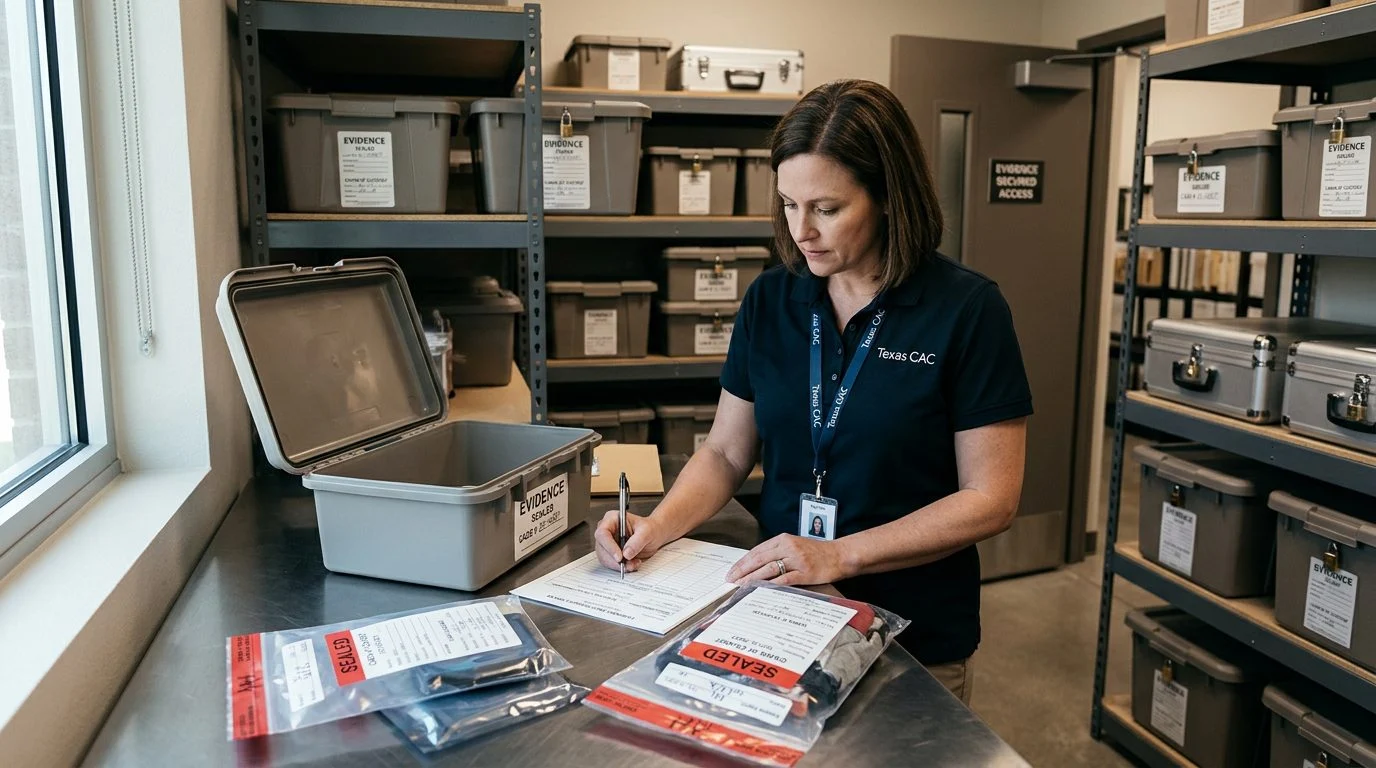
We review the allegations, police reports, forensic material and any recordings, then explain what they mean for your options.
Protecting your rights
We advise you on how to handle contact from investigators and prosecutors so that nothing you say hurts your defense.
Discretion you can count on
Your consultation is confidential. Our team handles every matter with care for your privacy and your family's.
Attorneys who focus on criminal defense
Heather Barbieri and Carrie Thomas focus on criminal defense, including sex crimes and assaultive offenses, and our team supports every case.
By Heather Barbieri · Published November 15, 2026
If police have accused you of touching a child in a sexual way, you need to know exactly what the charge means. In Texas, indecency with a child by contact is a second-degree felony when the charge is sexual contact under Penal Code § 21.11.
This page explains the offense, what the State must prove, the defenses the facts may support, the penalties, and what happens next. It covers Texas law in general. Your own case turns on the exact allegation in your paperwork.
What Indecency With a Child by Contact Means in Texas
Indecency with a child by contact is sexual contact with a child younger than 17, done with intent to arouse or gratify sexual desire. The statute applies whether or not the person knows the child’s age at the time of the offense.
Under the statute, sexual contact covers touching a child’s anus, breast, or genitals, including through clothing. It also covers touching any part of a child’s body with the accused person’s anus, breast, or genitals. The touch must be done with intent to arouse or gratify sexual desire.
Contact is different from exposure. Exposure under § 21.11(a)(2) involves exposing one’s own anus or genitals while knowing a child is present, or causing a child to expose. Exposure is a third-degree felony, so the subsection listed in your paperwork matters. Check it first.
Read your charging papers and bond paperwork before anything else. They should name the exact allegation and the subsection charged.
Facing an indecency with a child by contact charge is frightening, and you do not have to face it alone; we can review your charge with you. Talk it through with our team — the first consultation is free, confidential, and carries no obligation.

What the State Must Prove
Intent is often where a contact case turns.
- The child was younger than 17 at the time.
- Sexual contact happened, meaning a touch of a body area named in § 21.11(c).
- The touch was done with intent to arouse or gratify the sexual desire of any person.
A touch alone is not enough under this statute. The same act can look very different depending on why it happened, so intent gets tested closely.
The wording of the allegation and the timeline matter too. Review when the contact is said to have happened, where it happened, and how the child described it. Note who the child told first, and when.
A lawyer reviewing your file tests each element against the evidence the State actually has, not the accusation alone.
Defense Strategies the Facts May Support
Defenses in these cases target the State’s proof. Which lines apply to your case depends on the facts.
- Lack of intent. If the contact was accidental, incidental, or part of non-sexual care, the defense examines whether the State can prove the intent the statute requires.
- Penal Code § 21.11(b) applies only if the accused was not more than three years older than the child and of the opposite sex, did not use duress, force, or a threat against the child at the time of the offense, and at the time of the offense either was not required to register for life as a sex offender under Chapter 62 or was not a person who had a reportable conviction or adjudication under Chapter 62 for an offense under this section. It also requires no duress, force, or threat at the time of the offense, and that the accused was either not required to register for life under Chapter 62 or was not a person with a reportable conviction or adjudication under Chapter 62 for an offense under this section. Subsection (b-1) adds a separate defense for a spouse.
- A child’s statement to the first adult other than the accused can be used only with notice on or before the 14th day before the proceeding begins (Code of Criminal Procedure art. 38.072), and only if the child testifies or is available to testify at the proceeding in court or in any other manner provided by law. The judge must also find it reliable outside the jury’s presence.
- Under art. 38.22, when a question is raised as to the voluntariness of the accused’s statement, the judge must make an independent finding, outside the jury’s presence, on whether it was made under voluntary conditions. Recordings of custodial interviews must be preserved.
- Phone evidence. Riley v. California says police generally need a warrant before searching a phone’s digital data, even after an arrest. The Supreme Court held in Riley v. California that police generally need a warrant before searching the data on a cell phone, even when the phone was seized incident to arrest.
- False allegation or misidentification. Inconsistent statements and questions about who was involved can be examined through discovery and at trial.
Penalties and Collateral Consequences
A second-degree felony carries two to 20 years in prison and a fine of up to $10,000. Under Penal Code § 12.33, the fine can be added to prison time.
The exposure version under § 21.11(a)(2), where a person, with intent to arouse or gratify sexual desire, exposes their anus or genitals knowing a child is present or causes a child to expose, is a third-degree felony as set out in subsection (d) of the statute.
Registration rules are detailed, so ask about them at the first meeting.
Beyond the sentence, a charge can affect bond conditions, any no-contact order, work, housing, and family or custody matters. Follow every bond condition exactly, and ask a lawyer to explain each one.
How the Process Works: What to Expect
The case moves from your first meeting through review, a grand jury, pretrial motions, and then trial or resolution. Timelines differ from case to case.
- First consultation. You share your charging papers, bond terms, and what you remember. The meeting is confidential.
- Review of the State’s file. On a timely request, the State must produce offense reports and written or recorded statements, as soon as practicable (Code of Criminal Procedure art. 39.14). We review recordings, reports, and bond terms together.
- Grand jury. An indictment needs at least nine grand jurors to concur in finding the bill (Code of Criminal Procedure art. 20A.301). We explain what that stage means for your case.
- Pretrial motions. We can challenge statements, child-witness evidence, and how recordings were handled. For a child younger than 13 who would be unavailable to testify in the defendant’s presence, the court may order closed-circuit testimony under art. 38.071.
- Trial or resolution. Each option gets a plain explanation so you can decide with full information.
Why Barbieri Law Firm for This Charge
Barbieri Law Firm is an all-women criminal defense firm in Frisco, Texas. It defends people accused of sex crimes and assaultive offenses across Collin County, Dallas-Fort Worth, and Texas.
Heather Jean Barbieri, Board Certified, Criminal Law — Texas Board of Legal Specialization.
Our lawyers include Heather Barbieri and Carrie Thomas. Our team also includes assistants and office staff.
Our focus is sex crimes defense, including child sex crimes, aggravated sexual assault, and online sex crimes.
In a first review, we check your charge line by line against the statute. We review the evidence, including recordings and reports, and explain your options. We won’t predict how your case will end, and no honest lawyer can.
Not sure what your next step is?
Talk it through with our team — the first consultation is free, confidential, and carries no obligation.
Frequently Asked Questions
Short answers to the first questions people ask about this charge.
Do I have to talk to police?
You can ask for a lawyer before you answer questions.
Will I go to prison if I’m charged?
A second-degree felony carries two to 20 years in prison. How a case ends turns on its facts, and no one can predict it.
A child’s statement to an adult can be admitted as hearsay under art. 38.072 only if the article’s requirements are met, and the article applies only to certain offenses against children or persons with disabilities and to statements made to the first adult, 18 or older, the child told.
Do I need to act now?
Follow every bond condition exactly and keep every court setting on your calendar. Those are the steps you control right now.
What does the first consultation cost?
The initial consultation is free, confidential, and carries no obligation to continue.
Talk to Barbieri Law Firm About Your Charge
You may be facing a bond hearing, a grand jury, or a choice about speaking with police. You do not have to face it alone. Bring your charging papers and bond terms to a first meeting with our team.
Call (972) 424-1902 or send your case details through our contact page to schedule your consultation.
Attorney responsible for this site: Heather Barbieri, Barbieri Law Firm, Frisco, Texas.
What to bring to your consultation
Charging papers and notices
Bring any arrest paperwork, bond documents, court notices or letters you have received.
Your timeline of events
Write down what you remember and when it happened. Share these notes with your lawyer only.
Messages and contact
Tell us about any texts, calls, social media messages or other contact connected to the allegation.
Your questions
Bring every question you have about the process. We will explain the options in your case and what each could involve.
Talk to a lawyer before you speak with investigators
Statements you make to police or investigators can be used in your case. Speak with a lawyer before answering questions about this allegation.
Your first consultation is free, confidential and comes with no obligation to continue.
Attorney responsible for this site
Heather Barbieri, Barbieri Law Firm, Frisco, Texas.
Related practice areas
Request a Consultation
Fill out the short form and we will take it from there.