

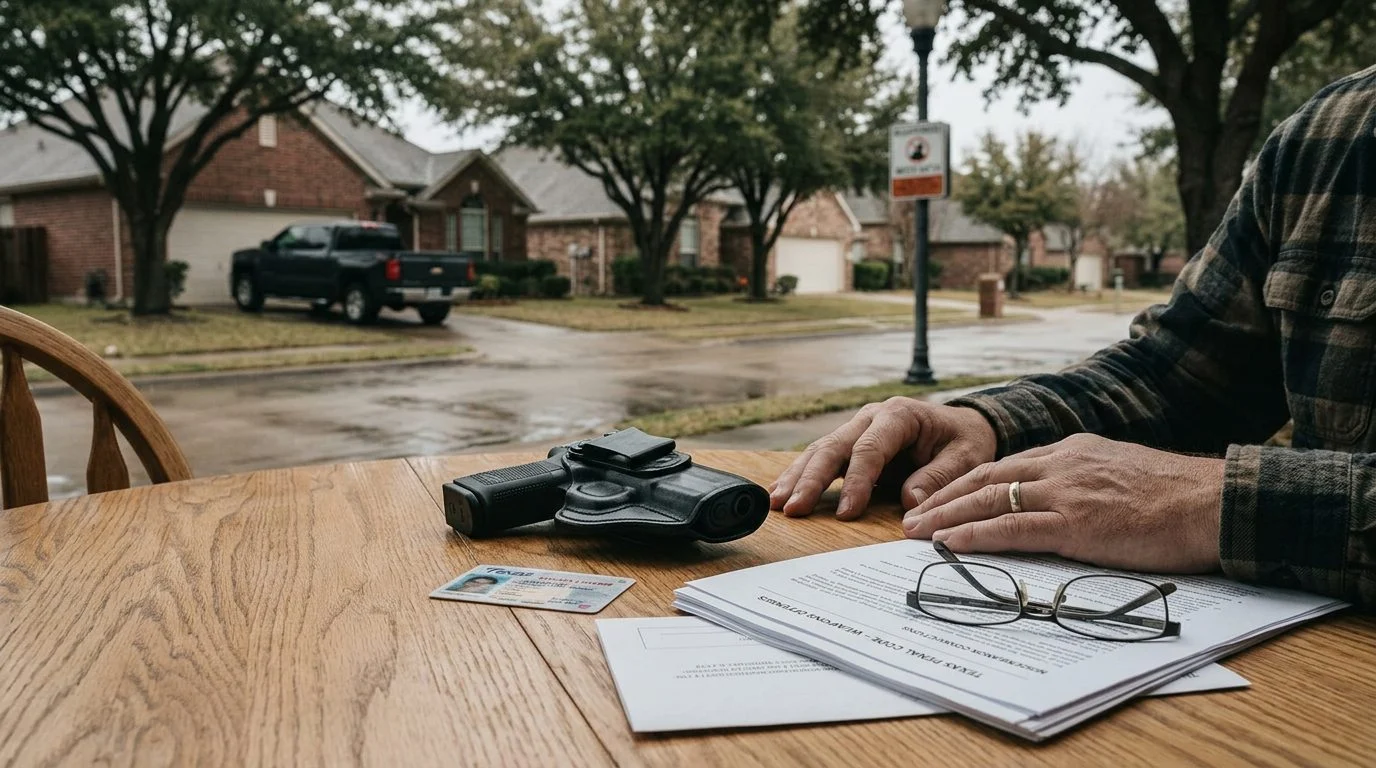
Family Violence Defense | Collin County, Texas
Could a Misdemeanor Affect Your Right to Own a Gun in Texas?
Barbieri Law Firm reviews the charge, the relationship between the parties and the court record, then explains in plain terms what a conviction could mean for your firearms.
By Heather Barbieri · Published November 16, 2026
You may have just learned about a misdemeanor charge or a protective order. Now you’re asking whether you can still own a gun. That question matters, and it deserves a clear answer.
Most ordinary Texas misdemeanors do not, by themselves, stop you from owning a gun under federal law. The ones that often do involve violence or threats against a family member, a partner, or a child. Certain protective orders can do the same, and Texas adds its own rules on top.
Which misdemeanors can take away your gun rights?
Only a narrow group of misdemeanors creates a firearm ban. Most of them involve force or threats against a family member, a partner, or a child.
The first is the federal rule for misdemeanor crimes of domestic violence. The second is the federal rule for certain protective orders. The third is the Texas rule on possession and license to carry. A fourth question is whether a typical one-year misdemeanor counts at all. Under the federal definition, it usually does not.
Keep these tracks apart when you read your own paperwork. Start with the charging document and the relationship between the people involved.
If a family violence charge or protective order has you wondering whether you can keep your guns, we can review your paperwork with you in a free, confidential consultation. Talk it through with our team — the first consultation is free, confidential, and carries no obligation.
Does a family violence misdemeanor take away gun rights?
Yes, a misdemeanor crime of domestic violence can take away your right to own a gun under federal law. A separate federal rule bars possession by people convicted of a crime punishable by more than one year in prison, but under 18 U.S.C. § 921 that term does not include a state misdemeanor punishable by two years or less.
The federal definition is in 18 U.S.C. § 921. The offense must have as an element the use or attempted use of physical force, or the threatened use of a deadly weapon. It must be committed against a victim by a current or former spouse, parent, or guardian, a person who shares a child with the victim, a person who is cohabiting or has cohabited with the victim as a spouse, parent, or guardian, a person similarly situated to a spouse, parent, or guardian, or someone in a dating relationship with the victim.
Texas defines family violence differently in some ways. Texas Family Code § 71.004 covers a threat that places a household member in reasonable fear of imminent harm. A household, under § 71.005, is people living together in the same dwelling, whether or not they’re related. So compare the charge wording against both definitions.
Do protective orders stop you from owning a gun?
Yes, a protective order can bar you from having a gun, even with no criminal conviction. Federal law covers certain orders that bar force or threats against an intimate partner or child, as stated in 18 U.S.C. § 922.
In Texas, the court makes a finding at the end of the hearing. Texas Family Code § 85.001 requires the court to find whether family violence occurred. If it did, the order can apply to the person found to have committed it. Under § 85.022, the court may prohibit that person from possessing a firearm.
Timing matters too. If the order doesn’t state an end date, it generally lasts until the second anniversary of issuance, under § 85.025. If a family violence criminal case is pending, the order can last until the second anniversary of that case’s final disposition.
Does a typical one-year misdemeanor trigger the federal gun ban?
Federal law’s felony definition excludes many state misdemeanors punishable by two years or less, but that exclusion does not settle a firearm question. A misdemeanor crime of domestic violence can trigger a federal firearm prohibition under 18 U.S.C. § 922(g)(9) regardless of how long the punishment is.
In Texas, a Class A misdemeanor carries a fine of up to $4,000 and up to one year in jail, under § 12.21. A Class B misdemeanor carries a fine of up to $2,000 and up to 180 days in jail, under § 12.22. Both fall inside the federal exclusion.
Texas’s own possession limits for misdemeanors are narrow. Texas Penal Code § 46.04(b) covers a person who has been convicted of a Class A assault under § 22.01 against a family or household member and who possesses a firearm before the fifth anniversary of the later of release from confinement or release from community supervision. The bar lasts until the fifth anniversary of the later of release from confinement or release from community supervision. The same section also covers certain criminal street gang members who carry a handgun in a vehicle.
What does Texas add for felonies and license to carry?
A Texas felony conviction bars possession before the fifth anniversary of the later of release from confinement following the felony conviction or release from supervision under community supervision, parole, or mandatory supervision, under § 46.04(a). After that period, possessing a firearm anywhere other than the place you live is an offense.
In a protective order, the court must suspend a handgun license that a person found to have committed family violence holds, under § 85.022.
Which court records should you gather first?
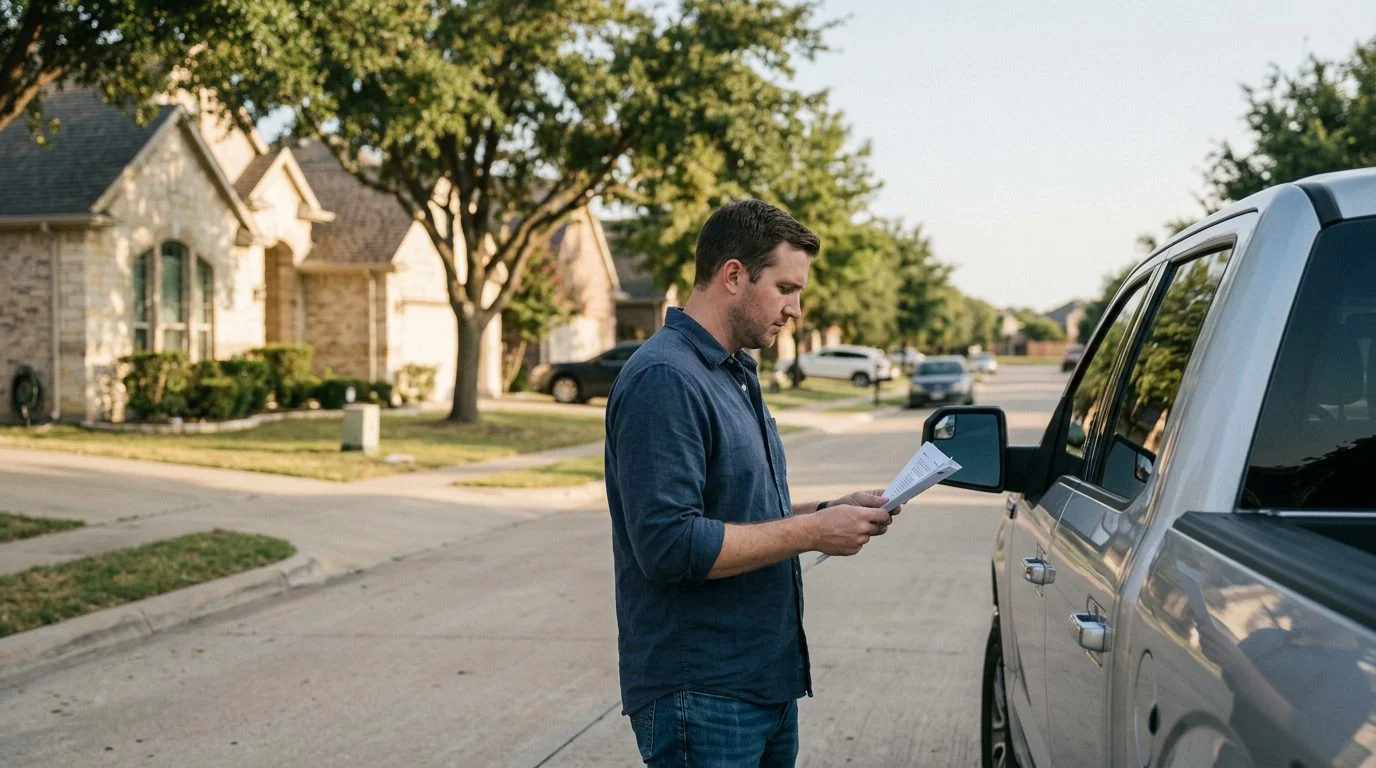
The charging document, any protective order, and the final court paperwork answer most gun questions. Gather them before you decide anything.
Start with the charging document. It shows the offense and the section charged. Next, get any protective order, and check its firearm language and end dates. Then get the judgment or dismissal order, which shows how the case ended.
Also write down the relationship facts. Did you and the other person live together in the same dwelling? Under the Texas household definition, that detail can matter. Note the release dates from any confinement or supervision too.
Not sure what your next step is?
Talk it through with our team — the first consultation is free, confidential, and carries no obligation.
Do dismissals, deferred adjudication, or expunction clear your rights?
A dismissal can change the answer, but the result turns on the exact order and on how each set of rules defines a conviction. Under Texas Code of Criminal Procedure art. 42A.111, a judge who has not adjudicated guilt must dismiss and discharge a defendant after deferred adjudication ends.
Except as provided by Section 12.42(g), Penal Code, a dismissal and discharge may not be considered a conviction for disqualifications imposed by law for a conviction. Under 18 U.S.C. § 921, an expunged or set-aside conviction doesn’t count, unless the order expressly bars firearms.
The answer depends on the facts of your case, and this is the only place this page makes that point.
What should you do next with your own case?
Bring your paperwork to a conversation, so your gun question gets answered from the actual records. A family violence charge or protective order can affect your firearms in ways that are easy to miss on a summary.
Barbieri Law Firm is in Frisco, Texas. The firm defends people accused of family violence, assault, and sex crimes across Collin County, Dallas-Fort Worth, and Texas. The initial consultation is free, confidential, and without obligation to continue. You can call (972) 424-1902 or send your case details through the contact form.
No lawyer can predict how your case will end. A consultation can help you see which of these tracks your facts fall into.
Attorney responsible for this site: Heather Barbieri, Barbieri Law Firm, Frisco, Texas.
Frequently Asked Questions
Does a Texas misdemeanor conviction stop you from owning a gun?
A family violence assault conviction can affect your right to have a gun under both Texas and federal law. Under Texas Penal Code § 46.04(b), a person convicted of an offense under Section 22.01, punishable as a Class A misdemeanor and involving a member of the person’s family or household, commits an offense if the person possesses a firearm before the fifth anniversary of the later of the date of release from confinement following conviction of the misdemeanor or the date of release from community supervision following conviction of the misdemeanor. Federal law (18 U.S.C. § 922(g)(9)) can also bar possession after a misdemeanor domestic violence conviction, so the charge and the facts matter.
Which misdemeanor disqualifies you from owning a gun under federal law?
Under federal law, a person who has been convicted in any court of a misdemeanor crime of domestic violence is prohibited from possessing a firearm (18 U.S.C. § 922(g)(9)).
Does being charged with a misdemeanor take away your gun rights?
Being charged is not the same as being convicted, but a pending case can still affect what you may possess, depending on the charge and any court orders. Talk with a lawyer about your specific case before you buy, sell, or transfer a firearm.
Can an expunction or sealed record restore your gun rights?
Federal law allows an exception if a conviction was expunged, set aside, pardoned, or had civil rights restored, unless that order still restricts firearms. Because the answer depends on your record, contact Barbieri Law Firm at (972) 424-1902 for a free, confidential consultation with no obligation to continue.
What we review in your case
The exact charge
We start with the statute, the offense level and the wording in the charging papers, because the details decide which rules may apply.
The relationship between the parties
For family violence charges, we look closely at how the parties are related or whether they share a household.
Court and protective order records
We review the judgment, any protective order and the case file to understand the full picture.
Your questions, answered plainly
We explain what the record shows, what it does not show and what options may be available to you.
Bring your paperwork
Firearm restrictions tied to a conviction depend on the specific statute, the offense and the court record. Bring every document you have, including the charge, any judgment and any protective order, so we can review the details with you.
Bring these to your consultation
Charging papers
Any complaint, citation or information you received, including the offense listed.
Court paperwork
Judgments, deferred adjudication orders, probation papers or dismissal notices.
Protective orders
Any temporary or final protective order, along with its dates and terms.
Your own timeline
A short written account of what happened and when, to help us organize the record.
Talk with Barbieri Law Firm about your charge. The first consultation is free, confidential and comes with no obligation to continue.
Related practice areas
- Aggravated Sexual Assault Charges in Texas
- Can I buy a gun with a dismissed domestic violence charge in Texas?
- Can a deferred adjudication be dismissed in Texas?
- How early can you get off deferred adjudication for a felony in Texas?
Request a Consultation
Fill out the short form and we will take it from there.